Philodendron bipennifolium (likely ‘Siam Aurora’/related cultivar)
설명
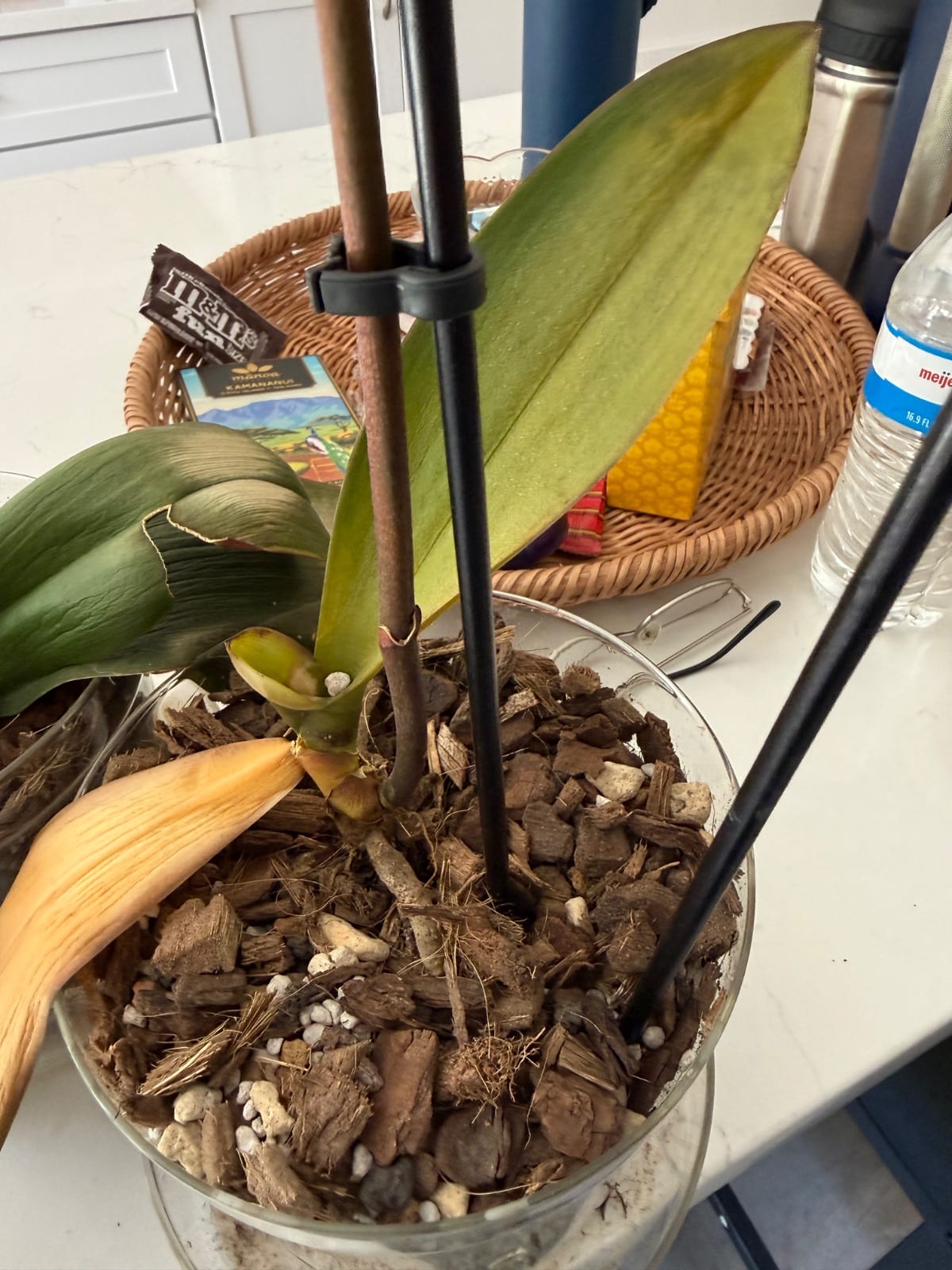
From the photo, the plant appears to be a juvenile Philodendron with large, thin-to-moderately thick, glossy, arrow/heart-shaped leaves on relatively long petioles, showing a pale-green/yellowish sheen on the leaf surface. The overall look (long petioles rising from a caudex/crown region, glossy texture, and leaf shape) is consistent with Philodendron species in section/lineages that can produce large juvenile leaves. Because only a single angle and mostly juvenile foliage are visible, and because several Philodendrons (and some related aroids) can look very similar at this stage—especially with yellow-green variegation—this is an identification with limited certainty. If you can share a clearer photo of the newest leaf, the underside of the leaf, the petiole (including any color bands), and whether the plant has a climbing habit, I can narrow the species/cultivar much more. --- ## Plant characteristics (what you’re likely growing) **Philodendron bipennifolium** is an aroid grown for its attractive foliage. In mature form, it typically develops **deeply divided or lobed leaves** (hence the “bipennifolium” name referring to a feather/finely divided look). Juvenile plants, however, often show **more heart/arrow-shaped leaves** that can look smoother and less divided than mature foliage. Key traits often seen in this type of Philodendron: - **Leaves:** glossy, green to yellow-green tones; may show **light mottling/variegation** on new growth. - **Growth form:** commonly **climbing** (as it matures) using aerial roots, though young plants can look more like a rosette in a pot. - **Stems/petioles:** petioles can be fairly thick; some cultivars show pale or contrasting petiole color. - **Texture:** the leaves are usually **smooth and somewhat thin**, not velvety. --- ## Light - Provide **bright, indirect light** for best growth and leaf color. - It can tolerate medium light, but growth will slow and leaves may become greener and smaller. - Avoid harsh direct sun through a window (especially midday), which can scorch the leaves. **Tip:** The pale/yellowish cast suggests the plant is either receiving brighter light or is naturally variegated—so ensure light is strong but filtered. --- ## Watering Aroids like evenly moist conditions but not soggy soil. - Water when the **top 2–5 cm (1–2 in)** of the mix feels dry. - Water thoroughly until excess drains from the pot. - Empty any saucer/tray after watering. In high light and warm temperatures you’ll water more often; in cooler months less often. **Common issue:** Yellowing leaves + consistently wet soil usually indicates overwatering/root stress. --- ## Soil and potting mix Use a **well-draining, airy mix** that still holds some moisture. Good options: - Potting mix + **orchid bark** + perlite (and/or coco chips) - Aroids mixes sold commercially are fine if they drain well. Because the plant is in a very chunky, bark-heavy-looking medium in the photo, it may be a good setup; just ensure it isn’t so dry that the plant wilts repeatedly. **Pot choice:** A pot with drainage holes is essential. Terracotta can help prevent overwatering. --- ## Temperature and humidity - Ideal indoor range: **18–27°C (65–80°F)**. - Avoid cold drafts and temperatures below about **13–15°C (55–59°F)**. - Humidity is appreciated: aim for **50–70%** if possible. If your home is dry: - Use a humidifier - Group plants - Avoid placing near heaters/AC vents --- ## Support / training If this plant is a climbing type (many Philodendrons are), it benefits from a support: - Moss pole or coir pole encourages stronger growth. - Tie the stem gently with plant ties. In your photo, a support pole is already present, which is a good sign. --- ## Fertilization - Feed during active growth (spring through summer; sometimes early fall). - Use a balanced fertilizer formulated for houseplants or aroids. - Typical approach: **¼–½ strength** every 2–4 weeks. In winter, reduce or stop fertilizing to avoid salt buildup. **Watch-outs:** Brown leaf tips or crusty white residue on soil can indicate over-fertilizing. --- ## Pruning and maintenance - Remove yellowing or damaged leaves at the base with clean scissors. - Wipe leaf surfaces occasionally to remove dust (improves light absorption). --- ## Propagation Most climbing Philodendrons propagate well by: - **Stem cuttings** with at least one node (and ideally aerial roots) - Root in moist airy substrate or water (then transition to soil) For faster results, cuttings benefit from humidity and warmth. --- ## Pests and problems Common indoor pests: - **Spider mites** (fine webbing, stippling) - **Mealybugs** (cottony clusters) - **Scale** (hard bumps on stems/undersides) - **Thrips** (silvery streaks, distorted leaves) Check leaves and petioles regularly. Early treatment is key. **Root rot** can occur if the mix stays wet for too long or drainage is poor. --- ## Safety / toxicity Philodendrons are **toxic if ingested** (calcium oxalate crystals) and may cause mouth irritation, drooling, vomiting, and more severe symptoms in pets/children. - Keep out of reach. - Wear gloves if you have sensitive skin (sap can irritate). --- ## What I’d like to confirm To increase confidence on the exact species/cultivar, please tell me: 1. Is it **climbing** as it grows (does it produce aerial roots and longer internodes)? 2. Are newer leaves **more lobed/splitting** over time? 3. Photo of the **newest leaf** and the **underside**. 4. Any distinct **petiole color** (green, brown, reddish) or patterns. With those details, I can narrow it down much more accurately.
식별 시간
2026년 7월 1일
안내
식집사의 기능은 AI를 사용하고 있어 부정확 할 수 있습니다. 단순 재미와 참고용으로만 사용해주세요.
식물 결과에서 바로 할 수 있는 일
이름을 확인한 뒤 공식 식물 DB에서 관리 정보를 바로 확인하세요.