Philodendron bipennifolium (likely ‘Siam Aurora’/related cultivar)
Description
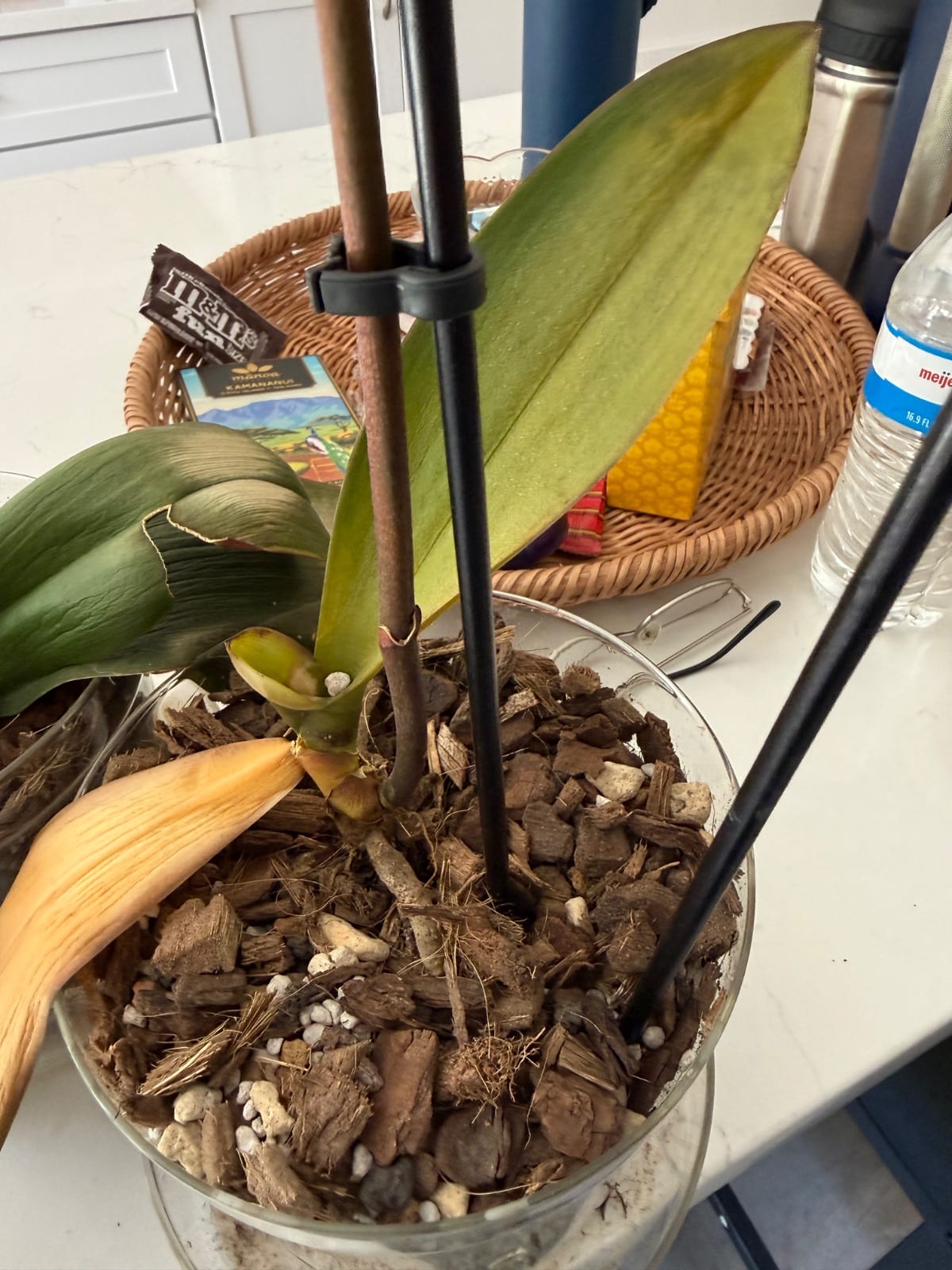
From the photo, the plant appears to be a juvenile Philodendron with large, thin-to-moderately thick, glossy, arrow/heart-shaped leaves on relatively long petioles, showing a pale-green/yellowish sheen on the leaf surface. The overall look (long petioles rising from a caudex/crown region, glossy texture, and leaf shape) is consistent with Philodendron species in section/lineages that can produce large juvenile leaves. Because only a single angle and mostly juvenile foliage are visible, and because several Philodendrons (and some related aroids) can look very similar at this stage—especially with yellow-green variegation—this is an identification with limited certainty. If you can share a clearer photo of the newest leaf, the underside of the leaf, the petiole (including any color bands), and whether the plant has a climbing habit, I can narrow the species/cultivar much more. --- ## Plant characteristics (what you’re likely growing) **Philodendron bipennifolium** is an aroid grown for its attractive foliage. In mature form, it typically develops **deeply divided or lobed leaves** (hence the “bipennifolium” name referring to a feather/finely divided look). Juvenile plants, however, often show **more heart/arrow-shaped leaves** that can look smoother and less divided than mature foliage. Key traits often seen in this type of Philodendron: - **Leaves:** glossy, green to yellow-green tones; may show **light mottling/variegation** on new growth. - **Growth form:** commonly **climbing** (as it matures) using aerial roots, though young plants can look more like a rosette in a pot. - **Stems/petioles:** petioles can be fairly thick; some cultivars show pale or contrasting petiole color. - **Texture:** the leaves are usually **smooth and somewhat thin**, not velvety. --- ## Light - Provide **bright, indirect light** for best growth and leaf color. - It can tolerate medium light, but growth will slow and leaves may become greener and smaller. - Avoid harsh direct sun through a window (especially midday), which can scorch the leaves. **Tip:** The pale/yellowish cast suggests the plant is either receiving brighter light or is naturally variegated—so ensure light is strong but filtered. --- ## Watering Aroids like evenly moist conditions but not soggy soil. - Water when the **top 2–5 cm (1–2 in)** of the mix feels dry. - Water thoroughly until excess drains from the pot. - Empty any saucer/tray after watering. In high light and warm temperatures you’ll water more often; in cooler months less often. **Common issue:** Yellowing leaves + consistently wet soil usually indicates overwatering/root stress. --- ## Soil and potting mix Use a **well-draining, airy mix** that still holds some moisture. Good options: - Potting mix + **orchid bark** + perlite (and/or coco chips) - Aroids mixes sold commercially are fine if they drain well. Because the plant is in a very chunky, bark-heavy-looking medium in the photo, it may be a good setup; just ensure it isn’t so dry that the plant wilts repeatedly. **Pot choice:** A pot with drainage holes is essential. Terracotta can help prevent overwatering. --- ## Temperature and humidity - Ideal indoor range: **18–27°C (65–80°F)**. - Avoid cold drafts and temperatures below about **13–15°C (55–59°F)**. - Humidity is appreciated: aim for **50–70%** if possible. If your home is dry: - Use a humidifier - Group plants - Avoid placing near heaters/AC vents --- ## Support / training If this plant is a climbing type (many Philodendrons are), it benefits from a support: - Moss pole or coir pole encourages stronger growth. - Tie the stem gently with plant ties. In your photo, a support pole is already present, which is a good sign. --- ## Fertilization - Feed during active growth (spring through summer; sometimes early fall). - Use a balanced fertilizer formulated for houseplants or aroids. - Typical approach: **¼–½ strength** every 2–4 weeks. In winter, reduce or stop fertilizing to avoid salt buildup. **Watch-outs:** Brown leaf tips or crusty white residue on soil can indicate over-fertilizing. --- ## Pruning and maintenance - Remove yellowing or damaged leaves at the base with clean scissors. - Wipe leaf surfaces occasionally to remove dust (improves light absorption). --- ## Propagation Most climbing Philodendrons propagate well by: - **Stem cuttings** with at least one node (and ideally aerial roots) - Root in moist airy substrate or water (then transition to soil) For faster results, cuttings benefit from humidity and warmth. --- ## Pests and problems Common indoor pests: - **Spider mites** (fine webbing, stippling) - **Mealybugs** (cottony clusters) - **Scale** (hard bumps on stems/undersides) - **Thrips** (silvery streaks, distorted leaves) Check leaves and petioles regularly. Early treatment is key. **Root rot** can occur if the mix stays wet for too long or drainage is poor. --- ## Safety / toxicity Philodendrons are **toxic if ingested** (calcium oxalate crystals) and may cause mouth irritation, drooling, vomiting, and more severe symptoms in pets/children. - Keep out of reach. - Wear gloves if you have sensitive skin (sap can irritate). --- ## What I’d like to confirm To increase confidence on the exact species/cultivar, please tell me: 1. Is it **climbing** as it grows (does it produce aerial roots and longer internodes)? 2. Are newer leaves **more lobed/splitting** over time? 3. Photo of the **newest leaf** and the **underside**. 4. Any distinct **petiole color** (green, brown, reddish) or patterns. With those details, I can narrow it down much more accurately.
Identification Time
July 1st, 2026
Notice
The function of Plantypia is using AI, so it may be inaccurate. Please use it for fun and reference only.
A plant result page that leads to the next useful action
After checking the name, continue into official plant database results.