Grape vine (Vitis sp.)
설명
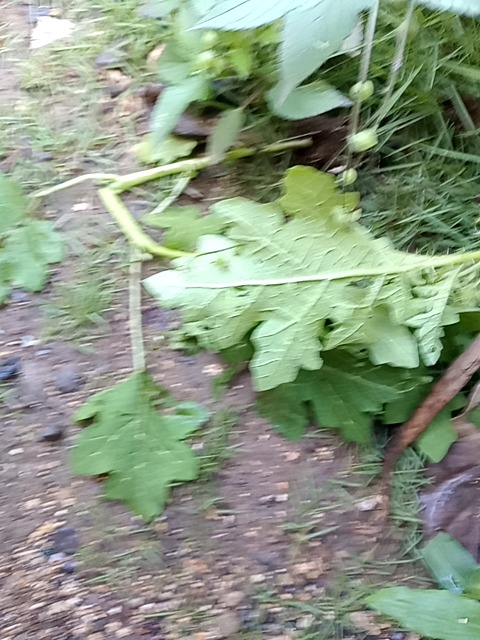
Based on the visible features in the photo, the plant appears to be a grape vine (Vitis species), a deciduous climbing or sprawling vine known for its large, lobed leaves arranged alternately along a woody or herbaceous stem. The leaves shown are broad and palmately lobed with irregular, deep sinuses, which is characteristic of many grape varieties. The stem appears green and flexible, suggesting a young vine or a plant that has recently grown and spread along the ground, possibly with tendrils or a light climbing habit. While the photo provides a good hint, identifying the exact species or cultivar from leaves alone can be tricky, since wild grape species and many cultivated grape varieties share similar leaf shapes. If you have access to the plant during fruiting, or can share a photo of the tendrils, bark, or grape clusters, that would help confirm the ID more precisely. For now, this description treats it as a grape vine, which is a reasonable and commonly encountered plant with this leaf morphology. Description and key characteristics - Leaves: Deciduous, broad, and alternately arranged along the stem. Leaves are typically lobed (often 3–5 lobes) with serrated margins and prominent veins radiating from the petiole. The leaf surface is usually medium to dark green, sometimes with a slightly glossy or matte finish depending on age and variety. - Vines and habit: Grapevines are climbing or trailing woody plants that produce flexible stems. When young, stems are green and can sprawl along the ground or be trained onto a trellis or support. Mature vines develop a woody framework. The plant in the photo shows a creeping habit rather than a fully upright, woody shoot, which is common in many garden situations where vines are not fully trellised. - Growth environment: Grapevines prefer a sunny position with well-drained soil. They tolerate a range of soil types but perform best in fertile, loamy soils with good drainage. They often spread vigorously if unconfined, forming dense canopies and, over time, a substantial root system. - Reproduction and fruit: Grapevines produce grapes in clusters when mature. Each fruiting cycle depends on the cultivar and climate. The fruiting organs are not visible in your image, but the presence of a grape vine is typically associated with small, inconspicuous flowering clusters that give way to berries later in the season. - Additional features: Many grape varieties produce tendrils opposite the leaves that help the vine climb supports. The color of new growth is often light green, becoming more woody and brown with age. Care and cultivation (general guidelines) - Site and training: If you want to encourage fruit production and a neat appearance, provide a sturdy support structure such as a trellis, arbor, or sturdy fence. Grapevines respond well to training and pruning. A sunny location that receives at least 6–8 hours of direct sunlight per day helps maximize fruit set and sugar content. - Soil preparation: Prepare well-drained soil rich in organic matter. Incorporate compost or well-rotted manure to improve soil structure and fertility. Grapevines tolerate a range of pH levels but generally prefer a slightly acidic to neutral pH (around 6.0–7.0). - Watering: Water deeply and regularly while establishing, but avoid waterlogging. Once established, grapes benefit from deep, infrequent watering rather than frequent light watering. In particularly hot or windy conditions, supplemental irrigation may be needed to maintain steady growth and fruit development. - Mulching: Apply mulch (straw, wood chips, or compost) around the base of the plant to conserve moisture, suppress weeds, and stabilize soil temperatures. Keep mulch a few inches away from the trunk to prevent rot. - Feeding: Grapevines typically don’t require heavy feeding if soil is reasonably fertile. In early spring, a balanced fertilizer or a compost/top-dress can support new growth. Avoid excessive nitrogen late in the growing season, which can delay ripening and reduce fruit quality. - Pruning and maintenance: Pruning is the key to good grape production and health. In most temperate regions, pruning is done during the dormant season. The goal is to balance fruiting canes (which bear fruit) with vegetative shoots that restore the plant’s structure for next year. Training methods vary (cordon, cane pruning, etc.), so choose a method appropriate for your climate and space. Remove weak or diseased wood and keep an open canopy to improve air circulation and reduce disease pressure. - Pest and disease management: Grapevines are susceptible to several pests and diseases, including powdery mildew, downy mildew, botrytis (gray mold), phylloxera, grape leafhoppers, and various beetles. Good cultural practices—sunlight exposure, air movement through proper pruning, and clean- up of fallen leaves—reduce risk. If problems arise, use appropriate horticultural oils, sulfur or copper-based fungicides (where permitted), or targeted organic or synthetic controls. Insect monitoring and regular scouting are essential for early intervention. - Harvesting: Grapes are typically harvested when they reach the desired sweetness and flavor, which is cultivar- and climate-dependent. Brix measurements or taste tests are common ways to determine readiness. Harvesting at the right time is important for flavor and storage quality. After harvest, berries can be eaten fresh, dried into raisins, or used for juice and winemaking depending on the cultivar. Propagation and regenerative potential - Propagation by cuttings: Grapevines are commonly propagated from hardwood cuttings taken in winter or from green cuttings in late spring. Desired wood is cut into sections that include a few buds, then rooted in a moist, well-drained medium. With proper moisture and warmth, cuttings will form roots and eventually establish new vines. - Layering: A simple way to propagate is to bend a low-growing stem to the soil, cover a portion with soil while still attached to the parent plant, and wait for it to root. Once rooted, it can be separated and transplanted. - Seed propagation: It is possible but less reliable for fruit quality and may require several years to reach fruiting, if it fruits at all. Most gardeners prefer vegetative propagation to preserve cultivar traits. Uses, benefits, and cautions - Edible fruit: Grapes are a global staple, with varieties suited for fresh eating, drying (raisins), juice, and wine production. The flavor, texture, and color of grapes vary widely among cultivars and growing conditions. - Ornamental value: Even when not fruiting, grapevines can be attractive due to their lush foliage, seasonal color changes, and the architectural lines they provide on fences or trellises. - Cautions: If the plant is a wild grape or a less familiar cultivar, taste or harvest only ripe, fully colored fruit to avoid sourness or unpalatability. Be mindful of potential pesticide exposure on home-grown vines and follow local guidelines for handling and processing fruit. In some climates, young vines can be susceptible to sunburn on leaves; providing some shade during the hottest part of the day for new growth can help establish resilience. A note on identification and next steps - If you have access to the plant in fruit or with tendrils, posting a photo of the fruit clusters or the tendril structure can help confirm the ID with higher confidence. Additionally, close-ups of the leaf underside, leaf petiole, and bark on older wood can aid differentiation among Vitis vinifera cultivars and wild grape species. - If you discover that the plant is not a grape (for example, if the leaves are from a totally different plant form), you can share another photo showing a broader view of the plant, including the growth habit, flowers, and any fruiting structures, so an alternative identification can be offered and tailored care guidance provided. In summary The plant in your photo most closely resembles a grape vine (Vitis sp.) due to its large, lobed leaves and creeping/vining habit. Grapevines are versatile, long-lived plants that can be grown for fruit, shade, or ornamental purposes. They require a sunny site, well-drained soil, and regular but not excessive watering, along with diligent pruning and training to keep the plant healthy and productive. With proper care, grapevines can provide years of harvest and visual appeal, whether you’re growing them for fresh grapes, winemaking, or decorative landscaping. If you can confirm the fruit or provide additional photos, I can refine the identification and tailor the care recommendations even more precisely.
식별 시간
2026년 3월 24일
안내
식집사의 기능은 AI를 사용하고 있어 부정확 할 수 있습니다. 단순 재미와 참고용으로만 사용해주세요.
식물 결과에서 바로 할 수 있는 일
이름을 확인한 뒤 공식 식물 DB에서 관리 정보를 바로 확인하세요.