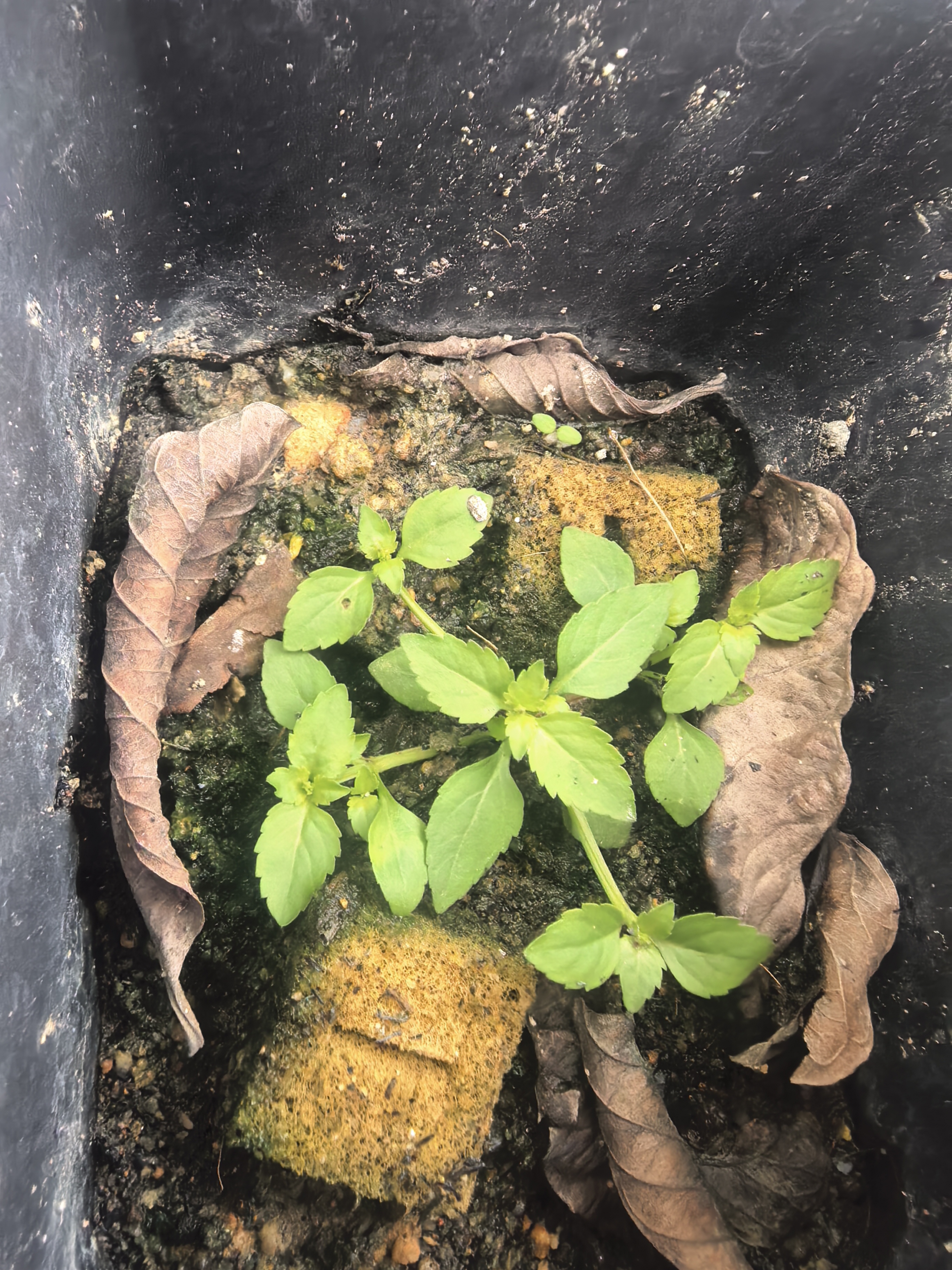
Tomato seedling (Solanum lycopersicum) – likely volunteer
설명
The plant in the photo appears to be a young tomato seedling, or at least a plant very closely related to tomatoes (Solanaceae). This is a common volunteer in pots and gardens, often arising from tomato seeds that were inadvertently mixed into potting soil or compost. The shoot is slender and green with small, bright green leaves that have a serrated or scalloped edge. Early true leaves on tomato seedlings can look modest and lightly toothed, and the growth habit tends to be an upright and branching stem. While the image is not a perfect, textbook seedling of tomato, the overall morphology aligns more closely with tomato or a related nightshade than with many other common pot weeds (for example, mint, nettle, or many broadleaf weeds). If you crush a leaf and detect a distinctive tomato-like aroma, that would further support the identification. With that caveat in mind, here is a thorough care guide for a young tomato-like plant growing in a container, along with notes on alternatives if it is not a tomato. Identification cues and quick checks - Leaves: Small, green, with shallow serrations. They appear opposite along the stem in a sequence that is typical of many herbaceous plants, but the overall look resembles a Solanaceae seedling rather than a perfect mint or nettle. Tomato seedlings often show a few simple true leaves with toothed margins before developing more deeply lobed leaves later. - Stem: Green, slender, and somewhat hairy to the touch in more mature stages of tomato plants. Hairiness is a common trait in tomato stalks and helps differentiate from many smooth-leaved herbs. - Habit: Upright growth with multiple nodes and new leaves developing from the tip. In containers, tomatoes can stay compact if pruned or stunted by limited root space. If you want to confirm in person, you can try a couple of quick checks: - Smell a leaf: Tomato leaves have a characteristic earthy, slightly spicy scent when crushed. Most other common weeds do not smell tomato-like. - Look for a faint hairiness along the stem or leaf midribs, a hallmark of many tomato seedlings. - Observe growth pattern over a week or two: a tomato plant tends to push out new leaves with a consistent pattern of modest lobing in later leaves, whereas many weeds will remain more uniformly simple in their early stages. Care and growing guidelines (about 1000 words of practical steps) 1) Light and placement - Ideal light: Tomato plants thrive with bright, direct sunlight. Aim for at least 6–8 hours of sun per day. In very hot climates, some protection during the hottest part of the day can prevent leaf scorch, but still keep as much sun as possible. - Indoor considerations: If grown indoors, place the pot near a sunny window or supplement with a high-quality full-spectrum grow light placed about 2–4 inches above the plant, gradually increasing to an altitude that keeps the plant in strong, even light without overheating the soil. - Rotating plants: Rotate the pot every few days so all sides of the stem receive light, encouraging a sturdy, evenly branched plant rather than a leggy, slanted one. 2) Container, soil, and repotting - Pot size: A single tomato seedling will eventually need a larger volume of soil to satisfy its growing roots. Start in a small 4–6 inch pot to establish the plant, then transplant into a larger container (at least 12–16 inches in diameter and 12–14 inches deep) or a deep tub as it grows. Deeper pots support better root systems and stability for taller plants. - Soil mix: Use a well-draining, nutrient-rich potting mix. A good baseline is a mix of high-quality potting soil with compost or well-rotted organic matter. Some gardeners add perlite or pumice to improve drainage and aeration. - Drainage: Ensure the pot has drainage holes to prevent waterlogging, which is particularly harmful to tomato seedlings. - Transplanting: If the plant grows larger and shows more extensive root development, carefully transplant to the bigger container. Minimize root disturbance by gently loosening the root ball and placing it a bit deeper in the new pot to encourage a stronger stem and more volume for roots. 3) Watering and humidity - Watering pattern: Keep the soil consistently moist but not waterlogged. Tomato roots do not tolerate long periods of drought or soggy soil. Water deeply when the top inch of soil dries out, and adjust frequency based on the container size, warmth, and humidity. - Mulching: A light layer of mulch (straw, shredded leaves, or compost) helps retain soil moisture, keeps the roots cooler, and reduces weed competition. - Humidity: Moderate humidity supports healthy leafy growth. In very dry indoor conditions, a gentle misting or a small humidifier nearby can help, though tomatoes generally do fine with typical indoor humidity. 4) Fertilizing and nutrition - Baseline fertility: Start with a balanced, water-soluble fertilizer or a granular slow-release fertilizer formulated for vegetables. Avoid high-nitrogen fertilizers early on, as excessive nitrogen can encourage lush foliage at the expense of fruiting later on. - Feeding schedule: After transplanting to a larger pot and once the plant has established, feed every 2–3 weeks with a balanced fertilizer (for example, 10-10-10 or similar N-P-K ratio) or follow the label for container vegetables. As the plant develops flowers, switch to a fertilizer with a slightly higher phosphorus and potassium content to support fruit set and growth. - Micronutrients: Tomatoes benefit from micronutrients like magnesium (for leaf health) and calcium (to help prevent blossom end rot). A well-rounded fertilizer or a calcium-containing product can be beneficial if soil calcium is low. 5) Support, pruning, and training - Staking or caging: For indeterminate tomato varieties (vining types), provide a stake or grow a cage to support vertical growth and keep the plant off the ground. This improves air circulation and reduces disease risk. - Suckering: As the plant grows, it will produce shoots called suckers in the crotch between the main stem and a branch. In container-grown tomato plants, you can remove suckers below the first flowers to encourage a more compact form, or allow some suckers to grow if you want a bushier plant. Be mindful of not removing new growth too aggressively. - Pruning: Light pruning to improve airflow can help reduce disease risk, especially in humid environments. Avoid heavy pruning early on, as the plant still needs leaf area to feed itself and develop fruit. 6) Temperature and climate - Temperature range: Tomato plants generally grow best in daytime temperatures of 21–29°C (70–85°F) and night temperatures above 15°C (60°F). Very hot or very cold swings can slow growth or harm flowering. - Outdoors: If you plan to move outdoors, acclimate the plant gradually (a process called hardening off) by starting in partial shade and gradually increasing sun exposure over 7–14 days. 7) Pests and diseases to watch for - Common pests: Aphids, whiteflies, spider mites, and tomato hornworms are among the common invaders. Regular inspection of the undersides of leaves helps you catch problems early. - Diseases: Early blight, late blight, and powdery mildew can affect tomato plants. Good airflow, plant spacing, and watering at the base (not overhead) help reduce disease risk. If you notice yellowing leaves, dark spots, or fuzzy growth on leaves, investigate and take action promptly (removing affected leaves, applying approved organic or chemical controls as appropriate). - Integrated management: Encourage beneficial insects, keep the area clean of fallen plant matter, and avoid overhead watering in the evenings to minimize leaf wetness that favors disease. 8) When and how to harvest (if this is a tomato plant) - On the plant: Tomatoes are usually ready to harvest when they have fully developed color (red, orange, yellow, or purple depending on the cultivar) and feel slightly soft to the touch. Color development can take several weeks after blossoming. In a container, adequate sun and consistent warmth help ripening. - Storage: Store ripe tomatoes at room temperature away from direct sunlight. Refrigeration can affect flavor and texture; only refrigerate if fully ripe and you cannot consume them promptly. If it turns out the plant is not a tomato, here are alternative possibilities and how care would differ: - Nettle (stinging nettle) or mint-family weed: If the seedling is a nettle or a member of the mint family, you might notice a stronger scent when leaves are crushed, and the plant may spread more quickly via runners or compact growth. For nettles, avoid contact with the skin due to stinging hairs; for mint, growth can be quite vigorous and invasive. Care focuses on mowing or trimming to prevent spread, or removing the plant entirely if it is unwanted. - Other vegetables (pepper, eggplant): Pepper or eggplant seedlings can resemble tomato seedlings in early stages. If so, provide similar sun and warmth requirements, but be mindful of species-specific differences such as fruiting habit and pruning needs. - Broadleaf weeds: If it is a non-tomato weed, the best approach is to identify by leaf shape, scent, and growth habit, then remove promptly to avoid competition with your desired plants. General maintenance tips for container plants like this, regardless of exact species - Monitor moisture carefully. Container soil dries out faster than ground soil, so you may need to water more often, especially in bright sun. - Keep an eye on soil quality. If the soil begins to compact or lose fertility, top-dress with compost or re-pot into fresh potting mix to maintain vigor. - Space and airflow are important. Too-dense plantings encourage disease. If you have more than one plant in a pot or nearby pots, consider spacing out or repotting to ensure good airflow. - Labeling. If you’re growing tomatoes or similar plants side-by-side, labeling helps you remember care routines and prune strategies relevant to each plant. Bottom line - The plant in your photo most closely resembles a tomato seedling or a related nightshade plant, particularly given the leaf shape, growth habit, and context of growing in a pot. Care-wise, treat it as a young tomato: give bright light, steady moisture with good drainage, enriched soil, and the option to stake or cage as it grows. Fertilize gradually, watch for pests and diseases, and transplant to a larger pot if needed to support ongoing growth and, eventually, fruiting. - If your plant proves not to be a tomato upon closer inspection (smell of the leaves, growing pattern, or lack of typical tomato foliage later on), adapt the care to the actual species with attention to light, water, soil, and temperature needs. Either way, a well-drained pot, regular feeding, and consistent sun are the foundations of success for most young container plants.
식별 시간
2025년 12월 29일
안내
식집사의 기능은 AI를 사용하고 있어 부정확 할 수 있습니다. 단순 재미와 참고용으로만 사용해주세요.
식물 결과에서 바로 할 수 있는 일
이름을 확인한 뒤 공식 식물 DB에서 관리 정보를 바로 확인하세요.