American pokeweed (Phytolacca americana)
설명
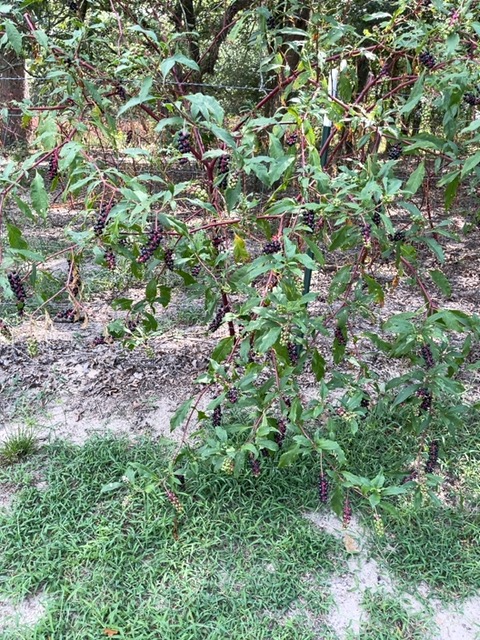
The plant in the photo closely resembles American pokeweed (Phytolacca americana), a tall, herbaceous perennial that often forms a multistemmed clump with reddish-purple stems. It is known for its very long, hanging racemes of dark purple to almost black berries. The leaves are large, simple, and alternately arranged, with a smooth, slightly glossy surface and a broad, oval to oblong shape. Young growth may be reddish or green, but the stems typically take on a vivid pinkish to wine color as the season progresses. The overall look is one of a vigorous, somewhat untidy shrub or large understory plant that can reach several feet to more than a meter in height, depending on climate and management. The berries are held on pendant clusters that dangle from the stems, creating a striking, dramatic appearance in late summer and autumn. A milky sap may exude if a stem is broken, which is characteristic of pokeweed. Key identification features - Large oblong leaves with smooth margins and a pointed tip, up to 20–30 cm long depending on growing conditions. - Stems that are reddish to pinkish in color, often becoming woody-looking at the base as the plant ages. - Inflorescences that form dense, elongated racemes or panicles of tiny white to greenish flowers in summer, followed by long clusters of shiny, dark purple to black berries. - Berries that are arranged densely along the racemes and persist into autumn; birds often consume the fruit and help disperse the seeds. - A plant that often forms a clumping, no-try-to-taste form rather than a single straight trunk, with the base sometimes spreading via rhizomatous roots. Habitat and biology American pokeweed is native to eastern North America but has naturalized in many regions around the world. It commonly grows along roadsides, in open woodland margins, disturbed sites, and hedgerows. In gardens and landscape plantings, it can appear as a clause of drama due to its tall habit and striking fruiting stems. It prefers full sun to light shade and thrives in well-drained soils with moderate moisture. While it can tolerate a range of soil types, it performs best in fertile soils with consistent moisture. It is a biennial or short-lived perennial in many climates, often flowering in its second year and dying back after seed production, though in warmer climates it can persist longer. Toxicity and safety A critical note about pokeweed: all parts of the plant are considered toxic if ingested by humans or many animals. The plant contains a mix of saponins and phytolaccatoxins, among other compounds, which can cause nausea, vomiting, diarrhea, abdominal pain, and more serious effects if large quantities are eaten. Berries are particularly hazardous if consumed in significant amounts, although birds frequently eat them and can disperse the seeds. Because of the toxicity, this plant is generally not recommended for households with children or pets, and care should be taken to avoid accidental ingestion. In some regions, it is considered an invasive weed and a nuisance in managed landscapes. Ecological role Despite its toxicity to people, pokeweed plays an ecological role in the landscape. The berries serve as a food source for many bird species in late summer and autumn, which is one reason the plant commonly persists in the wild—birds help spread its seeds over large distances. The plant’s large, lush leaves can provide temporary shelter for small wildlife, and its late-season structure adds architectural interest to gardens when many other plants have finished fruiting. Care and maintenance - Planting and location: If you choose to grow pokeweed intentionally, select a location with full sun to partial shade and robust soil. It tolerates various soils but does best with consistent moisture and drainage. Avoid planting in areas accessible to children, pets, or grazing wildlife due to its toxicity. - Watering: Keep the soil evenly moist, especially during the establishment phase. Once established, pokeweed can tolerate occasional drought but performs best with regular watering during hot, dry periods. - Fertilization: If the soil is poor, a light feeding with a balanced, slow-release fertilizer in spring can support vigorous growth. Avoid over-fertilization, which can promote excessive leaf growth at the expense of interesting fruiting behavior. - Pruning and size control: Pokeweed can become quite tall and leggy. If you want to keep it manageable, prune back in late winter or early spring before new growth starts. Cutting the plant to the ground and removing the root crown can help in control, but be aware that regrowth may occur from remaining roots or dormant buds. Regular pruning also reduces the risk of its tall, top-heavy canes falling over in wind. - Propagation: The plant readily self-seeds, so you’ll often see new seedlings under mature plants. It can also be propagated by seeds or root cuttings, though root propagation is less common due to the plant’s long taproot. If collecting seeds, sow them in spring after a brief stratification period to improve germination rates. - Pest and disease management: Pokeweed is relatively pest-resistant but can be susceptible to issues that affect overall vigor, such as poor drainage or nutrient deficiencies. Monitor for foliage yellowing or poor growth, which may indicate root problems or environmental stress rather than a pest issue. - Seasonal care: In some climates, the plant can die back after frost and re-emerge from the roots in spring. In warmer regions, it may persist year-round. Deadheading spent flower clusters can help reduce self-seeding if you do not want more volunteers in subsequent years, though many gardeners appreciate the birds and the dramatic seed displays. Practical uses and cautions - Ornamental value: The plant is often grown for its dramatic late-summer and autumn fruiting display. The contrast of glossy green leaves with the deep purple-black berries and pinkish stems can be striking in mixed borders or naturalistic plantings. - Historical uses: Historically, pokeweed was used as a source of ink (hence the common name “inkberry”). Some cultures have used young greens as a cooked greens dish (poke salad) after meticulous preparation to reduce toxicity, but this practice is risky and not recommended for foragers without expert guidance, due to the potential for severe poisoning. - Wildlife gardens: If you are aiming to attract birds, pokeweed can be a productive choice because the berries are an important late-season food source for many species. However, be mindful that the plant’s toxicity remains a risk if children or other non-target animals access the berries. Managing interruptions and alternatives - If you live in an area where pokeweed is considered invasive, or you simply want a less aggressive plant, consider replacing it with non-toxic, less self-seeding species that provide similar vertical interest and berry-like appeal, such as certain viburnums, elderberries (Sambucus) with caution, or ornamental pear cultivars. If you already have pokeweed and want to control it without chemicals, repeatedly mowing or cutting back to the ground during the growing season can exhaust the root system and reduce vigor over time, though patience is required. - For poison-sensitive households, ensure proper labeling and containment. Wear gloves when handling the plant, wash hands after pruning, and dispose of clippings away from children and pets. In summary What you see in the photo is most consistent with Phytolacca americana, commonly called American pokeweed. It is a striking plant with large leaves, pinkish-red stems, and long, dangling clusters of dark berries. While it can be grown as an ornamental, it is highly toxic and tends to spread by seed, which can make it invasive in some regions. If you decide to grow it, provide a sunlit, moist site, manage its size through pruning, and be mindful of safety around children and animals. If you prefer not to grow it, removing the plant or replacing it with non-toxic alternatives is a prudent choice. Even when grown as a garden specimen, respect its dual nature: beautiful and dramatic, but dangerous if ingested.
식별 시간
2025년 8월 23일
안내
식집사의 기능은 AI를 사용하고 있어 부정확 할 수 있습니다. 단순 재미와 참고용으로만 사용해주세요.
식물 결과에서 바로 할 수 있는 일
이름을 확인한 뒤 공식 식물 DB에서 관리 정보를 바로 확인하세요.