Laburnum (Golden Rain / Golden Chain)
설명
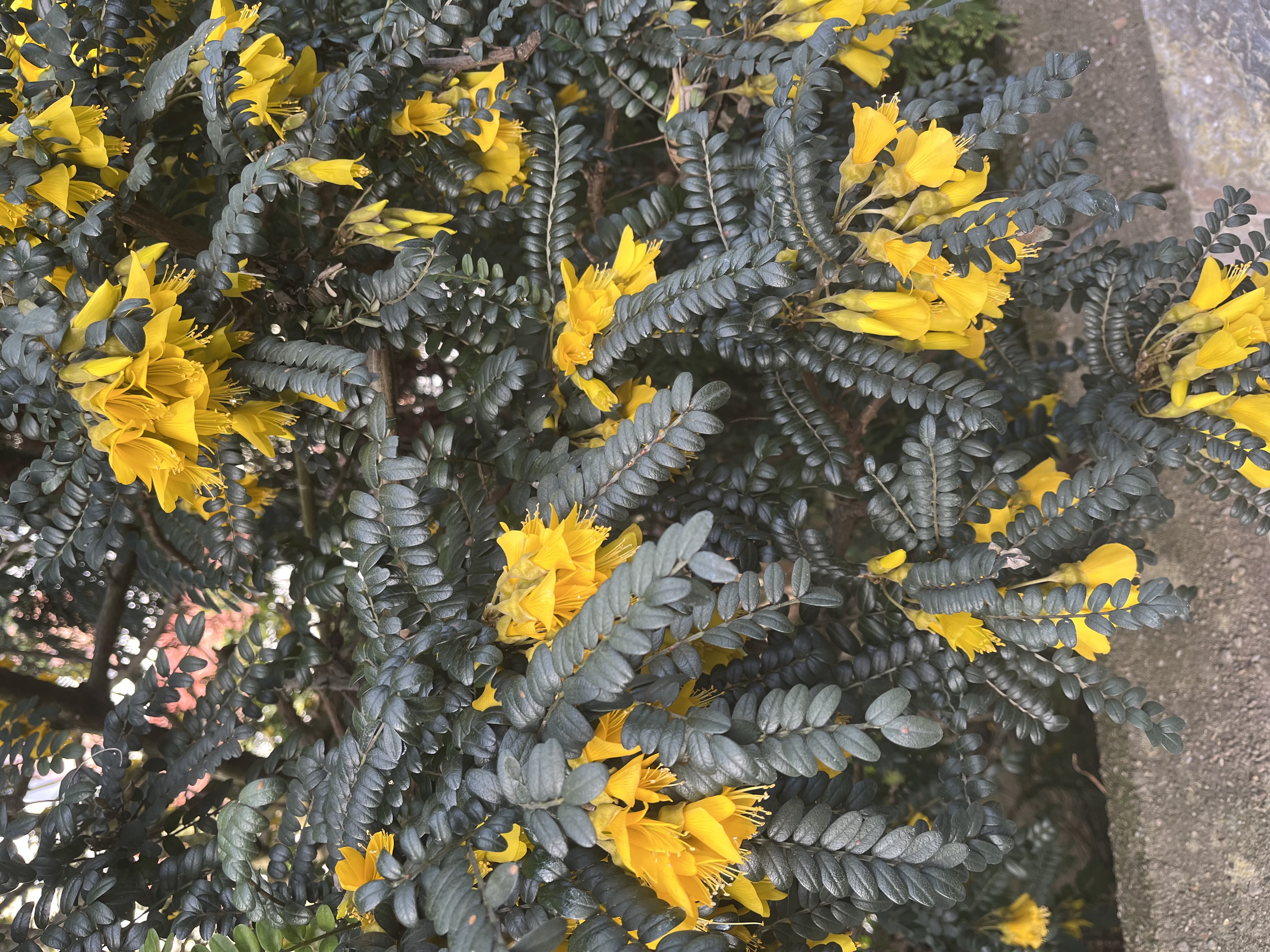
The plant shown in the photo most closely matches a Laburnum, commonly called golden rain or golden chain. It is a deciduous shrub or small tree valued for its spectacular spring display: long, pendent racemes of brilliant yellow pea‑like flowers, often appearing in large numbers along the branches. The foliage is feathery and attractive year‑round, with finely divided, pinnate leaves that give the plant a delicate, lacy look even when the blossoms are not in bloom. While it is often grown as a small tree, many gardeners prune and train Laburnum into a vigorous shrub or informal hedge, which may explain the dense, cascading habit seen in the image. Identification cues from the image: - Leaves: The plant bears pinnate leaves composed of many small, oval leaflets arranged along a central rachis. The leaflets are tightly packed and give the foliage a dark, bluish‑green tone. This feathery, twice‑pinnate appearance is a hallmark of Laburnum and related Fabaceae shrubs. - Flowers: The bright yellow flowers appear in clusters along the branches, with each individual blossom resembling a typical papilionaceous (pea‑flower) form. The massed clusters and the way they hang from the branches are characteristic of Laburnum racemes bursting with color in spring. - Overall habit: A compact to medium‑sized shrub or small tree with arching, pendant branches, often used ornamentally in temperate gardens. The plant can fill space under a window or along a border with its dramatic yellow display in late spring. About Laburnum: Laburnum is a member of the Fabaceae family and is native to Europe and western Asia, though it has been grown horticulturally around the world. The genus today is most commonly represented in gardens by a few species, with Laburnum anagyroides (the common or golden rain) being a classic choice for the grassy or woodland garden. The allure of Laburnum lies in the luminous yellow blossoms and the airy, gold‑green contrast those blooms provide against the finely textured leaflets. Care and cultivation (practical guidance): - Light and site: - Best performance occurs in full sun to light, bright partial shade. A sunny location promotes abundant flowering and strong growth. In very hot climates, some afternoon shade helps protect the plant from stress while preserving bloom quality. - Soil and drainage: - Laburnum adapts to a range of soils, provided there is good drainage. It tolerates average garden loams and can tolerate mildly acidic to neutral soils. Avoid consistently waterlogged soil, as this can lead to root problems and reduced flowering. - Watering: - Water regularly during the first growing season to establish a strong root system. Once established, Laburnum is relatively drought‑tolerant but will perform best with steady moisture, especially in hot, dry spells during spring and summer. - Fertilization: - Use a balanced, slow‑release fertilizer in early spring if soil is poor or very sandy. Do not over‑fertilize with nitrogen, as excessive vegetative growth can come at the expense of flowering. - Pruning and training: - Pruning is best done after flowering. Laburnum forms flowers on previous year’s wood for many cultivars, so removing old wood too aggressively in winter can reduce bloom next season. Light, formative pruning after bloom helps shape the plant and encourages new flowering wood. Remove any crossed or diseased branches and thin out crowded areas to maintain air movement and vigor. - If grown as a shrub or hedge, light shaping annually is usually sufficient. For a tree form, selectively prune to maintain a balanced canopy rather than a sheared look. - Temperature and hardiness: - Laburnum is hardy in temperate zones and can tolerate cold winters. In very hot tropical or subtropical climates, flowering may be reduced or the plant may not perform as reliably as in its preferred temperate range. - Propagation: - Propagation is typically by semi‑hardwood cuttings taken in late summer or early autumn, or by seed. Seeds require scarification and stratification to germinate, and may take longer to establish. For ornamentally used landscapes, cuttings are the more predictable method. - Pests and diseases: - Laburnum is generally resilient but can suffer from common garden problems such as aphids, scale insects, and leaf spot if conditions stay wet and crowded. Good air circulation, proper spacing, and regular monitoring help keep problems in check. Fungal issues can be mitigated by avoiding overhead irrigation and ensuring the plant dries quickly after rain. - Toxicity and safety: - A critical caution: all parts of Laburnum contain cytisine and are highly poisonous if ingested. The seeds are especially dangerous. Handling the plant typically carries little risk, but avoid consumption of any plant parts, and keep plantings away from curious children and pets. Wear gloves if you are pruning and wash hands afterward. Do not use Laburnum branches for edible crafts or for cooking purposes. - Landscape uses and design notes: - The golden racemes provide a spectacular spring spectacle and can serve as a dramatic focal point, a screens‑or‑ornamental feature along a wall, or a self‑supporting specimen where its arching habit can be admired from multiple angles. When planted near sidewalks or driveways, consider the eventually sprawling branches and potential seed pods that may drop in late summer. Ecology, flowering, and maintenance considerations: - Bloom timing: Laburnum typically flowers in late spring, sometimes extending into early summer depending on climate and growing conditions. The abundance of flowers is a temporary, seasonal event that makes subsequent pruning and care critical to maintaining a balanced, ongoing presence in the garden. - Seed pods and regeneration: After flowering, the plant forms long seed pods that mature through late summer. Those pods are a reminder of the plant’s Fabaceae heritage; they are decorative only for some cultivars but can contribute to seed spread in suitable climates. Regularly removing spent flower clusters and pods helps prevent unwanted self‑seeding and maintains a tidy appearance. - Longevity and vigor: A well‑cared‑for Laburnum can provide many years of beauty. Inappropriate pruning (heavy removal of older wood) or consistently poorly drained soil can weaken the plant, reduce flowering, and increase susceptibility to disease. A gentle, consistent maintenance routine tends to yield the best long‑term performance. In summary: The plant in your photo is best described as a Laburnum (golden rain), celebrated for its luminous yellow blossoms that hang in abundant clusters from feathery, deep‑green foliage. With proper site selection, soil drainage, and a light, post‑flowering pruning routine, Laburnum can be an outstanding focal point in a temperate garden, delivering a spectacular spring chorus of color year after year. It is important to remember its toxicity and to keep this plant away from small children and pets who might be tempted to ingest any part of it. If you value a plant that imposes a dramatic seasonal moment with delicate foliage, Laburnum offers a classic and timeless choice for gardeners seeking a touch of “golden rain” on their landscape.
식별 시간
2026년 3월 11일
안내
식집사의 기능은 AI를 사용하고 있어 부정확 할 수 있습니다. 단순 재미와 참고용으로만 사용해주세요.
식물 결과에서 바로 할 수 있는 일
이름을 확인한 뒤 공식 식물 DB에서 관리 정보를 바로 확인하세요.