Mandevilla (Dipladenia)
설명
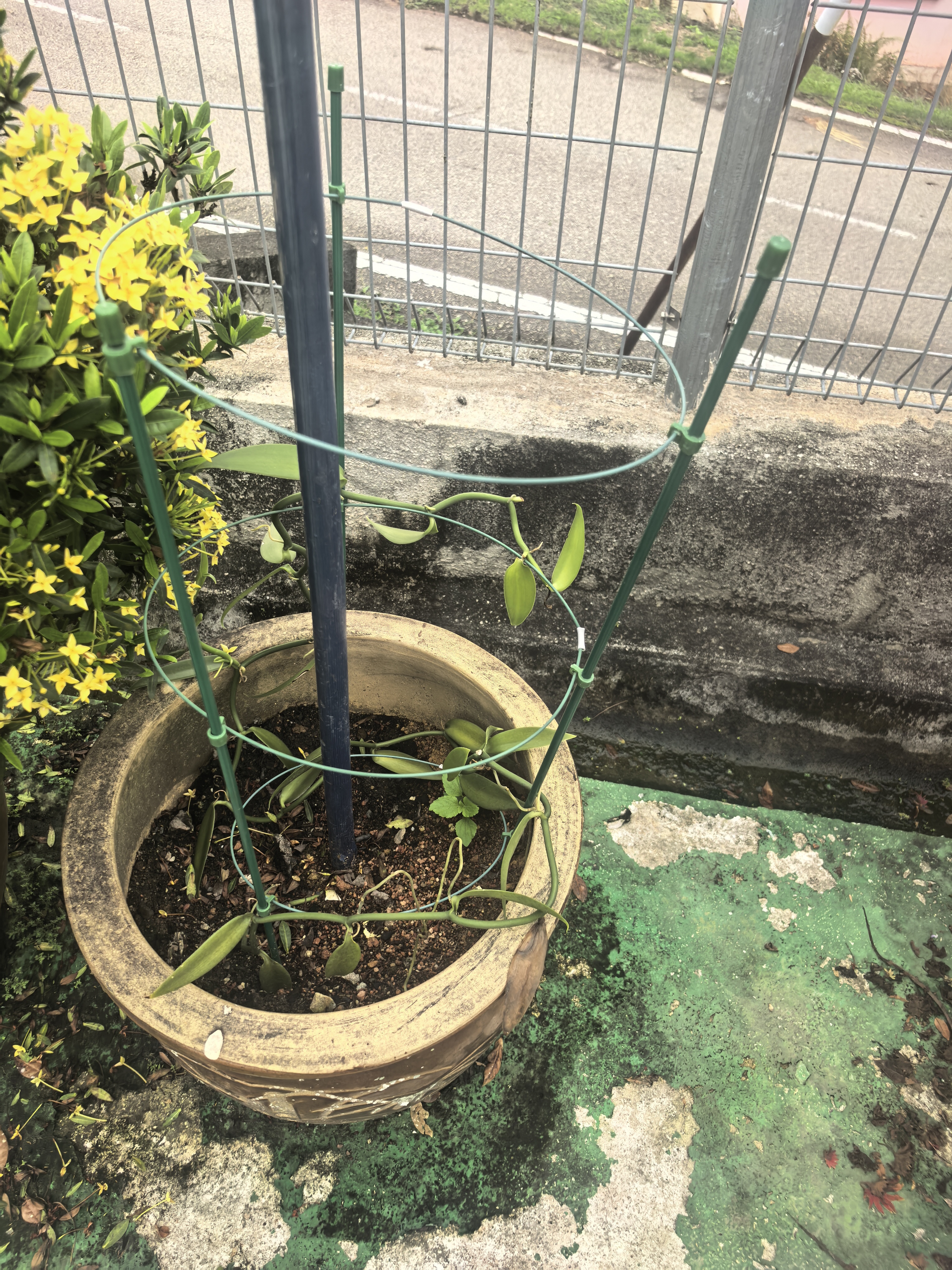
This plant appears to be a tropical climbing vine commonly sold as Mandevilla, with Dipladenia being a frequent closely related name in the trade. In your photo the plant is trained on a circular green support ring attached to stakes, a typical setup for flowering climbers grown in containers. The stems are slender and green, and the leaves are small to medium, glossy green, and simple with smooth margins. The growth habit is that of a twining or climbing vine, which would normally produce showy, funnel‑shaped flowers when in season. The leaves look healthy and firm, suggesting the plant is in either a warm outdoor location or a bright sunny indoor spot. While there are many cultivars, the general picture matches a Mandevilla/Dipladenia type: a glossy-leaved, evergreen tropical vine that is prized for its long, continuous flowering when given proper conditions. The plant you have is most typically grown in pots, on a trellis or ring support, to create a vertical accent in a balcony, patio, or garden corner. For care guidance, I’ll describe the key characteristics of the plant, its preferred environment, and practical steps to keep it thriving and flowering well. Character and features: - Leaves: Opposite pairs, simple, oval to lanceolate, about 2–7 cm long depending on the exact cultivar. They are glossy, leathery, and a rich green color, with relatively smooth edges. The leaf surface contributes to the overall tropical look of the plant. - Stems: Woody to semi‑woody as the plant matures, with slender, climbing vines that can twine around supports. In a container, they are often trained around a ring, stake, or small trellis to encourage vertical growth. - Flowers: While not visible in the photo, Mandevilla flowers are its standout feature. They are typically large, trumpet‑shaped or funnel‑shaped blossoms with five petals, coming in colors such as pink, red, white, or coral. The flowers are usually showy and long‑lasting during warm months, and their presence is a strong indicator of a healthy, well‑cared‑for plant. - Growth habit: Fast‑growing, climber or trailing vine. It can reach several feet in warm climates if supported and given adequate light, water, and fertility. In container culture, regular pruning helps maintain shape and encourages abundant flowering. - Tona and use: A popular choice for containers on patios, balconies, or near entrances. It’s commonly sold as a vine that can be trained on a ring, trellis, or stake, making it an excellent focal point with relatively straightforward care. Care and cultivation (approximately 1000 words): Mandevilla is beloved for its spectacular blooms, but to sustain that flowering and keep the plant healthy, it needs bright light, warmth, and a steady, well‑drained watering routine. Here is a practical guide to growing this plant successfully in a pot, with a focus on the situations suggested by your photo (a pot with a support ring, near a fence or wall). Light and location: - Light: Mandevilla thrives in full sun. Aim for at least 6 hours of direct sunlight per day for the best flowering, especially in spring and summer. In very hot climates, a few hours of afternoon shade can prevent heat stress and leaf scorch, but try to keep it in bright light overall. Indoors, place the plant near a south‑ or west‑facing window where it can receive strong light for most of the day. - Placement: In a container on a patio or balcony, position the plant where it can freely twine around the ring or trellis. Avoid shaded corners that limit flowering. If grown indoors, ensure good air movement to reduce fungal issues. Temperature and humidity: - Temperature: Mandevilla is a warm‑weather plant. It prefers average indoor temperatures in the range of 60–85°F (15–29°C). Protect it from cold drafts and temperatures below about 50–55°F (10–13°C). In outdoor settings, bring it indoors or provide protection during frosty nights in temperate regions. - Humidity: It tolerates normal indoor humidity, but slightly higher humidity helps with bloom and overall vigor. If your air is very dry, especially in winter, occasional misting can be beneficial, provided you don’t leave the leaves damp for long periods. Watering and soil: - Watering: Keep the potting mix evenly moist during the growing season, but avoid waterlogging. The top 1–2 inches of soil should feel lightly dry before you water again. In hot weather, you may need to water more frequently. In cooler seasons or when growth slows, reduce watering to prevent root rot. - Soil: Use a well‑draining potting mix. A standard mix for container Vines with some organic matter is suitable. Adding a bit of perlite or sand can improve drainage. The pot should have drainage holes to prevent water from sitting at the bottom. - Pot size and refresh: As the plant grows, consider a larger pot to accommodate root development and ongoing flowering. If the plant becomes root‑bound, you’ll see reduced vigor and flowering; repotting to a container only slightly larger than the current one helps keep the plant productive. Fertilization and feeding: - Fertilizer: During the active growing and flowering season, feed every 2–4 weeks with a balanced, water‑soluble fertilizer (for example, a 20‑20‑20 or similar ratio) or a fertilizer formulated for flowering plants. A fertilizer higher in phosphorus can help promote bloom. Follow label directions to avoid overfertilization, which can lead to lush green foliage with fewer flowers and possible salt buildup in the pot. - Winter feeding: In winter, when growth slows, reduce or stop fertilization to avoid weak growth. Pruning and training: - Pruning: Prune after flowering or in late winter to keep the plant compact and encourage bushier growth. Remove dead or damaged wood and trim long, leggy canes to maintain a pleasing shape and to stimulate new flowering shoots. If you want a robust climber, pinch young growth to encourage branching. - Training: The circular ring in your setup is a good training structure. Gently tie the vines to the ring or guides with soft ties to avoid damaging the stems. Rotate the plant as needed so that growth occurs evenly around the support. If the vine becomes too long or unruly, you can cut it back to encourage a new flush of growth. Repotting and soil refresh: - Repotting: Every couple of years or when the plant outgrows its pot, transplant to a slightly larger container with fresh potting mix. This provides fresh nutrients and better drainage. - Soil refresh: Even without repotting, you can refresh the top layer of soil annually and add a light application of fresh fertilizer during the growing season. Pests and diseases: - Common issues: Mandevilla can be affected by spider mites, aphids, whiteflies, and scale. Yellowing leaves or sticky residues can indicate pests. Fungal leaf spots can occur in overly damp conditions. - Management: Inspect regularly. If pests appear, wash the leaves with water, apply insecticidal soap or neem oil according to label directions, and ensure good airflow around the plant. For fungal issues, improve spacing and avoid overhead watering late in the day. Propagation: - From cuttings: Take 6–8 inch cuttings from healthy shoots, remove the lower leaves, dip in rooting hormone, and place in a well‑draining medium. Keep the cuttings warm and humid until roots form, which is usually in 4–8 weeks. Once rooted, transplant into a pot and treat as a mature plant. - Layering: You can also attempt simple layering bywounding a low growing stem and covering a section with moist medium until roots appear, then severing and potting the new plant. Common problems and troubleshooting: - Leggy growth: Often a sign of insufficient light. Move the plant to brighter light or provide stronger direct sun if safe for the location. - Leaf yellowing: May indicate overwatering or poor drainage, or possibly a nutrient deficiency. Check the soil moisture, ensure the pot drains well, and adjust watering and feeding accordingly. - Flowering issues: If flowering is sparse, ensure the plant receives adequate light and is not stressed by drought, overwatering, or nutrient deficiencies. Deadhead spent flowers to encourage new blooms. Toxicity and safety: - Caution: Like many members of the Apocynaceae family, mandevillas contain milky sap that can irritate the skin and mucous membranes on contact. Avoid ingestion. If you have children or pets that chew on plants, place the plant where it cannot be disturbed, or choose a non‑toxic alternative for households with curious pets. When pruning or handling, it’s prudent to wear gloves and wash hands afterward. Seasonal notes: - In temperate regions, mandevilla is treated as a warm‑season plant. It is typically planted in spring after the danger of frost has passed and, if kept outdoors, benefits from the warmth of summer. In autumn, as daylight shortens and temperatures fall, growth slows and flowering declines. In many homes or mild climates, the plant can continue to bloom into early fall if kept in bright light and well‑fed. During winter, if the plant is kept indoors, minimize water and fertilizer, and provide bright, stable temperatures to preserve the plant through the season. Summary and practical tips for your setup: - You are using a support ring, which is excellent for keeping the vine neat and encouraging vertical growth. Tie new growth carefully to the ring so it can climb without being crushed. - Ensure the pot has drainage holes and a well‑draining mix. A pot that holds water around the roots will quickly lead to problems if the plant is actively growing. - Provide bright light, stable warmth, and regular feeding during the growing season to maximize flowering. Watch for pests and signs of stress, and adjust watering and fertilization as needed. - If you are new to mandevilla, start with a moderate pot size and a shallow pruning routine to learn the plant’s growth pattern. As you gain experience with your specific cultivar, you’ll be able to fine‑tune light, water, and feeding to achieve the best display of blooms. Overall impression: - The plant in your photo, with its glossy leaves and the ring trellis, matches a mandevilla/dipladenia type, a reliable choice for adding a tropical, flowering element to outdoor spaces or sunny indoor corners. With attentive care—plenty of light, warmth, regular moisture without saturation, periodic feeding, and thoughtful pruning—the plant will reward you with a long season of vibrant flowers and a lush, graceful presence in your pot arrangement.
식별 시간
2025년 12월 29일
안내
식집사의 기능은 AI를 사용하고 있어 부정확 할 수 있습니다. 단순 재미와 참고용으로만 사용해주세요.
식물 결과에서 바로 할 수 있는 일
이름을 확인한 뒤 공식 식물 DB에서 관리 정보를 바로 확인하세요.