Sansevieria (Snake Plant)
설명
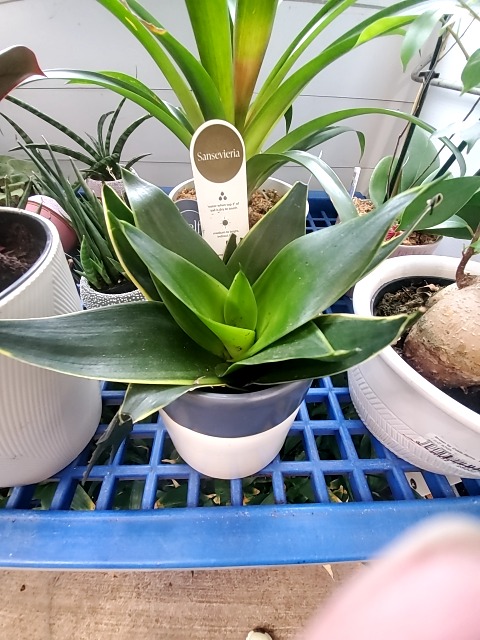
Sansevieria, commonly known as snake plant or mother-in-law's tongue, is a hardy evergreen perennial native to tropical West Africa. The plant in the photo appears to be a compact, rosette-forming cultivar with broad, sword-shaped leaves that emerge from a short crown. The leaves are thick, firm, and dark green with a smooth, waxy surface. The overall look is architectural and upright, which makes this species a popular choice for interior decoration and low-maintenance gardening. While many people recognize Sansevieria for its tall, vertical, blade-like leaves, there are rosette-forming cultivars that stay relatively compact, especially when grown in small pots or in conditions that limit vigorous growth. The plant’s rosette in the image sits close to the soil and may produce small offsets (pups) at the base over time, which can be separated and potted to propagate a larger clump. The label visible in the pot confirms the genus Sansevieria, which is now often treated as Dracaena in some classifications and commonly kept under the common name snake plant. Botanical characteristics and identification cues: - Leaves: The Sansevieria leaf is a thick, succulent-like, sword-shaped structure with a rigid, upright posture. In many cultivars, leaves are solid green or feature variegation (yellow or light green margins or striped patterns). The photo shows a solid green leaf type with a broad, flat-to-tuscan blade. The leaf tip is sharp, and the leaf surface is glossy and resistant to water loss, a hallmark of succulents adapted to arid or well-drained habitats. - Growth form: Sansevieria typically grows from a rhizome or hidden stem. In cultivated settings, many plants form a crown from which multiple leaves radiate. Some forms remain compact, forming tight rosettes, while others grow tall and upright in a vase-like fashion. Offsets arise at the base and can be separated for propagation. - Size: In homes, the size varies by cultivar. Small rosette forms may stay under 12–18 inches (30–45 cm) tall, while taller varieties can reach 2–3 feet (60–90 cm) or more with age if given space and light. The plant in the image is a relatively compact specimen, suitable for tabletops, shelves, or office desks. - Flowers: When grown in optimal light and favorable conditions, mature Sansevierias may produce a tall flower stalk with pale green or white tubular flowers. Indoor flowering is relatively uncommon but possible for well-cared-for plants. - Tolerance and resilience: Sansevierias are renowned for their hardiness and tolerance of a wide range of conditions. They handle neglect, inconsistent watering, low light, and varying temperatures better than many other houseplants. Their thick leaves store water, enabling them to withstand drought-like periods without injury. Caring for Sansevieria: practical guidelines for home cultivation - Light: Sansevierias prefer bright, indirect light, which helps maintain leaf color and vigor. They will tolerate lower light levels, making them suitable for rooms with less natural light or office spaces. In very bright, direct sun, leaves may develop sunburn or tip browning; if you must place them in strong sun, gradually acclimate the plant and provide light shading if needed. - Watering: One of the most important care aspects is watering discipline. Allow the soil to dry almost completely between waterings. Water deeply, then let excess water drain away. In winter, reduce watering even further, as the plant’s growth slows. It is better to underwater than overwater Sansevieria, because soggy soil can lead to root rot and fungal issues. In a small pot, the soil may dry quickly, so check moisture level regularly. - Soil and drainage: Use a well-draining potting mix. A cactus or succulent mix is often ideal, sometimes amended with extra perlite or pumice to improve drainage. Ensure the pot has drainage holes to prevent water from sitting at the bottom. - Temperature and humidity: Sansevierias tolerate a wide temperature range but prefer temperatures from roughly 60–85°F (15–29°C). They are not frost-tolerant; protect from freezing temperatures. They tolerate typical household humidity very well and do not require high humidity. - Fertilization: Feed lightly during the growing season (spring and summer) with a balanced, water-soluble fertilizer diluted to half strength, about once a month. Do not fertilize in fall or winter when the plant’s growth slows. - Pruning and maintenance: Remove any yellowing or damaged leaves at the base with clean scissors or a knife. Wipe the leaves occasionally with a damp cloth to remove dust, which helps photosynthesis and prevents pests. If pups appear, they can be left to form a clumping plant or separated and potted individually when they are sizable enough with their own root systems. - Propagation: Propagation is commonly achieved by separating offsets (pups) from the base or by leaf cuttings. Pups are often easier, providing a reliable way to create additional plants. For leaf cuttings, cut a healthy leaf near the base, let the cut end callous for a day or two, then place in well-draining soil. Roots should develop in a few weeks to a couple of months; keep the soil just barely moist during rooting. - Pests and problems: Sansevierias are relatively resistant to pests but can occasionally suffer from mealybugs, spider mites, or scale. If pests are detected, treat with a mild insecticidal soap or rubbing alcohol on a cotton swab. Overwatering is a frequent issue; if leaves become soft, yellow, or mushy, reduce watering and inspect roots for rot. Poor drainage or cold drafts can also cause stress symptoms. - Toxicity: This plant is mildly toxic to pets and humans if ingested. Pets like cats and dogs may experience vomiting or diarrhea after chewing on the leaves. If you have curious children or animals, place the plant out of reach or choose a non-toxic alternative. Practical tips and design notes for placement - A Sansevieria with a compact rosette, like the one in your photo, is ideal for tabletops, shelves, or grouped displays. Its strong vertical habit and clean lines complement modern interiors and can act as a visual anchor in a collection of varied plants. - Pairing ideas: Combine with other low-maintenance plants such as pothos, ZZ plants, or pothos for contrast in leaf texture. Use a shallow dish or tray to catch excess water and keep the display neat. - Aesthetic considerations: If the plant has uniform green leaves, keep an eye on the leaf tips for signs of dehydration in dry indoor air. If you notice browning tips, adjust watering and consider increasing ambient humidity or moving the plant to a slightly less dry location. - Air quality and health claims: Sansevierias are often cited for their air-purifying qualities due to their ability to perform photosynthesis at night. While this is a topic with some debate and depends on many variables, having several plants indoors can contribute to a fresher feel and improved room aesthetics. In summary, the plant in the image is a Sansevieria, a versatile, low-maintenance houseplant renowned for its architectural rosette form, drought tolerance, and resilience in a range of indoor conditions. It favors bright, indirect light but tolerates lower light; it thrives with infrequent watering and well-draining soil; it grows slowly but steadily, producing pups that can be propagated to create larger clumps. With proper care, it will remain a striking, long-lived addition to homes and offices, offering both visual appeal and modest air-quality benefits. If you follow straightforward practices—allowing soil to dry between waterings, using a well-drained mix, and keeping the plant away from cold drafts—you should enjoy a healthy, attractive specimen for many years.
식별 시간
2026년 1월 3일
안내
식집사의 기능은 AI를 사용하고 있어 부정확 할 수 있습니다. 단순 재미와 참고용으로만 사용해주세요.
식물 결과에서 바로 할 수 있는 일
이름을 확인한 뒤 공식 식물 DB에서 관리 정보를 바로 확인하세요.