Heartleaf Philodendron (Philodendron scandens)
설명
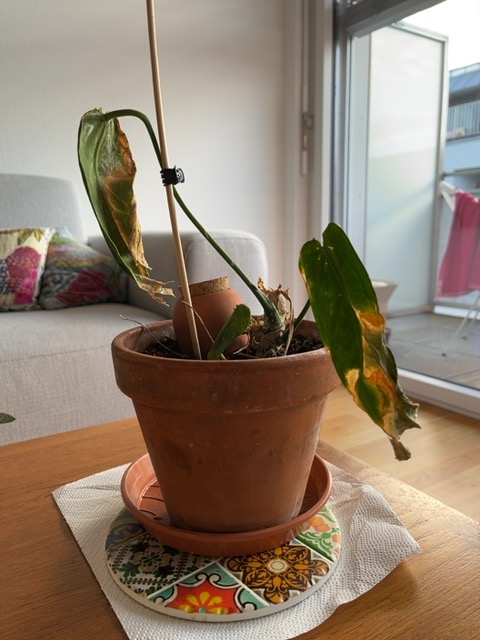
The plant in the photo resembles a Heartleaf Philodendron (Philodendron scandens), a classic climbing vine in the arum family. It is a popular houseplant because of its forgiving nature, glossy dark-green leaves, and easy propagation. In many homes it is grown as a trailing plant on a shelf or as a climber using a stake, moss pole, or trellis. The plant in the image shows a long, slender stem with a couple of large, drooping leaves and a support stake. The leaves are elongated and heart-shaped with a glossy surface. Some older leaves are turning yellow or developing brown, dry edges, which often indicates watering issues, low humidity, or light stress. Overall, the plant’s morphology and growing habit point toward a philodendron that is meant to climb and trail rather than to stay small and compact. While philodendrons tend to be sturdy, the health of the plant benefits from a few consistent care practices described below. Size and structure - This species is a vining tropical climber. It naturally produces long green stems that can grow several feet in length indoors when given support and favorable conditions. - Leaves are simple, alternate, and usually heart-shaped in younger growth, becoming larger as the plant elongates. They are typically glossy dark green, though some cultivars may show subtle variations. - In the photo, the plant is tied to a stake, which is a common way to guide its growth and encourage a neater, upright presentation. A moss pole or trellis is a good option for this plant if you want a fuller vertical growth habit. Care overview - Light: Heartleaf Philodendron tolerates a range of indoor light levels but performs best in bright, indirect light. It can survive in lower light, but growth slows and leaves may become smaller or lighter in color. Avoid direct sun, which can scorch the leaves. - Water: Water when the top 1–2 inches (2.5–5 cm) of the soil feel dry to the touch. Thoroughly water until moisture drains from the bottom of the pot, then allow excess to drain away. Do not let the plant sit in a waterlogged saucer, as this can lead to root rot. In winter, reduce watering as growth slows. - Humidity and temperature: Average indoor humidity is usually adequate, but this plant appreciates higher humidity (around 40–60%). Provide warmth in the typical house range (about 65–80°F / 18–27°C). Keep away from cold drafts and sudden temperature drops. - Soil and repotting: Use a well-draining potting mix suitable for aroids (a mix of standard houseplant potting soil with perlite or orchid bark to improve drainage and aeration). Repot only when the roots become crowded or the growth slows, typically every 1–2 years. - Fertilizer: Feed monthly during the growing season (spring through summer) with a balanced, water-soluble houseplant fertilizer at half strength. Avoid heavy feeding in fall and winter when growth naturally slows. - Pruning: Regular pruning helps maintain a bushier, more aesthetically pleasing plant and also keeps it under control if it becomes too leggy. Pinch back the growing tips to encourage lateral branching. You can also prune off leaves that are yellowing, browned, or otherwise unhealthy. Common problems and solutions - Yellowing leaves with brown tips: This is one of the most common issues seen in the photo. Causes include overwatering leading to root stress, underwatering with dry leaf tips, low humidity, or salt buildup from fertilizer. Check the soil moisture, ensure your pot drains well, flush the soil occasionally to remove salts, and adjust your watering and humidity. Trim away any severely damaged foliage. - Leggy growth: If light is insufficient, the plant may become leggy and appear sparse. Move it to brighter, indirect light and consider guiding the vines to a stake or trellis to encourage a fuller canopy. - Browning leaf edges or tips: Often due to dry air, drafts, or inconsistent watering. Increase humidity, water consistently, and trim damaged parts. If the plant is in a dry, heated room, misting or grouping plants together can help. - Pests: Watch for common pests like spider mites, mealybugs, and scale. Treat with insecticidal soap, horticultural oil, or neem oil and wipe leaves gently with a damp cloth to remove residue. Increase humidity and air circulation to reduce pest pressure. - Root issues: If roots appear crowded or if the plant is not thriving after repotting, gently check the root ball. Trim any black or mushy roots and repot in fresh, well-draining soil. Propagation tips - The Heartleaf Philodendron propagates easily from stem cuttings. Find a healthy stem with at least one node and one leaf, then cut below a node. Place the cutting in water or moist potting mix. Roots typically form within a few weeks, and then you can plant the cutting in a pot once robust roots appear. - For faster rooting, you can use warm temperatures and high humidity. You can also prune the parent plant to encourage multiple new shoots from the base, increasing the number of cuttings available for propagation. Practical care plan for the plant in the photo - Assess watering schedule: The leaves show some yellowing and browning tips, which often points to water-related stress. Check the soil moisture before watering; if the top layer is dry, water deeply, ensuring drainage. If the soil is consistently wet, allow it to dry out more between waterings. - Improve light conditions: If the plant is currently in a dim corner or receiving heavy direct sun, adjust placement. A spot near a bright, east- or west-facing window with filtered light is ideal. Rotate the plant occasionally to promote even growth on all sides. - Enhance humidity: A humidity boost can help prevent brown leaf tips. Consider grouping plants, placing a small humidifier nearby, or placing the pot on a humidity tray. Mist the plant occasionally if your home is very dry. - Check the potting mix and drainage: If the pot is clogged with roots or if you notice water pooling in the saucer, consider a light repot into fresh, well-draining soil. Ensure the pot has drainage holes. - Prune and train: Trim any dead or yellowing leaves. If the plant is very leggy, pinch back the tips to encourage branching and fullness. Use the stake to guide the vine upward, or allow it to cascade over the edge for a trailing look. - Fertilize modestly: In spring and summer, feed once a month with a balanced fertilizer diluted to half strength. Avoid fertilizing in autumn and winter unless growth resumes actively. - Pest vigilance: Regularly inspect leaves (top and underside) for signs of pests. Clean leaves with a damp cloth to remove dust and check for pests at the nodes where leaves attach to stems. - Safety and longevity: This plant is relatively low maintenance but does best with gentle, consistent care. Avoid placing it in extremely hot direct sun or near a radiator, which can dry leaves and stress the plant. Why this plant is a good choice - Tolerance and ease: Heartleaf Philodendron is renowned for adapting to a variety of indoor conditions, making it a staple for beginners and seasoned plant lovers alike. - Aesthetic versatility: Its glossy green leaves and trailing habit fit a wide range of decor styles, from modern to tropical-inspired spaces. With proper support, it can become a striking vertical accent on a stand or shelf. - Propagation value: It propagates easily, enabling quick expansion of a plant collection from a single healthy stem cutting. In summary The plant pictured appears to be a Heartleaf Philodendron, a resilient climber commonly grown indoors. Its glossy, heart-shaped leaves, long green stems, and climbing habit are characteristic, and the plant’s health in your pot is largely determined by light, watering, humidity, and occasional pruning. By providing bright but indirect light, allowing the top layer of soil to dry between waterings, maintaining moderate humidity, and giving the plant a supportive structure to climb, you can revive any leggy growth and encourage a robust, attractive specimen. With patience, simple propagation, and routine care, this classic philodendron can thrive and continue to brighten your living space for years to come.
식별 시간
2025년 8월 31일
안내
식집사의 기능은 AI를 사용하고 있어 부정확 할 수 있습니다. 단순 재미와 참고용으로만 사용해주세요.
식물 결과에서 바로 할 수 있는 일
이름을 확인한 뒤 공식 식물 DB에서 관리 정보를 바로 확인하세요.