White mulberry (Morus alba)
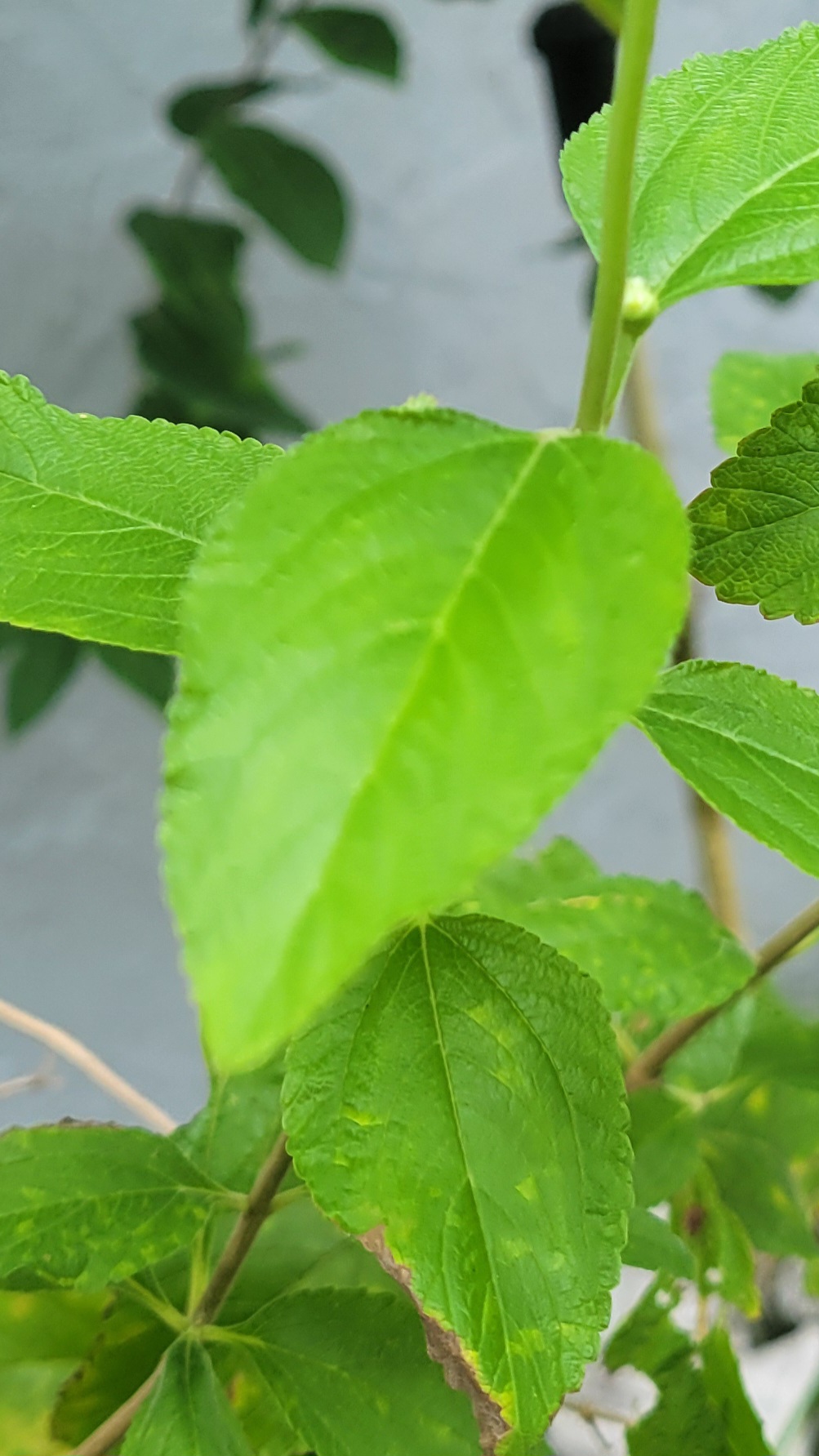
설명
Identification and overview: The leaves in the photo closely resemble those of a young mulberry tree, most likely a white mulberry (Morus alba) or a Morus species in that group. Mulberries are deciduous trees or large shrubs with simple, alternate leaves that are often variable in shape. The leaf shown is oval to oblong with a finely serrated margin and a pointed tip, a common look for many Morus leaves. The stems are green and slender, and the overall habit in the image suggests a small, actively growing plant that could be trained on a trellis or supported as a young tree. Mulberries come in several forms, and unlobed, serrated leaves like this are typical for many cultivars and for Morus alba in particular. Key characteristics: - Leaves: simple, alternate, with a serrated margin. Leaf size in the photo appears to be a few centimeters long, with a prominent midrib and noticeable venation. The leaf surface in good light looks bright green and somewhat textured, which is typical for Morus leaves. Some Morus varieties show leaf shape variation from rounder to more elongated forms on the same plant. - Stems: slender, green to brown as they age, with a flexible growth habit. - Growth form: deciduous, fast-growing; commonly grown as a small tree, bush, or trained as an espalier or against a trellis in home gardens. Biology and ecology: - native range and use: Morus alba is widely cultivated around the world for fruit and for silkworm rearing; it is adaptable to many climates and soils and can naturalize in some regions. Fruits are aggregate drupes that ripen in late spring to summer depending on climate. - flowers and fruit: Morus species typically produce tiny, inconspicuous flowers in spring, followed by small, edible fruits that resemble blackberries in appearance, initially light-colored (yellow to pale red) and maturing to red, purple, or black as they ripen. The fruit is sweet and aromatic with a distinct mulberry flavor and can be eaten fresh or used in jams, desserts, or beverages. Care and cultivation guidance (approx. 1000 words condensed here for practical use): - Light and location: White mulberries prefer full sun for the best growth and fruit production. They will tolerate partial shade, but fruiting and overall vigor decline with less light. In hot climates, ensure some protection from the harshest midday sun if you’re growing in an extremely hot region. - Soil and drainage: They are adaptable and will grow in a wide range of soils, but perform best in well-drained, fertile soil. A loamy soil with good organic matter is ideal. While tolerant of poorer soils, avoid consistently waterlogged conditions, which can lead to root rot. - Watering: When establishing a young plant, keep the soil evenly moist but not waterlogged. Once established, mulberries are relatively drought-tolerant, but regular watering helps fruit set and leaf health, especially in container-grown plants. In containers, monitor moisture closely since potted plants dry out faster. - Temperature and hardiness: White mulberry is hardy in a broad range of climates (roughly USDA zones 4–9, depending on cultivar). In very cold or very hot regions, growth may slow or fruiting may be irregular. Protect new plantings from extreme cold or wind in adverse climates. - Feeding and soil fertility: Mulberries generally benefit from a balanced, slow-release fertilizer in spring to support new growth and fruiting. Avoid excessive nitrogen, which can promote lush vegetative growth at the expense of fruiting and can make the tree more susceptible to certain pests. If your soil is rich in organic matter, you may not need heavy supplemental feeding. - Pruning and training: Young trees often require shaping to establish a strong frame. For trees grown against a wall or on a trellis, training shoots along the support with secure ties helps create a productive, manageable canopy. For free-standing trees, prune to maintain a central leader with well-spaced vertical branches. Pruning can also help remove dead wood and limit overly vigorous growth. If your goal is fruit production, prune out old, unproductive wood after several years to encourage new growth that will bear fruit. - Pollination and fruiting: Morus alba is typically self-fertile, so cross-pollination is not strictly required for fruit set, though cross-pollination by other mulberry trees nearby can sometimes improve yield. Fruit ripening times vary with climate; in temperate regions, expect late spring to summer harvests. - Pests and diseases: Common mulberry pests include aphids, scale insects, spider mites, and fruit flies in some regions. Fungal issues like powdery mildew or leaf spot can occur in humid, wet conditions. Maintain good air circulation around the plant, avoid overhead watering when possible, and monitor for pests. If pests become significant, treat with appropriate organic or chemical controls as needed, following label instructions. Regular pruning to improve airflow can reduce disease pressure. - Diseases to watch for include fungal leaf spots and shot-hole-like lesions. In some cases, wood borers or canker pathogens may affect older trees, particularly if stressed. If you see unusual cankers, dieback, or tree decline, seek professional guidance to identify the pathogen and best management practices. - Propagation and new plants: Mulberries are easily propagated by cuttings, layering, or occasionally from seed. Cuttings taken from semirt—wood (seasoned growth from the previous year) in winter can root readily in a humid, warm environment. Layering a flexible branch in spring or early summer can also produce a new plant with a high success rate. Seeds require stratification (a period of cold treatment) to break dormancy. Grafting or budding onto a compatible rootstock is common for orchard production and certain ornamental forms. - Edible uses and nutritional notes: The fruits are eaten fresh, dried (like raisins), or used in jams, pies, or beverages. They are high in natural sugars, dietary fiber, and some vitamins (notably vitamin C and some B vitamins). Mulberry leaves are also historically significant as a primary food source for silkworms and are used in some folk medicines and herbal preparations in various cultures. Some people use young leaves in salads or teas, but be sure to identify the plant correctly and avoid any pesticide residues. - Other uses: The wood of Morus species is relatively strong and used for small carpentry projects, turnery, and fuel in some regions. The tree can provide light shade and serve as an ornamental or fruit-producing feature in a yard or garden. - Potential cautions: In some areas, white mulberry can behave like a wild or invasive species if it establishes aggressively. It may spread via seeds from dropped fruit that germinates in nearby beds or cracks. If you’re growing it in a small garden, consider regular pruning and fruit management to avoid unwanted spread. Some people have allergies to mulberry pollen; if you’re sensitive, be mindful during flowering season. Practical care checklist (quick reference): - Plant in full sun; ensure good drainage. - Water regularly while establishing; reduce watering once established but maintain consistent moisture during fruit set. - Mulch to conserve moisture and regulate soil temperature. - Prune to shape and remove dead or crossing branches; encourage a strong framework for fruiting. - Fertilize in spring with a balanced fertilizer if growth seems slow or the soil is poor in nutrients. - Monitor for pests and diseases; treat as needed and adjust care to improve airflow and plant vigor. - If growing in a container, choose a large pot with drainage holes and use a high-quality potting mix; be prepared to repot as the plant grows. In summary, the plant in your photo most closely resembles a young white mulberry (Morus alba) based on the serrated, oval leaves and slender green stems typical of Morus species. Mulberries are versatile, fast-growing plants that can function as a small ornamental tree, a fruit-producing shrub, or an espalier against a wall or trellis. With proper sun, well-drained soil, moderate and consistent watering, and periodic pruning, a Morus alba can establish quickly, produce fruit in favorable seasons, and provide both ecological and culinary rewards. If you have more pictures showing the overall habit (height, branching pattern, any fruiting clusters) or if you know the climate zone, I can refine the identification and tailor care tips even more closely to your plant.
식별 시간
2025년 9월 7일
안내
식집사의 기능은 AI를 사용하고 있어 부정확 할 수 있습니다. 단순 재미와 참고용으로만 사용해주세요.
식물 결과에서 바로 할 수 있는 일
이름을 확인한 뒤 공식 식물 DB에서 관리 정보를 바로 확인하세요.