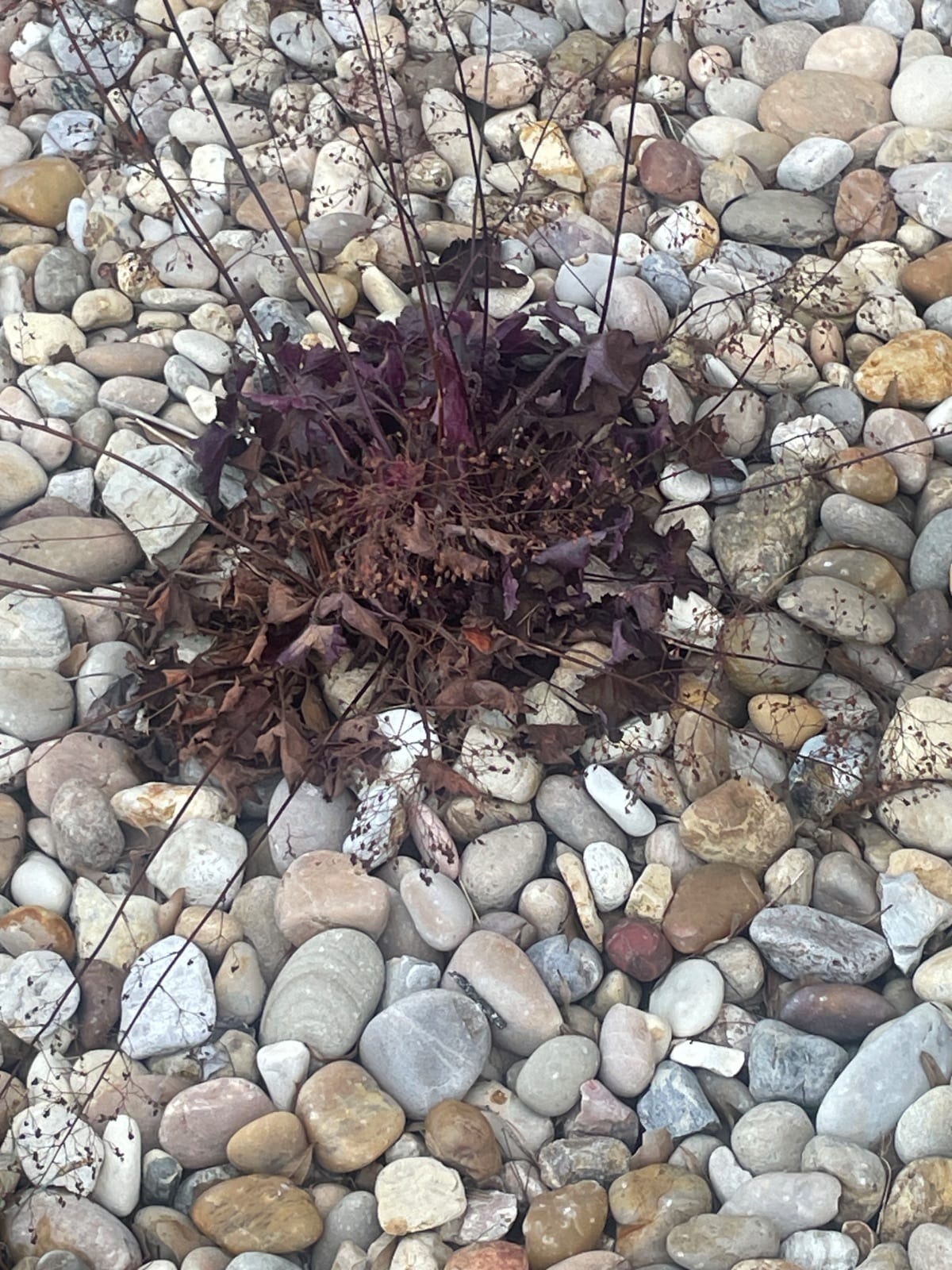
Purpleleaf sand cherry / purple sand cherry (Prunus x cistena)
설명
From the photo, this appears to be a low, dense shrub with intensely purple (reddish-purple) foliage and thin, arching stems. A very common landscaping plant with these traits is **purple sand cherry (Prunus x cistena)**, a compact hybrid/sand cherry cultivar widely planted for its spring foliage color and overall hardiness. That said, the exact ID from a single image is uncertain (other purple-leaved Prunus cultivars and a few ornamental shrubs can look similar), so please treat the identification as a best guess. --- ## Key characteristics (likely Prunus x cistena) - **Growth habit:** A **small, rounded shrub** that typically stays fairly compact (often around 1–2 m tall, depending on growing conditions). It forms a dense mass of stems. - **Leaves:** Narrow-to-oval leaves with a **strong reddish-purple to burgundy tone**, especially in cooler weather and early in the season. Color often deepens under more sun. - **Stems/branching:** Many **slender, upright-to-arching canes** giving a mounded form. - **Flowers:** In spring, it usually produces **small pinkish-white blossoms** (typical sand cherry/Prunus bloom) before or alongside leaf expansion. - **Fruiting:** Later, it can form **small dark fruit** (inedible or only mildly useful for wildlife; not a “food crop”). - **Bark & winter look:** The shrub keeps a twiggy, fine branching structure; leaf color fades as seasons progress. --- ## Care guide ### 1) Sunlight - **Best:** Full sun to at least **6 hours of direct sun**. - **Why:** Purple foliage color is generally **strongest with more light**. In shade, the plant may become greener and less showy. ### 2) Soil requirements - **Soil type:** Adaptable, but prefers **well-draining soil**. - **pH:** Tolerates a range, roughly **neutral to slightly acidic/alkaline**. - **Avoid:** Permanently soggy ground. If drainage is poor, consider raised beds or improved soil structure. ### 3) Watering - **Establishment period (first 1–2 seasons):** - Water regularly so the root zone doesn’t dry out completely. - A common approach: deep watering **1–2 times per week** (more often in heat), then taper off once established. - **After established:** - Typically **moderate drought tolerance**, but still benefits from watering during long hot dry spells. - **Practical tip:** Feel the soil 5–10 cm down. Water only when it’s starting to dry. ### 4) Mulching - Apply a **2–5 cm layer** of organic mulch (wood chips, bark, compost) around the base. - Keep mulch **a few centimeters away from the stem** to avoid rot. - Mulch helps stabilize moisture and reduces weeds. ### 5) Feeding (fertilizer) - Usually not heavy feeding required. - In early spring, you can use a **balanced slow-release fertilizer** or compost. - If growth becomes weak or leaves look pale, feed lightly. - Avoid excessive nitrogen (it can lead to lots of soft growth and reduced hardiness). ### 6) Pruning - **Time:** Late winter or early spring, before strong new growth begins. - **Purpose:** Shape, remove dead/damaged wood, and keep it dense. - If it becomes too tall, you can **lightly reduce** stems to encourage a compact form. - After flowering, pruning is also possible, but early-season pruning is most common. ### 7) Pests and diseases (watch for these) Sand cherry/Prunus can face typical Prunus issues: - **Aphids:** Can cause leaf curling/sticky residue. - **Scale insects:** Suck sap; leaves may yellow. - **Spider mites:** More likely in hot/dry conditions. - **Fungal leaf spots or powdery mildew:** Often worsened by poor airflow and overhead watering. - **Root problems:** Mainly from soggy soil. **Prevention tips:** - Provide good sun and spacing for airflow. - Water at the soil level (avoid wetting foliage when possible). - Remove heavily diseased leaves. - For severe infestations, use appropriate horticultural controls (e.g., insecticidal soap for light aphid issues, targeted treatments if needed). --- ## Related information: landscaping & ecosystem value - **Ornamental value:** Purple foliage provides strong color contrast in beds, along pathways, or as a low hedge. - **Wildlife:** The flowers attract pollinators; the small fruits can support birds. - **Hardiness:** Generally considered hardy once established, making it popular in many climates. --- ## Interpreting the photo specifically In the image, the plant is growing in a **rock/gravel setting** (decorative stones). That environment can dry out quickly: - Ensure there is **adequate soil volume** beneath/around the shrub roots. - Use **deep watering** to reach the root zone. - Keep mulch in the root area if possible (or provide another moisture-retaining layer that still looks natural with stones). The leaves appear dark and purple, consistent with the “purpleleaf” trait. If the plant is in full sun, that supports the likelihood of a purple sand cherry type. --- ## If you want higher confidence in the ID If you can share one or two of the following, I can narrow it down: 1. A close-up of **leaves** (shape and margin). 2. A photo of **flowers** (spring) or **fruits**. 3. The plant’s **height** and whether it forms a **mounded hedge**. 4. Any label from the nursery. --- ### Bottom line If this shrub truly has **intense purple foliage** and a **compact, dense, twiggy habit**, **purple sand cherry (Prunus x cistena)** is a plausible match. With **full sun, well-drained soil, moderate watering during establishment, and occasional shaping pruning**, it is typically an easy, reliable ornamental plant.
식별 시간
2026년 6월 30일
안내
식집사의 기능은 AI를 사용하고 있어 부정확 할 수 있습니다. 단순 재미와 참고용으로만 사용해주세요.
식물 결과에서 바로 할 수 있는 일
이름을 확인한 뒤 공식 식물 DB에서 관리 정보를 바로 확인하세요.