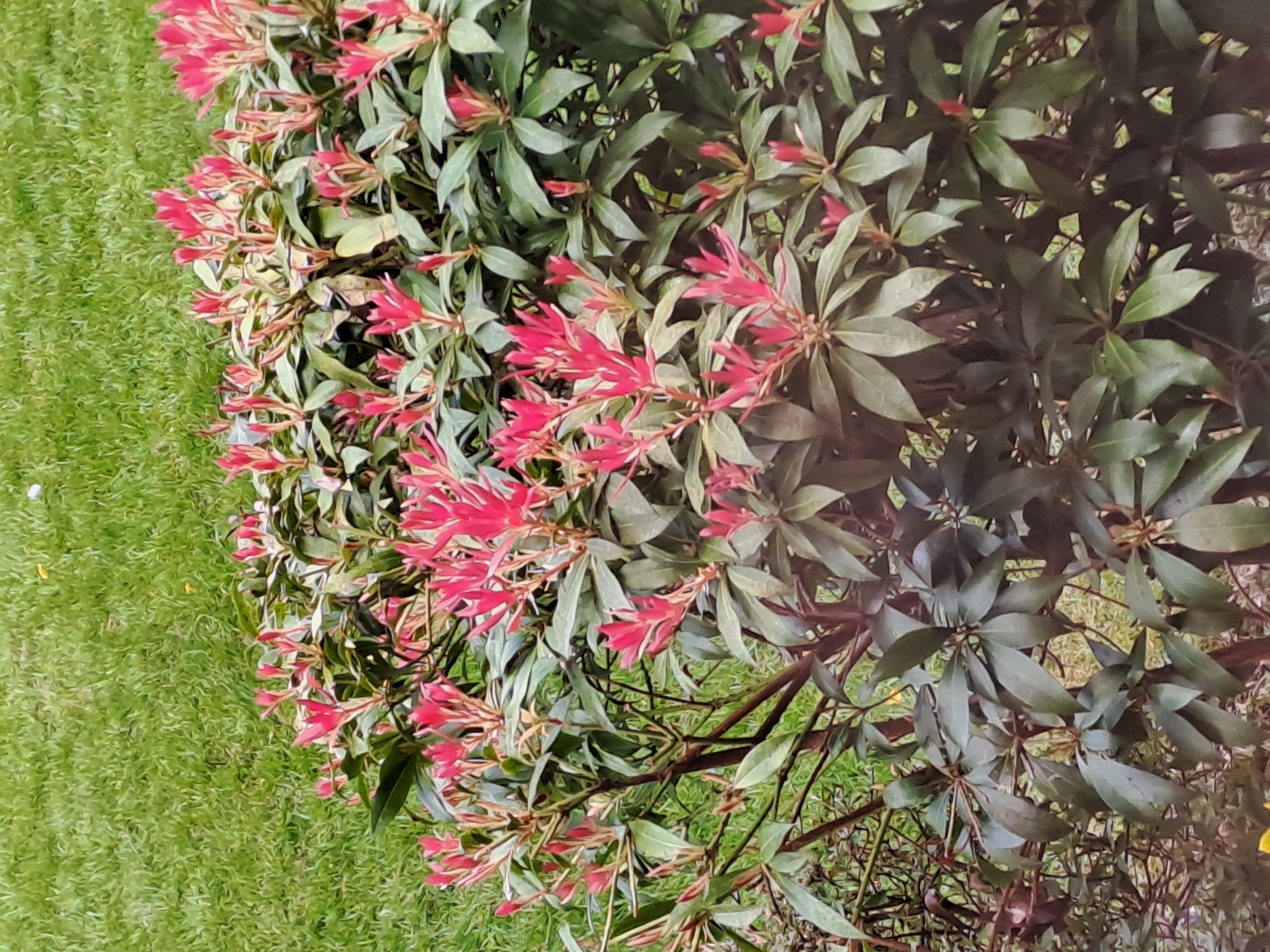
Red Tip Photinia (Photinia × fraseri 'Red Robin')
설명
Identification and general description: The plant in the photo is a Red Tip Photinia, most commonly grown as an evergreen hedge or ornamental shrub. Its botanical name is Photinia × fraseri, with the popular cultivar 'Red Robin' being the one most often seen in gardens and landscapes. This shrub forms a dense, upright to rounded bush with sturdy stems and a lush canopy. The foliage is glossy and evergreen, featuring two distinct types of leaves across the year. Mature leaves are a deep, dark green and relatively small (roughly 2–4 inches long). The real spectacle, however, is the new growth: each spring the tips erupt with bright red to pinkish-red leaves that stand out against the dark backdrop of older foliage. Over the season these new leaves gradually mature to green, creating a striking, two-tone appearance that remains visible throughout the year. In late spring to early summer, tiny white flowers appear in loose panicles along the shoots, adding a delicate, ornamental touch before fruiting occurs. The overall effect is a plant that provides vibrant color in spring and steady evergreen structure year-round, making it a popular choice for hedges, screens, and specimen plantings. Cultural characteristics and growth habit: Red Tip Photinia is a fast-growing, evergreen shrub. In ideal conditions, it can reach heights of 8–12 feet (2.4–3.7 meters) or more, with a spread of 8–12 feet, though in gardens it is often kept smaller with regular pruning. It tolerates a range of soil types and climate zones but performs best in full sun to light, dappled shade and prefers well-drained soil. Its leaves become less prone to sun scorch when grown with adequate moisture and in a location that receives sufficient light. The plant is fairly hardy in temperate climates but can be damaged by severe frost or strong, drying winds; in very cold regions it may lose some foliage during winter, though the red flush typically returns with new growth in spring. Care and maintenance: light, water, soil, and pruning considerations - Light: Photinias prefer full sun to partial shade. In cooler, temperate regions, full sun is ideal for the most intense red flush in spring. In very hot, sun-drenched climates, some afternoon shade can help prevent leaf scorch and maintain foliage health while still allowing color development. - Soil and planting site: They are adaptable to a wide range of soils, but the soil should be well-drained. A slightly acidic to neutral pH is often best; in alkaline soils some iron chlorosis can occur, which may show as yellowing leaves with green veins. If chlorosis is a concern, improve drainage, consider amending with organic matter, or use iron chelates as recommended by local horticultural guidelines. - Watering: Establishment requires regular, deep watering. Once established, Red Tip Photinia is fairly drought-tolerant but will perform best with consistent moisture, especially during prolonged hot or dry periods. Avoid waterlogged soil, which can promote root rot and fungal problems. Mulching around the base helps conserve moisture and maintain even soil temperatures. - Fertilization: Apply a balanced, slow-release fertilizer in spring to support new growth and overall vigor. Follow label directions to avoid over-fertilizing, which can cause excessive tender growth that is more susceptible to pests and diseases. If the plant shows signs of nutritional deficiencies (such as pale new growth or chlorosis in iron-poor soils), test the soil and adjust the program accordingly. A light top-dress of compost in spring can also benefit the plant. - Pruning and shaping: Regular pruning is common and beneficial for maintaining a compact, dense hedge or shrub. The best time to shape is late winter to early spring, before new growth starts, so the plant can flush with bright red shoots in spring. Light, frequent shearing can keep a formal hedge neat, but avoid heavy pruning in late summer or fall, as tender growth may not harden off before cold weather. - Pruning for health: Remove dead, diseased, or crossing branches to improve air circulation and reduce disease risk. Prune out any diseased shoots promptly, especially if leaf spot or blight symptoms appear, to prevent spread. - Pests and diseases: Fire blight (Erwinia amylovora) is a notable concern with Photinia. It can cause oozing, brown, wilted shoots that bend in a shepherd’s crook shape. If you observe symptoms, prune out affected shoots well below the symptomatic area and dispose of them (do not compost). Maintain good air circulation, avoid overhead watering, and practice clean pruning tools between cuts. Leaf spot (Entomosporium maculatum) can also affect Photinia, producing small red or brown spots on the leaves. Remove affected leaves and consider fungicidal treatment if infestations persist. Other potential issues include scale, aphids, and spider mites; keep an eye on new growth, spray with appropriate horticultural oils or insecticidal soaps if necessary, and promote plant vigor through proper watering and nutrition to reduce susceptibility. - Mulching and weed control: A 2–3 inch layer of organic mulch helps regulate soil moisture, suppress weeds, and protect shallow roots. Keep mulch several inches away from the trunk to prevent rot and pest harboring. - Propagation: Red Tip Photinia can be propagated by semi-hardwood cuttings taken in late summer or early autumn. Use rooting hormone and a well-draining rooting medium, and maintain high humidity around cuttings until roots form. Rooting can take several weeks to a couple of months depending on conditions. Grafting is not typically necessary for this cultivar. - Longevity and use: In landscapes, Photinia × fraseri ‘Red Robin’ is valued for its dramatic red flush and year-round structure. It works well as a formal hedge, a backdrop plant, a focal specimen, or as a privacy screen. In containers, it can be grown as a small tree or columnar hedge, though container plants generally require more frequent watering and attention to nutrient needs. Special considerations and regional notes: In regions with cool, damp springs, the flush of red growth can be delayed or reduced, and the plant may be more prone to leaf spot diseases if air circulation is poor. In warm climates, provide enough space for air movement and avoid excessive pruning that would disrupt the natural flush cycle. Because Photinia is widely used as a hedge, repeated heavy pruning can stress the plant and invite disease; therefore, balanced, consistent pruning that maintains form without removing too much wood at once is recommended. In areas where fire blight is a known problem, selecting resistant cultivars or implementing strict hygiene and pruning practices is wise. Toxicity and safety: Photinia is not commonly listed as highly toxic to humans or pets, but, as with many ornamental shrubs, ingestion of plant parts can cause mild GI upset. It’s wise to keep young children and pets from chewing on the foliage and to wash hands after pruning. If you suspect ingestion of a large amount, contact a medical professional or veterinarian for guidance. In summary: The plant in your photo is a Red Tip Photinia, renowned for its striking red-new-growth display against evergreen dark-green leaves. With proper sun, well-drained soil, and regular pruning, it provides reliable beauty and structure for years. It benefits from thoughtful water and fertility management, routine inspection for pests and diseases, and timely pruning to maintain form and encourage fresh red growth each season. For many gardeners, this plant offers an eye-catching, low-maintenance solution for hedging, screening, or a bold focal point in a mixed border.
식별 시간
2026년 3월 26일
안내
식집사의 기능은 AI를 사용하고 있어 부정확 할 수 있습니다. 단순 재미와 참고용으로만 사용해주세요.
식물 결과에서 바로 할 수 있는 일
이름을 확인한 뒤 공식 식물 DB에서 관리 정보를 바로 확인하세요.