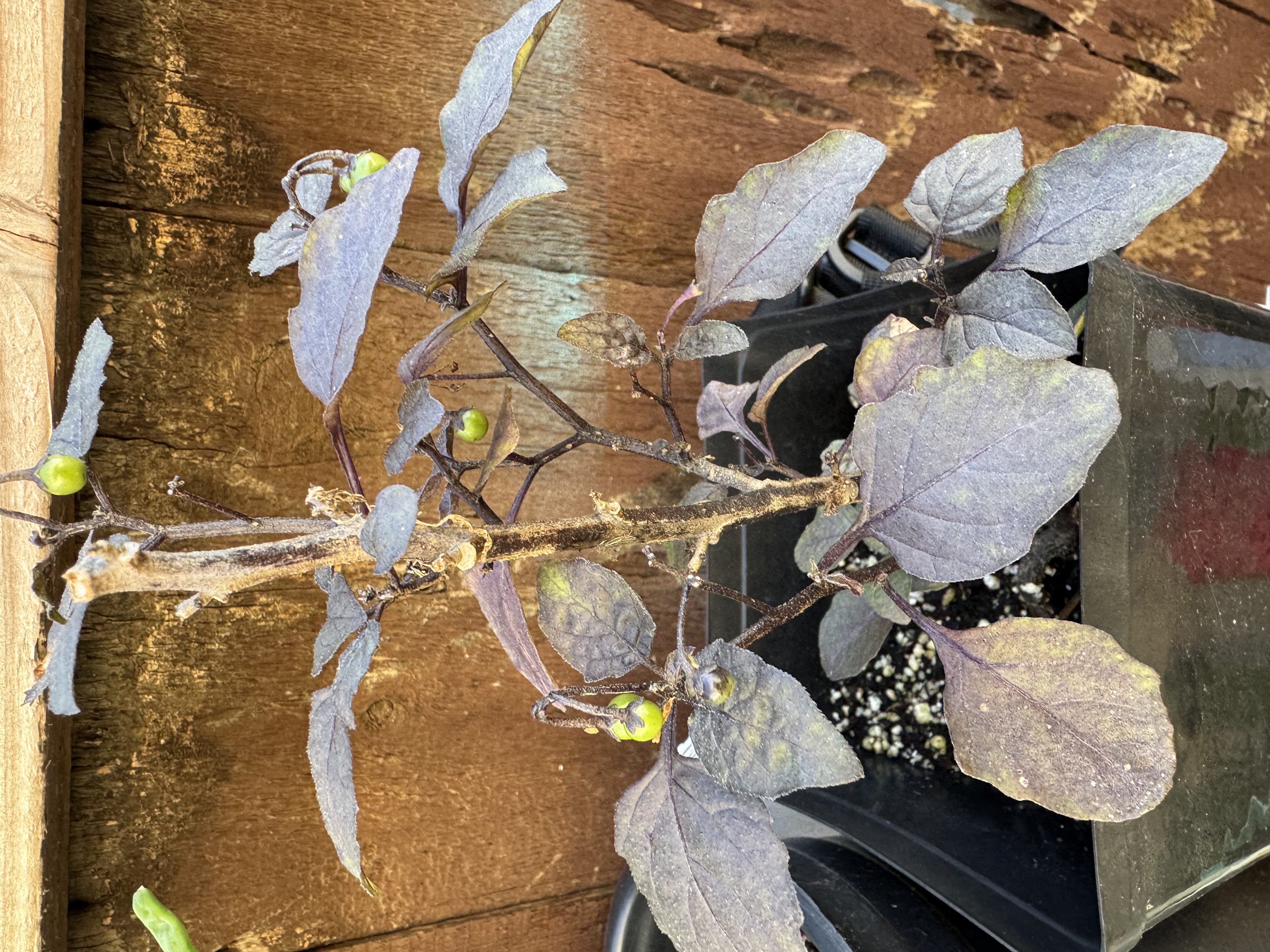
Purple-leaved ornamental pepper (Capsicum annuum) – likely a cultivar with purple foliage
설명
Identification and overview: The plant in the photo appears to be a Capsicum annuum, a pepper plant, with unusually purple to blue-gray foliage and small green berries forming at the leaf axils. This combination—upright, branching habit; oval, slightly wavy leaves that carry a dusky purple tint; and tiny round fruits that are green while immature—is characteristic of many ornamental pepper cultivars. While the exact cultivar name cannot be confirmed from a single image, the features strongly align with an ornamental pepper variety that is often grown in containers for color. In many such cultivars the foliage is colored or booted with anthocyanin pigments, which can deepen with sun exposure, cooler temperatures, or nutrient changes, and the fruits are small and cherry-like, eventually ripening to a color that depends on the specific cultivar. The plant’s form—a compact, multi-branched stem system with leaves arranged along the stems and fruit produced at the leaf axils—fits the typical growth habit of small potted ornamental peppers. With that caveat, the following care and cultivation guidance should help you nurture this plant whether it remains ornamental or, if the fruits are edible in your cultivar, used for culinary or educational purposes. Description of the plant and where it grows best: The plant in the image is a small, woody-stemmed pepper plant with a somewhat upright to spreading habit. Leaves are oval to lance-shaped, typically 3–8 cm long, and show a striking purple to grayish-purple color that may appear dusty or bluish in certain lighting or if the plant is under some stress. The margins are smooth, and the venation is clearly visible. Stems are slender and may have a brownish hue; in many ornamental peppers the stems can become somewhat woody as the plant matures. Small round peppers, currently green, appear at leaf axils along the stem. In mature plants from this group, the peppers may stay green for a period before turning red, yellow, orange, purple, or other colors depending on the cultivar. The plant pictured is in a container, which is typical for ornamental peppers that are grown for color displays on patios or balconies. Key features you can use to distinguish it: purple to blue-gray foliage, compact branched structure, and tiny round green fruit clustered along stems. The plant’s overall appearance may vary with light, temperature, and nutrient availability. If the leaves begin to turn more deeply purple under bright sun or cooler nights, that is a common response in purple-leaved capsicum cultivars and does not necessarily indicate a problem; it often enhances the ornamental effect. Conversely, leaves that yellow or become severely pale may signal nutrient deficiency or environmental stress that should be addressed with appropriate care. Care and cultivation guidelines (approximate 1000-word overview): Light and temperature - Provide bright, full sun. Ornamental peppers perform best with at least 6 hours of direct light daily. Within a container, placing them where they receive strong sun will help deepen foliage color and promote robust fruiting. - Keep temperatures warm. These plants favor daytime temperatures around 70–85°F (21–29°C) and do not tolerate cold well. Night temperatures above 60°F (16°C) are ideal. If growing indoors, place near a sunny window or use a grow light to maintain light intensity during shorter days. Container, soil, and watering - Potting mix and drainage: Use a well-draining potting mix rich in organic matter. A container with drainage holes is essential to prevent waterlogging, which can cause root rot and foliage problems. - Pot size and repotting: Start in a small to medium container and repot into a larger pot if roots become crowded. A 2–5 gallon pot is commonly suitable for a compact ornamental pepper, though the exact size depends on the plant’s vigor and how long you want it to grow before seasonal changes. - Watering: Keep the soil consistently moist but not soggy. Water when the top inch (2.5 cm) of soil feels dry. Reduce frequency a bit when the plant is flowering but ensure steady moisture as peppers are sensitive to drought stress, which can impact fruit set and color development. Soil fertility and feeding - Fertilization: Use a balanced, water-soluble fertilizer labeled for vegetables or flowering ornamentals. Feed every 2–4 weeks during active growth and fruiting, following label directions. In the fruiting stage, a fertilizer higher in potassium (the middle number on N-P-K) can support flower and fruit development and color formation. - Nutrient balance: Observing a slightly higher phosphorus and potassium profile, with moderate nitrogen, can encourage steady growth and better fruit set without excessively lush vegetative growth that can delay fruit ripening. Pruning, training, and maintenance - Pruning for shape and vigor: If you want a bushier, more compact plant, pinch back growing tips early in the season. This encourages branching and a fuller form, which can improve overall air circulation and reduce disease risk. - Remove dead or diseased tissue: Regularly inspect for yellowing or necrotic leaves and prune them away to improve plant health and reduce the spread of any pests or diseases. - Mulching: A light layer of organic mulch in the container helps retain soil moisture and stabilize temperatures, which is especially useful in warm climates. Pollination and fruiting - Pollination: In outdoor or well-ventilated indoor settings, peppers are pollinated naturally by wind and insects. If fruit set seems poor indoors, you can gently shake the plant or use a small brush to help move pollen between flowers. - Fruit color: The small fruits in ornamental peppers often begin green and progressively color up to red, yellow, purple, or other hues based on the cultivar. Monitor color evolution as a sign of ripening. Harvesting at fruit maturity provides the best taste and the most vivid color for display. Pests and diseases - Common pests: Aphids, whiteflies, spider mites, and thrips can affect peppers. Regularly inspect the undersides of leaves and the growing tips. If infestations occur, rinse the plant with a gentle stream of water, and consider insecticidal soap or horticultural oil if needed, following product directions. - Fungal and bacterial issues: Powdery mildew, leaf spot, and root rot can appear in humid or poorly drained conditions. Improve air circulation, avoid overhead watering, and use well-draining soil. If mildew or spots appear, remove affected leaves and apply an appropriate fungicide or organic remedy as recommended for edible peppers. - Abiotic problems: Purple or yellow leaves can indicate nutrient imbalance, cold stress, or drought. If the plant has become pale or is showing leaf scorch, adjust light exposure, temperature, and watering and consider a targeted fertilizer to address possible phosphorus or potassium deficiencies. Humidity and environmental considerations - Humidity: Moderate humidity favors peppers, but they are generally tolerant of typical household humidity. If air is very dry, especially indoors during heating seasons, occasional misting or a humidity tray can help maintain leaf turgor without encouraging disease. - Airflow: Good airflow around the plant reduces disease risk. Avoid overcrowding with other plants in the same container or on a windowsill. Seasonal care and longevity - Outdoor to indoor transition: In regions with cold winters, ornamental peppers are often grown as annuals. If you live in a area with mild winters, they can sometimes overwinter in bright, cool to warm interiors, but performance may vary. When nights begin to consistently cool, consider bringing the plant indoors or treating it as a seasonal display. - Stop feeding when fruit stops setting: As flowering declines and fruits approach full color, you can scale back feeding to avoid excessive vegetative growth that could compromise fruit color and quality. Harvesting and use - Edibility and flavor: Many ornamental peppers are edible, but the flavor may be hot and the fruits are often grown primarily for visual appeal rather than culinary use. If you wish to taste, start with a tiny piece and exercise caution, as some cultivars can be quite spicy. Always identify the specific cultivar and verify edibility before consuming. - Culinary and decorative use: If edible, use ripened peppers or those labeled as edible in small quantities to add color to salads or garnishes. If ornamental, maintain the plant as a decorative feature on patios, balconies, or entryways. Propagation and genetics - Propagation: These pepper plants are commonly propagated from seeds or cuttings. If starting from seed, sow in a warm, well-draining mix and provide warmth and bright light for germination. Hybrid cultivars may not come true from seeds, so buying labeled seeds or nursery plants helps maintain color and habit. - Genetic variability: Foliage color in purple-leaved peppers can shift with light intensity, temperature, and nutrient availability. While rigorous uniformity is common in commercial hybrids, home-grown specimens may exhibit some variation in leaf color year to year, which is part of their charm. Safety and handling tips - Gloves and handling: Capsicum plants can cause skin irritation for some people when handling hot peppers or dusty leaves. If you are sensitive, wear gloves when pruning or harvesting and wash hands afterward. - Pets and children: Although ornamental peppers are visually appealing, the fruits can be spicy or irritating if consumed in quantity. Keep them out of reach of small children and pets if there is any concern about ingestion. In summary: The plant shown is most consistent with a purple-leaved ornamental pepper in a container. It offers striking foliage color and small fruit that can provide a dramatic display in bright light and warm conditions. Its basic care is straightforward: give it full sun, a well-draining soil mix, and regular feeding during growth and fruiting; monitor for pests and diseases and prune as needed to maintain a compact shape and good air circulation. The exact cultivar name may be hard to determine from a photo alone, but with proper care you can enjoy both the ornamental foliage and the presence of tiny peppers along the stems, which can be a fun feature for container gardens or shaded patios.
식별 시간
2026년 2월 22일
안내
식집사의 기능은 AI를 사용하고 있어 부정확 할 수 있습니다. 단순 재미와 참고용으로만 사용해주세요.
식물 결과에서 바로 할 수 있는 일
이름을 확인한 뒤 공식 식물 DB에서 관리 정보를 바로 확인하세요.