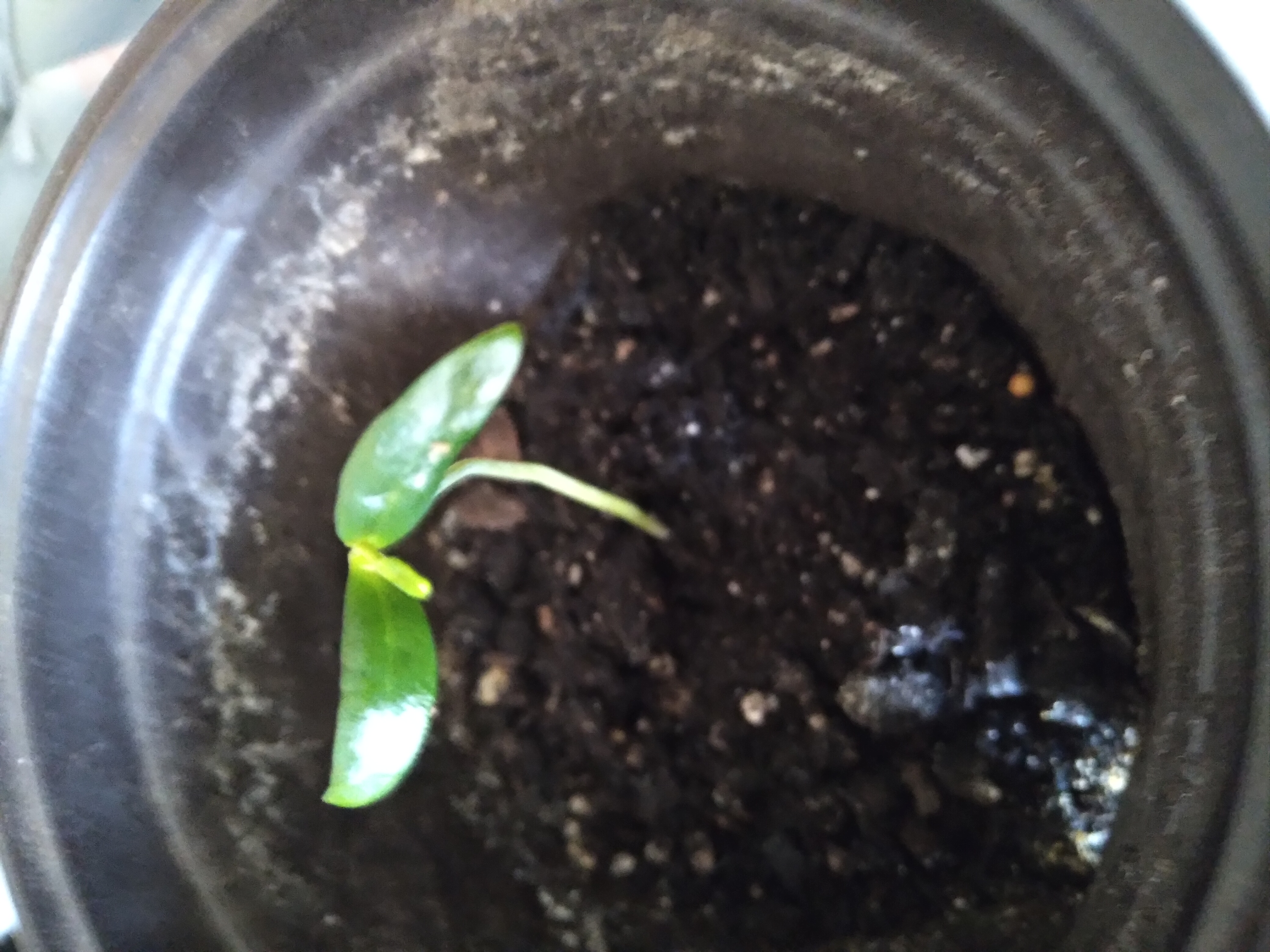
Capsicum annuum (pepper) seedling
설명
The plant in the photo appears to be a baby pepper plant (Capsicum annuum), likely a bell pepper or chili pepper seedling. The seedling shows two small, smooth, glossy cotyledon-like leaves at the base and a slender pale-green stem. A first true leaf is starting to form just above, and more true leaves would develop as the plant grows. This is a very common appearance for pepper seedlings purchased from seed or found volunteering in a home garden. While it is difficult to be 100% certain from a single early-stage image, the overall morphology—oval to oblong leaves with entire margins, a delicate thin stem, and the way the leaves sit opposite each other near the top of the stem—fits Capsicum seedlings well. If you are growing it from seed or from a saved pepper, you can expect it to continue developing the classic pepper plant form: a branching, erect, herbaceous plant that will grow more leaves and eventually produce flowers and fruit in warm conditions. Below is a thorough overview of pepper plant traits and care, focusing on this early seedling stage and extending into typical growth and production as it matures. Identity and basic characteristics: Pepper plants belong to the nightshade family (Solanaceae) and are grown as annuals in temperate regions, even though they are perennials in their native warm climates. They prefer warm weather, bright light, and rich, well-draining soil. The leaves are simple, smooth-edged, and glossy, usually green, with an elongated oval or lanceolate shape that broadens toward the tip. Leaves arise alternately along the stem as the plant grows, and each leaf is supported by a short petiole. The plant is typically compact when grown in pots, but depends on variety and pruning. When mature, capsicum plants form flowers (usually white with five petals) that become the edible fruits—peppers that can be green, yellow, orange, red, or even purple depending on variety. Growth stages and morphology: In the seedling stage, Capsicum annuum begins with two cotyledons that emerge from the seed and function as the initial energy source for growth. The cotyledons are relatively smooth and elongated. As the seedling matures, true leaves appear, increasing in size and becoming more distinctly oval and pointed at the tip. The stem remains slender and green, with a tendency to elongate if light is insufficient (a common issue in indoor setups—leggy seedlings). A healthy seedling will display a sturdy stem, a set of true leaves with a vibrant green color, and a growing apical bud that will eventually produce more leaves and flowering shoots. Ecology and native habitat: Pepper plants originate from the Americas and thrive in warm, sunny climates. They require warmth for germination and robust fruit development. In cooler regions, peppers are often grown as annuals or in greenhouses, while in tropical climates they can persist for multiple seasons. They prefer soil that drains well but retains adequate moisture, and they like partially to full sun for optimal growth and fruit set. Care and growing conditions: - Light: Pepper seedlings and young plants need bright light. Outdoors, provide full sun for most of the day. Indoors, place them near a south-facing window or under grow lights for 12–16 hours daily to prevent leggy growth. If leaves appear pale or stretched, increase light intensity or duration. - Temperature: Warmth is essential. Daytime temperatures of about 24–29°C (75–85°F) and nighttime temperatures above 15–18°C (60–65°F) are ideal for peppers. Seed germination requires even warmer soil (around 25–30°C or 77–86°F). Avoid cold drafts, and do not allow the root zone to stay wet in cold conditions. - Soil and potting mix: Use a well-draining, nutrient-rich potting mix. A sterile seed-starting mix is good for germination, but transplant seedlings into a high-quality potting soil with organic matter for ongoing growth. Aim for a slightly acidic to neutral pH, roughly 6.0–7.0. - Watering: Keep the soil consistently moist but not waterlogged. Pepper roots dislike standing water, which can lead to root rot and fungal issues. Water at the base when the top inch of soil feels dry to the touch. In pots, ensure drainage holes are open and consider bottom watering to avoid wetting leaves excessively. - Fertilization: Start with a balanced, water-soluble fertilizer once true leaves appear. A formula such as 10-10-10 or 20-20-20, applied at a quarter to a half strength every 1–2 weeks, supports healthy growth. As plants begin to set fruit, shift to a fertilizer with a modest nitrogen level and higher phosphorus and potassium to encourage flowering and fruiting (e.g., 5-10-10 or a tomato/pepper-specific blend). Avoid over-fertilizing with nitrogen, which can produce lush foliage but few fruits. - Pot size and transplanting: Seedlings in small pots should be transplanted into larger containers when they have 2–3 true leaves or when roots begin to circle the pot. A typical home-pot pepper may do well in 2–5 gallon containers, depending on variety, with adequate staking or support for taller cultivars. Transplanting should be done carefully to minimize root disturbance. - Pruning and training: Early pruning is optional. For many varieties, pinching the apical growth can encourage a bushier plant and more fruiting sites. Once the plant is larger, you can remove some lower leaves and prune to improve airflow and reduce disease risk. For indeterminate or very tall pepper types, staking helps prevent lodging in windy outdoor settings or with heavy fruit loads indoors. - Pollination: In outdoor settings, peppers are pollinated by wind and insects. Indoors or in greenhouses, you may need to gently shake the plant or use a small brush to assist pollen transfer, particularly in crowded or low-air-movement setups. A fan providing light air movement can also help. - Humidity and air circulation: Moderate humidity (40–60%) often helps prevent certain fungal diseases. Ensure good air circulation around the plant to reduce foliage diseases, especially in humid environments. - pests and diseases: Common issues include aphids, whiteflies, spider mites, pepper weevils, and fungal diseases such as powdery mildew or early blight. Manage pests with regular inspection, rinsing off insects with water, introducing beneficial insects if appropriate, and using insecticidal soap or horticultural oils as needed. Practice good sanitation by removing infected leaves and avoiding overhead watering that can promote foliar diseases. For disease prevention, rotate crops if you grow peppers in the same bed, and use clean soil and containers. Care notes specifically for a single early seedling: The image shows a very young seedling with two initial leaves and a delicate stem. At this stage, gentle handling, consistent warmth, and bright light are crucial. Keep the soil evenly moist but not soggy; avoid letting the plant sit in standing water. If the seedling becomes leggy (long internodes with weak growth), it usually indicates insufficient light; increase light exposure and consider using a small grow light to provide more intense, direct light. Once the first true leaves are well formed and the plant looks sturdy, you can begin a light feeding regimen with a balanced fertilizer. As roots develop and the plant grows, you may transplant into a larger pot to accommodate a stronger root system. When moving plants outdoors for summer, acclimate them gradually to stronger light and outdoor conditions to prevent sunburn and transplant shock. Varieties and fruit prospects: Capsicum annuum includes a wide range of peppers, from sweet bell peppers to hot chilies. The care principles described here apply broadly, though specific varieties differ in fruit size, color, and taste. Some peppers begin green and mature to red, yellow, orange, or purple, while others remain green when ripe. Hot varieties contain capsaicin and can be spicy, so handling ripe fruits with gloves is prudent. Fruit production depends on adequate light, warmth, and consistent watering. In containers, regular feeding supports continuous fruit set, but avoid water stress, which can cause blossoms to drop. Harvest and use: When peppers reach a desirable size and color for the cultivar, harvest with clean shears or a sharp knife. Early harvests can encourage continued fruiting in many varieties. Peppers are versatile and can be eaten fresh, roasted, stuffed, or used in countless cuisines. They store well in the refrigerator for several days and can be frozen after blanching or dried for longer-term storage. Nutritionally, peppers provide vitamin C, carotenoids, and a range of antioxidants. Bottom line for this seedling: If you planted a pepper seed or found this little plant in a pot, it is most likely Capsicum annuum. With the right warmth, light, and a steady watering schedule, this seedling will develop into a compact, productive pepper plant. As it matures, you can shape it through light pruning and proper feeding to maximize flowering and fruiting while maintaining plant health. If your goal is a specific pepper variety (such as a sweet bell, jalapeño, or cayenne), you can tailor care to that cultivar’s needs, but the core principles—warmth, bright light, well-draining soil, consistent moisture, and balanced nutrition—remain the same for healthy growth from seedling to fruit-bearing plant.
식별 시간
2026년 4월 10일
안내
식집사의 기능은 AI를 사용하고 있어 부정확 할 수 있습니다. 단순 재미와 참고용으로만 사용해주세요.
식물 결과에서 바로 할 수 있는 일
이름을 확인한 뒤 공식 식물 DB에서 관리 정보를 바로 확인하세요.