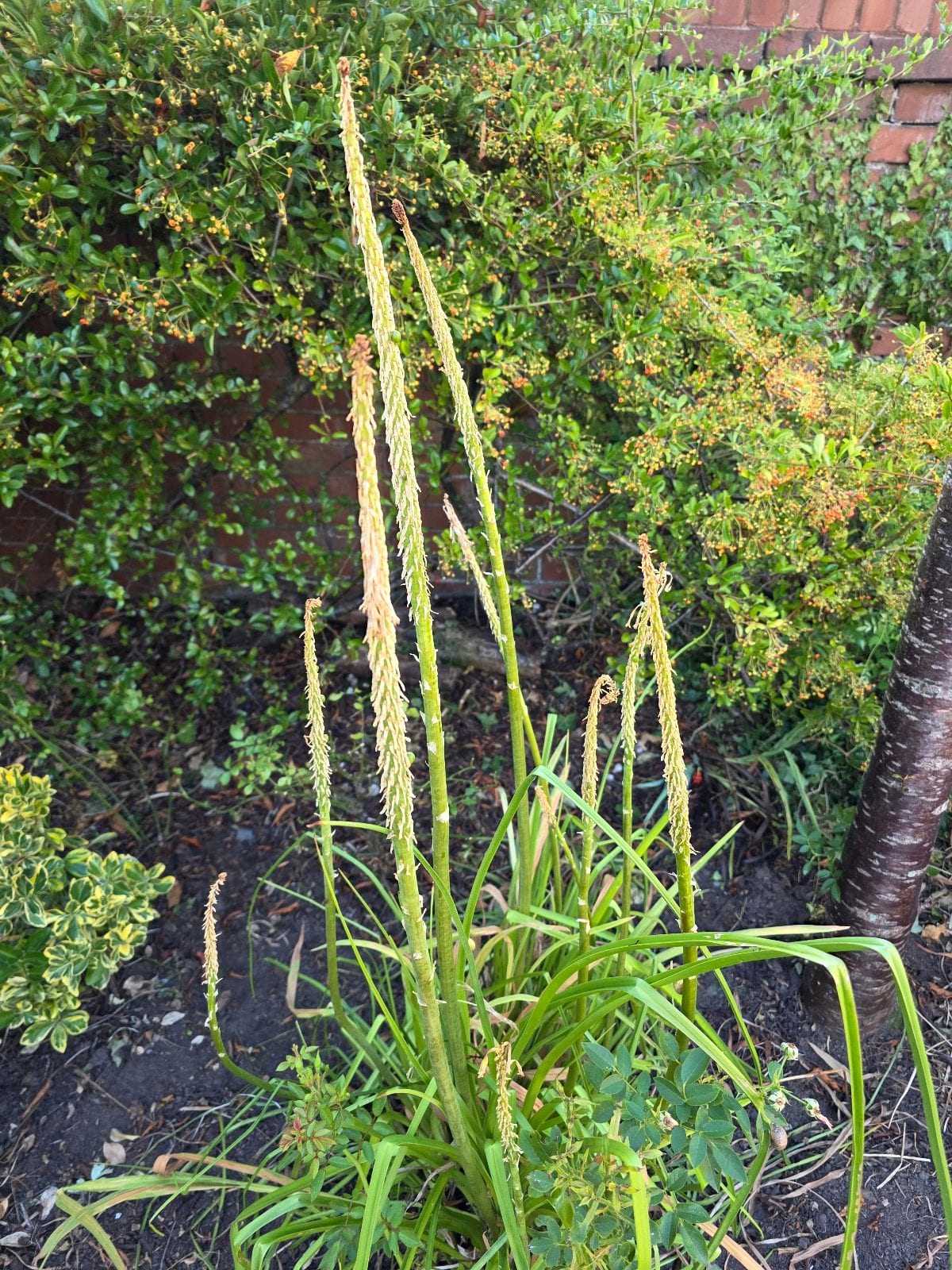
Italians broom (Cytisus scoparius ‘?).
설명
I can’t reliably identify this plant from the photo with high confidence. The image shows tall, pencil-thin green stems topped with long drooping, yellow-green “wands” covered in tiny bead-like structures, growing in a brick-and-ground garden. That look is not enough for a confident ID, and a few different plants (including some flowering/seed-stalk types and certain shrubs with long inflorescences) could fit. If you want a more accurate identification, please share: (1) a close-up of the “beads/wands” (top and side), (2) a view of the whole plant base and leaves (especially whether the leaves are present on the flowering stems), (3) the plant’s location/climate (country or hardiness zone), and (4) whether the wands are flowers or seed pods. In the meantime, here are likely care considerations for plants that produce tall flowering/seed stalks in garden conditions: 1) Sunlight - Most flowering garden shrubs and perennials like this prefer full sun (about 6–8+ hours). If it’s in partial shade, growth may be taller and flowering can be lighter. 2) Watering - During active growth and flowering: water deeply when the top few centimeters of soil dry out. - After establishment: many hardy shrubs/perennials are somewhat drought tolerant, but the new growth should not be allowed to fully desiccate. - Avoid consistently waterlogged soil; good drainage is important. 3) Soil - Use well-draining soil. If the area stays wet or clay-heavy, amend with compost and/or coarse grit/sand (not too much—aim for drainage without making it sterile). 4) Feeding - In spring, apply a balanced slow-release fertilizer or compost around the root zone. - Avoid heavy nitrogen once blooming starts; it can push more leafy growth than flowers. 5) Pruning - If the plant flowers on new growth (common for many perennials): light pruning after flowering can tidy the plant. - If it flowers on old wood (many shrubs): pruning should be done right after flowering to avoid removing next season’s buds. - Remove dead or damaged stalks at any time. 6) Deadheading / seed heads - If those drooping structures are seed pods, leaving them may allow reseeding (if the plant is self-fertile). If you want a cleaner look, remove them once mature. 7) Common issues to watch - Stem dieback or failure to flower can be from winter damage, insufficient light, or poor drainage. - Yellowing may point to overwatering, low nutrients, or iron/micronutrient issues (depending on soil pH). 8) Safety notes - Many shrub/seed-pod plants can be mildly irritating, and some are toxic if ingested. If you have pets or children, it’s best to avoid handling the plant’s seeds/pods until identification is confirmed. Once you share a close-up and leaf/base information, I can narrow down the exact species and give a tailored ~1000-word care guide including pruning timing, watering schedule, soil pH preferences, and whether the plant is likely a shrub/perennial or a grass-like plant with inflorescences.
식별 시간
2026년 8월 23일
안내
식집사의 기능은 AI를 사용하고 있어 부정확 할 수 있습니다. 단순 재미와 참고용으로만 사용해주세요.
식물 결과에서 바로 할 수 있는 일
이름을 확인한 뒤 공식 식물 DB에서 관리 정보를 바로 확인하세요.