Rose Glow Barberry (Berberis thunbergii 'Rose Glow')
설명
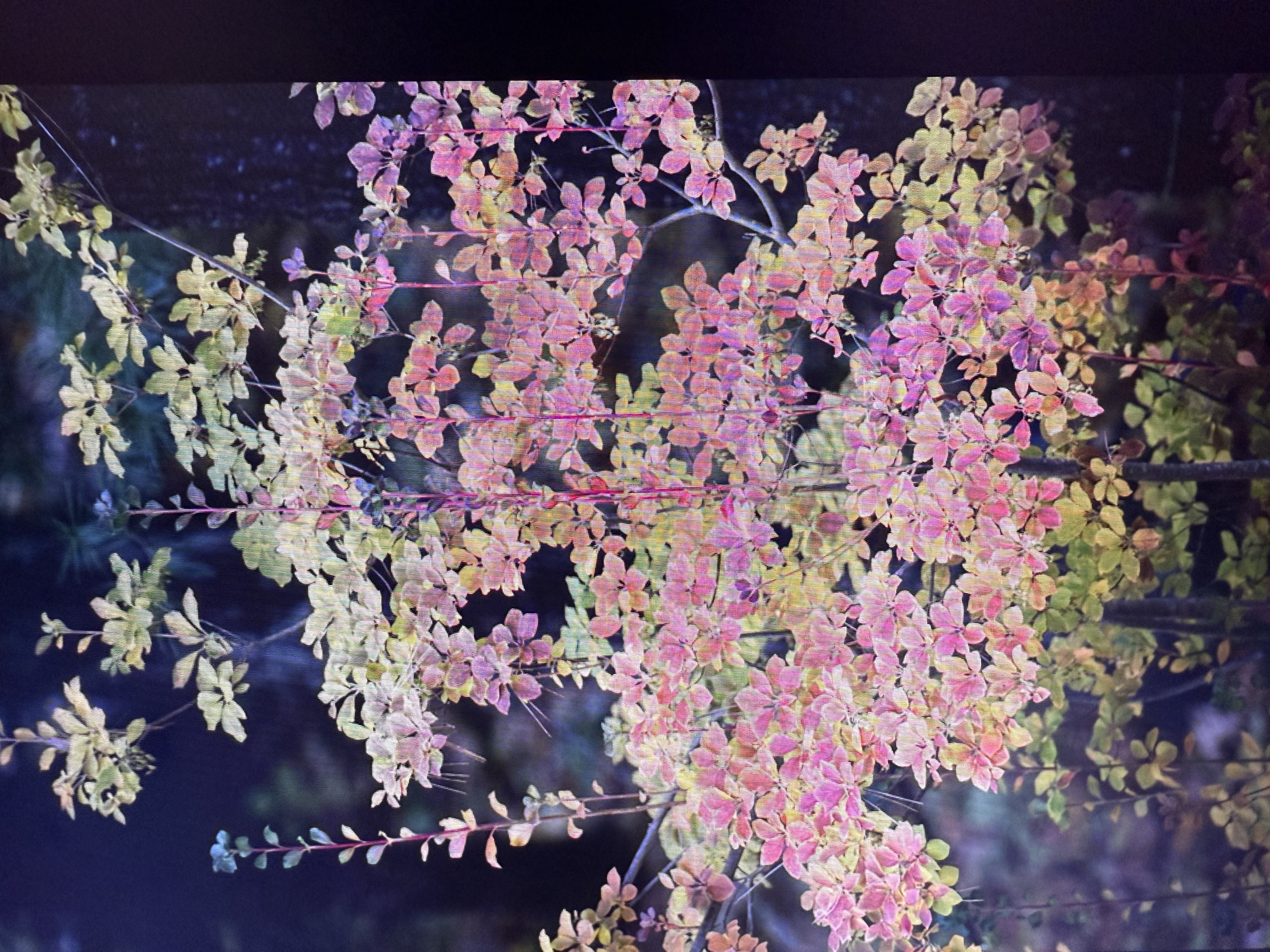
The plant in your photo most closely resembles a variegated barberry, commonly sold as Berberis thunbergii 'Rose Glow' or a closely related cultivar. This is a compact, deciduous shrub known for its slender, upright to arching stems and very small, oval leaves that ripen in a striking mosaic of pink, cream, and lime tones. New growth tends to emerge bright pink or rose, then gradually blends with yellow-green and cream as the season progresses. The overall effect is a warm, sunset-hued display that stays interesting throughout the year, especially in sunny locations. Stems are typically slender and can take on a purple-red hue, and the plant forms a rounded mound or a broad, airy shrub-like shape. In winter, after the foliage drops, the remaining twig color and architecture can still provide visual interest due to the contrast of the bare, spiny stems against the winter light. The leaves are small (roughly 0.5–1 cm long) and arranged alternately along the stems, with margins that are smooth to very finely toothed depending on the clone. Some cultivars of Berberis thunbergii produce small red berries later in the season, but in ornamental variegated forms the fruit may be less conspicuous or sparse. A notable feature is the spines on the stems, which give the plant a thicket-like, thorny character that can act as a deterrent for passersby if planted as a low barrier or border. Given these distinctive traits, the plant is often used in mixed borders, as a focal point in small gardens, or as a low, decorative hedge component. Care and cultivation outline (typical landscape conditions): - Light and location: Rose Glow Barberry performs best in full sun to light shade. The variegation and leaf color intensity are strongest when the plant receives several hours of direct sun each day. In shadier spots the foliage may be less variegated and the overall vigor somewhat reduced. A sunny, well-drained site is essential to prevent foliar diseases and root rot and to maintain the vibrant color pattern. - Soil and drainage: It tolerates a wide range of soil types, including average garden soil, clay, or loamy mixes, as long as drainage is good. It prefers slightly acidic to neutral soils but can tolerate modest alkalinity. Avoid permanently soggy soil, as excessive moisture can lead to root problems and leaf problems. - Watering and feeding: When first planted, provide regular, deep watering to establish a strong root system. Once established, Rose Glow Barberry is relatively drought-tolerant and can survive periods of dryness, though consistent moisture will generally promote stronger color and denser growth. In hot, dry climates, occasional deep watering during prolonged dry spells is advisable. Fertilization is not usually required every year; if growth looks weak or the plant is not forming the desired vigor, a light application of a balanced, slow-release fertilizer in early spring can help. Avoid heavy, high-nitrogen feeding, which can produce lush foliage at the expense of the characteristic variegated color. - Pruning and shaping: Pruning is typically light and maintenance-oriented rather than a heavy restructuring. Prune after flowering or in late winter to maintain shape, remove any dead or diseased wood, and encourage air circulation within the plant’s interior. Because of its thorny nature, wear gloves and long sleeves when pruning. If the shrub becomes overly dense, you can selectively thin out older canes to stimulate new growth and preserve the plant’s open, shrub-like form. Do not prune too aggressively into old wood if you want to retain the variegation pattern, as some cultivars lose color after hard pruning. - Cold hardiness and climate: This group is generally hardy in USDA zones 4–8, though exact hardiness can vary by cultivar and microclimate. In colder areas, give the plant a mulch layer in winter to protect roots. In hot regions, provide some afternoon shade and ensure good soil drainage to prevent heat stress. - Pests and diseases: Rose Glow Barberry is relatively pest- and disease-resistant but can be susceptible to common shrubs’ issues such as aphids, scale insects, and, occasionally, leaf spots in overly damp conditions. Good air circulation and avoiding overhead watering help minimize leaf disease. Spiny, dense growth can shelter pests, so inspect plants regularly and treat infestations early with horticultural oil, insecticidal soap, or appropriate systemic treatments if necessary. In some regions, barberries can host rust fungi that affect other plants; while this is more of a concern in farms, it is wise to monitor for rust-like symptoms and remove heavily infected leaves if observed. - Propagation: Propagation is typically done by semi-ripe cuttings taken in late summer or by layering. Cuttings should be prepared from current-year shoots, rooted with a rooting hormone, and kept in a sheltered, humid environment until established. Layering is easiest—bend a flexible shoot to the ground, bury a portion of it, and once roots form, detach and transplant. - Garden design and use: The variegated pink–cream foliage adds warm color to borders and rock gardens and pairs well with evergreens or plants with purple, blue, or lime tones. Its compact size makes it suitable for low hedges, edging along pathways, or as a specimen shrub in mixed borders. The thorny stems also create a slight barrier, which can be useful for delineating spaces in a subtle way. Because the foliage is highly decorative in spring and through summer, this plant can provide year-round interest, especially when contrasted with flowering perennials or ornamental grasses. - Safety and maintenance notes: The spines on the branches are a notable feature to be mindful of when planting near walkways or high-traffic areas. They can cause minor injuries if not handled carefully during pruning or maintenance. Regular upkeep—removing spent growth and thinning crowded branches—helps keep the plant healthy and visually balanced. If you are cultivating in a garden that accommodates wildlife, it’s worth noting that while the plant itself is not poisonous to humans as a whole, it is a hardy shrub with spines and should be handled with care. The berries, when present, are not commonly consumed by people and are more ornamental than culinary in most garden cultivars. - Invasiveness and regional considerations: Berberis thunbergii and some of its cultivars, including variegated forms, can be invasive in certain areas due to their ability to spread by root suckers and birds dispersing seeds. In regions where barberry rust or related diseases affect nearby crops (for example, cereals or fruit trees), local guidelines may advise limiting or restricting planting. If you live in an area with strict regulations or known invasive tendencies, consult local extension services or garden centers for guidance and consider choosing a non-invasive cultivar or a different border plant. - Seasonal behavior: In spring, new growth frequently appears pink or rose-tinted, giving the plant a lively start to the season. By summer, the variegation becomes a mosaic of pink, cream, and lime, creating a vivid palette that shifts with sun exposure. In autumn, some color shift to bronze or red tones can occur as the leaves prepare to drop. In winter, the plant largely rests with its architectural twig pattern visible, which still adds structure to a bare winter garden. Overall, Berberis thunbergii 'Rose Glow' is admired for its striking, low-maintenance color display, compact form, and resilience. It’s well suited to gardeners who want a splash of warm tone in a mixed border or a decorative, thorny hedge component that requires thoughtful but manageable care. If you can provide full sun, well-drained soil, and a light pruning routine, this shrub will typically deliver robust growth, dependable color, and an eye-catching seasonal cue in your landscape for years to come.
식별 시간
2025년 10월 25일
안내
식집사의 기능은 AI를 사용하고 있어 부정확 할 수 있습니다. 단순 재미와 참고용으로만 사용해주세요.
식물 결과에서 바로 할 수 있는 일
이름을 확인한 뒤 공식 식물 DB에서 관리 정보를 바로 확인하세요.