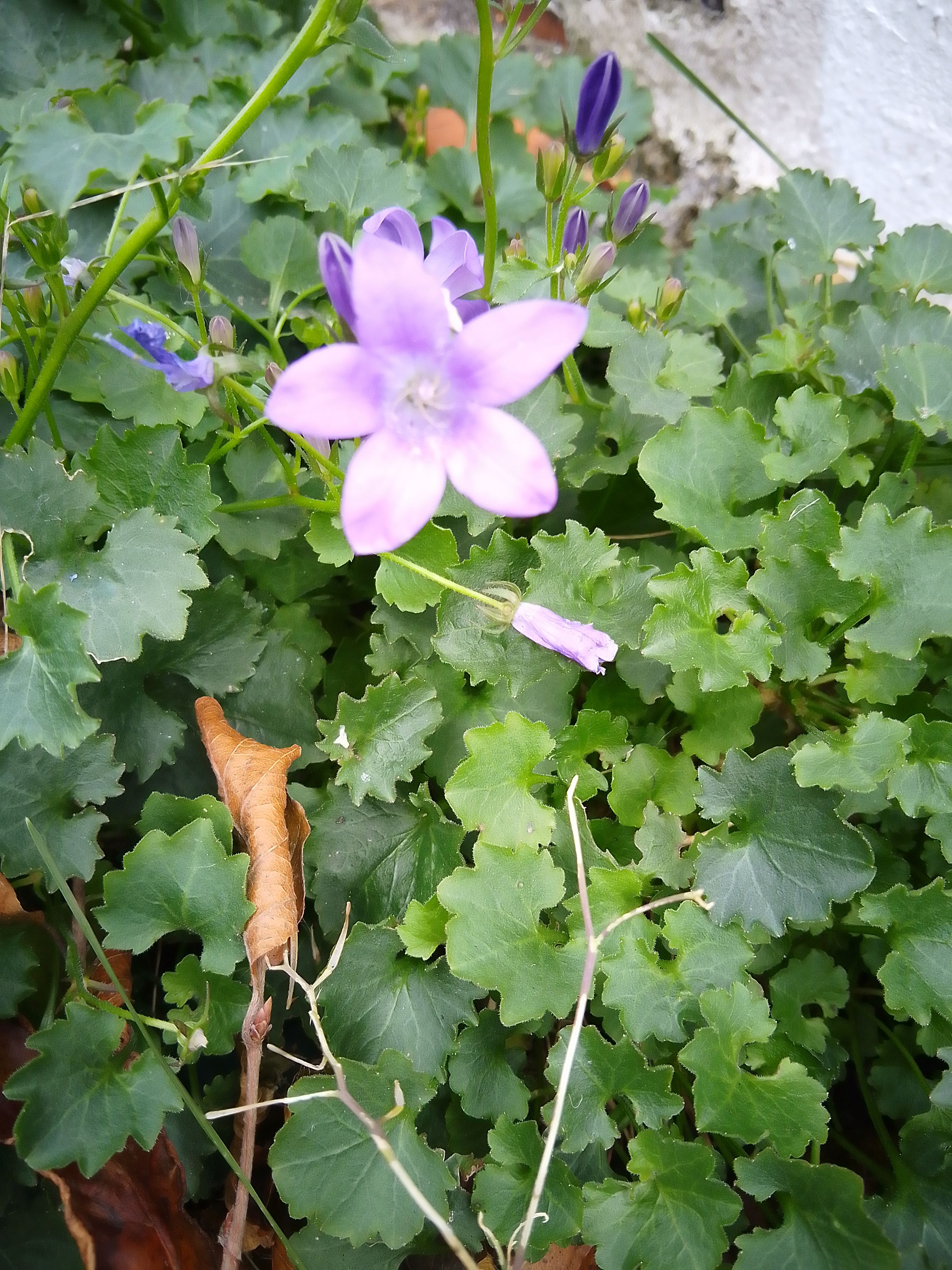
Campanula (bellflower) — likely Campanula portenschlagiana (Dalmatian bellflower) or a closely related creeping Campanula
설명
The plant shown in the photo appears to be a creeping Campanula, a low-growing, spreading perennial that forms a dense carpet of foliage and sends up slender flowering stems. The lilac to blue-purple, five-petaled flowers are star-shaped and sit above a mat of leafy groundcover. The leaves are rounded to kidney-shaped with shallow, lobed margins and a slightly hairy or textured surface, contributing to a compact, rock-garden or border-friendly habit. This combination—a creeping, evergreen to semi-evergreen groundcover with delicate, starry flowers on wiry stems—matches commonly sold forms of Campanula portenschlagiana (Dalmatian bellflower) and other creeping Campanula species such as Campanula poscharskyana. While a precise species cannot be guaranteed from a single photo, the overall growth form, leaf shape, and flower morphology are characteristic of these creeping bellflowers. Overview and natural habit - Growth habit: Low, spreading groundcover that forms a dense mat. It is well suited to rock gardens, container edging, borders, and naturalizing in loose soil. In milder climates it can naturalize and cover larger areas, but it is typically grown as a controlled edging or rock garden plant. - Foliage: Leaves are rounded or heart-shaped at the base with irregular, shallow lobes or teeth along the margins. They form a lush green carpet that remains attractive through the growing season, especially when the plant is not in bloom. - Flowers: The flowering stems rise above the foliage and bear five-petaled, star-shaped blossoms in shades of blue, violet, or lavender. The petals are typically evenly proportioned, creating a delicate, almost celestial look—hence the common name “bellflower” for the genus. The center of each flower is lighter, often with a pale throat, and the bloom is generally long-lasting when conditions are favorable. Care and cultural requirements - Light: Creeping Campanulas prefer full sun to light shade. In hotter climates, some afternoon shade helps prevent leaf scorch and extends bloom longevity. In full sun, expect more compact leaf growth and vigorous flowering. - Soil and drainage: They thrive in well-draining soil. A sandy, loamy mix is ideal. Good drainage is crucial; otherwise roots may rot in wet winters or overly rich, compact soils. They tolerate average garden soils but will perform best where water drains readily. - Watering: Water regularly during establishment to encourage a strong root system. Once established, creeping Campanula is relatively drought-tolerant, but it still appreciates regular moisture in prolonged hot spells. Avoid consistently waterlogged soil, which can lead to root rot and fungal issues. - Fertilization: Apply a light, balanced fertilizer in early spring as growth begins. A slow-release formula or a one-time feed with a balanced NPK (such as 10-10-10) works well. Avoid heavy feeding, which can promote excessive foliage at the expense of flowering. - Mulching: A shallow layer of organic mulch helps conserve moisture and suppress weeds, but avoid piling mulch directly against the crowns to prevent rot. In hot climates, mulching can also help moderate soil temperature. - Pruning and deadheading: Regular deadheading encourages continued flowering and prevents the plant from using energy on producing seed. After flowering, you can trim back spent stems to maintain a neat appearance. In areas with severe winters, light pruning in late winter or early spring helps promote fresh growth and a tidier look. - Propagation: Creeping Campanula propagates easily. Options include: - By division: In early spring or fall, lift and divide clump-forming varieties, replanting divisions in well-draining soil. - By layering: In some forms, you can pin down flexible stems to the soil to root and form new plants. - By seed: Campanula species produce seed; sow in spring or early summer for new plants, though cultivars are often more reliably propagated by division or cuttings. - Temperature and hardiness: Most creeping Campanula are hardy to at least USDA zone 4–6, depending on the cultivar. They tolerate cool winters but may need protection in very cold, wet regions. In areas with harsh freezes, provide mulch or move potted plants to a sheltered location. - Pruning specifics for vigor: If the plant becomes congested or starts to look leggy, light shearing after flowering can refresh growth and improve air circulation, reducing disease pressure. Avoid heavy pruning that could remove next season’s flowering wood. Pests, diseases, and problems to watch for - Pests: Slugs and snails can be a problem in damp, shady spots, particularly with tender new growth. Aphids and occasional caterpillars may appear on new shoots. Regular inspection helps catch issues early. - Diseases: Powdery mildew can occur in humid, crowded conditions. Ensure good air flow and avoid overhead watering. Root or crown rot may occur if soil remains waterlogged or if drainage is poor. - Weeds and competition: Because creeping Campanula forms a mat, it can be crowded by aggressive weeds or unusually vigorous neighboring plants. Mulching and routine weeding around the edge of the bed helps maintain vigor where desired. Design tips and companion planting - Use in rock gardens, slopes, or borders where a low-growing, long-blooming plant adds color without overwhelming space. - Pair with other drought-tolerant, sun-loving perennials such as thyme, sedum, or ajuga for textural contrast and extended color combinations. - In containers, combine with trailing annuals or compact perennials. Ensure the pot has good drainage and that the soil dries out slightly between waterings to prevent rot. - For color variety, consider cultivars with white or deeper blue flowers if available. Seasonal changes in soil moisture and temperature can influence shade intensity in some cultivars. Maintenance and lifecycle notes - Longevity: Creeping Campanula can form a durable, long-lasting groundcover if well cared for. Some forms are persistent for many years in ideal conditions, though heavy shading, poor drainage, or nutrient deficiency can reduce vigor. - Winter behavior: In colder climates, the foliage may die back or go semi-dormant in winter and re-emerge in spring. Mulching in late autumn can protect roots, but do not over-mulch or cover crowns. - Regrowth after stress: If the plant experiences drought stress or heat, it may rebound once conditions improve, but consistent care improves blooming cycles and overall health. Common mistakes to avoid - Overwatering and poor drainage: The biggest killer for creeping Campanula is waterlogged soil. Ensure beds are well-drained and avoid soggy spots, especially in winter. - Heavy feeding or overcrowding: Excess fertilizer or crowded conditions can promote leaf growth at the expense of flowers and can invite disease by reducing air circulation. - Ignoring pruning: Allowing the plant to become leggy or overly tall reduces a creeping effect and can make maintenance harder later on. Conclusion From the image, the plant appears to be a creeping Campanula, a charming groundcover prized for its delicate, five-petaled flowers perched above a soft, leafy mat. The care requirements are straightforward: provide sun to light shade, well-draining soil, and regular moisture during establishment, with moderate feeding in spring. Deadhead or trim after flowering to encourage fresh growth, and propagate by division or seeds as needed. With proper conditions, these plants can provide months of color, help stabilize slopes or edging, and create a pleasing, cottage-g garden feel. If you’re unsure of the exact species, you can still cultivate the general Campanula care approach and enjoy the same cheerful bloom and ground-covering habit that this plant offers.
식별 시간
2025년 8월 29일
안내
식집사의 기능은 AI를 사용하고 있어 부정확 할 수 있습니다. 단순 재미와 참고용으로만 사용해주세요.
식물 결과에서 바로 할 수 있는 일
이름을 확인한 뒤 공식 식물 DB에서 관리 정보를 바로 확인하세요.