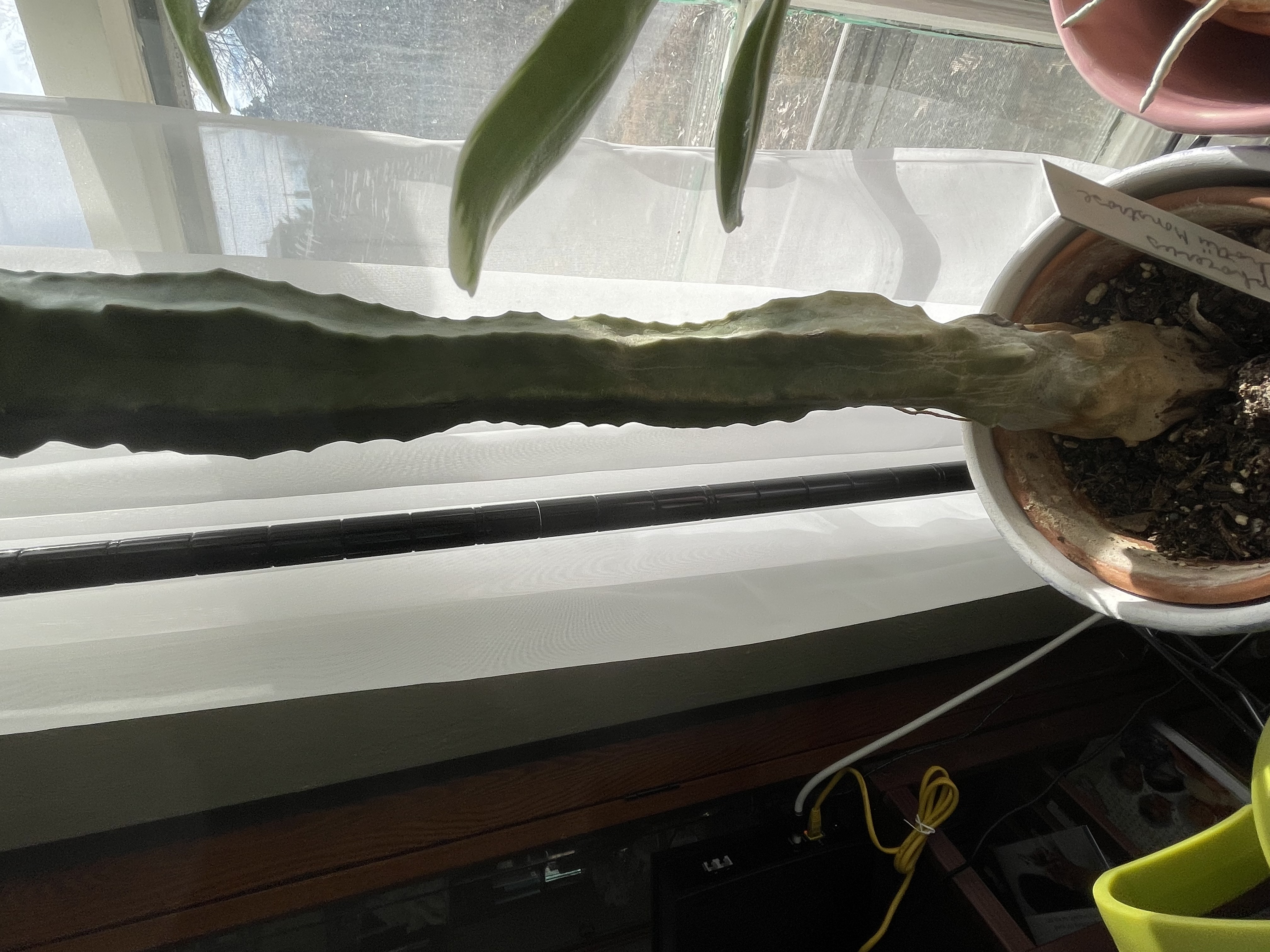
Euphorbia (caudiciform succulent) - likely a monstrose form
설명
This plant appears to be a caudiciform euphorbia, a type of succulent that stores water in a thick underground or near-ground caudex and sends up a tall, leafless stem. From the photo, the stem is a vertical, columnar structure with irregular, wavy ribs running along its length. The ribs create a corrugated or fluted appearance, giving the plant a sculptural, architectural look. The color is a mid to deep green, sometimes with a slightly bluish or gray-green tinge. The base of the plant shows a swollen, bulb-like caudex that sits at soil level or just above it, with a rough, corky bark-like surface. There are no obvious branches or leaves along the stem in this view, which is common for many adult euphorbia caudiciforms that shed leaves for extended periods. Overall, the plant has a striking, almost otherworldly appearance that is highly prized by collectors of drought-tolerant, desert-adapted species. Natural habitat and growth habit: In nature, many Euphorbia species with caudices inhabit arid or semi-arid regions of Africa and the Middle East. They experience hot days, cooler nights, and sporadic rainfall. To survive, they store water in their caudex and in the succulent stems, and they often go long periods without active growth. Growth is typically slow, and many of these plants only put on a small amount of new tissue each season. Leaves, when present, are usually small and fall off quickly as the plant conserves water. The tall stem that rises from the caudex is designed to maximize photosynthesis with minimal water loss, and the ribbed, ridged surface can help shade the plant’s own tissues from intense sun. What you’re seeing in the photo suggests a mature specimen, possibly a monstrose (mutant-like) form of Euphorbia. Monstrose varieties display highly irregular, wavy, or contorted stems that retain the typical Euphorbia milky sap. The combination of a large, fat caudex and a long, skinnier, ribbed stem is characteristic of many caudiciform Euphorbias kept as bonsai-like or sculptural houseplants. Care and cultivation overview: The central task in caring for a caudiciform Euphorbia is to respect its arid-adapted physiology. They are built to endure drought and prefer conditions that favor rapid drying after watering. Overwatering is the most common problem and can lead to caudex rot, stem rot, or fungal infections. With that in mind, here are practical care guidelines. Light and temperature: - Provide bright light. A south- or west-facing window is ideal if you can acclimate the plant slowly to full sun, as these plants thrive on strong light. If light is insufficient, the stem may become etiolated (soft, elongated, and pale) and the ridges can lose their pronounced contour. - Keep temperatures warm and stable. Ideal daytime temperatures are around 72–86 F (22–30 C). They can tolerate warmer summers, but avoid freezing or near-freezing temperatures. Sudden cold drafts or rapid temperature swings should be avoided, as they can stress the plant. Watering and humidity: - Water sparingly and thoroughly during the growing season (spring through fall). Allow the soil to dry out well between waterings. The frequency will depend on your pot size, soil mix, and environment, but a typical interior schedule might be every 1–3 weeks in hot, sunny conditions and much less often in cooler months. - In winter or during dormancy, reduce watering significantly. The plant will use far less water, and overwatering during dormancy is a common cause of rot. - Watering technique matters: water at the soil surface rather than directly on the caudex to minimize moisture around the base. Ensure the pot has drainage holes and use a well-draining mix. Soil and repotting: - Use a gritty, well-draining cactus/succulent mix. A common recipe is a base of potting soil with added perlite, pumice, or coarse sand to improve drainage. Some growers mix in a small amount of organic material, but avoid heavy, nutrient-rich soils that retain moisture. - pH preference is generally neutral to slightly acidic, but Euphorbia are tolerant of a range, provided drainage is good. - Repot every 2–3 years or when the plant becomes root-bound. Choose a pot that is not too large relative to the caudex, and consider a terracotta pot to help wick moisture away from the soil. Fertilization: - Fertilize lightly during the active growing season with a balanced, water-soluble fertilizer diluted to half strength. A product formulated for cacti and succulents is a convenient option. Avoid high-nitrogen fertilizers, which can promote leggy growth and weaken stems. - Do not over-fertilize; the plant does not require heavy feeding to stay healthy. Pruning, shaping, and latex: - If a branch or the stem is damaged or you want to adjust the plant’s shape, you can prune with clean, sharp tools. Euphorbia exude a milky sap that can irritate skin and be toxic if ingested, so always wear gloves and eye protection when cutting or handling exposed sap. Allow cut surfaces to callus before replanting or exposing them to moisture. - Pruning for shape should be done conservatively, especially with a specimen that already has a dramatic caudex, to avoid stressing the plant or removing too much of the architectural form. Propagation: - Propagation is typically done from cuttings of the stem or from offsets if your plant produces them. Take a clean cut, allow the wound to callus for several days, then plant in a well-draining mix and provide bright light and warmth to encourage rooting. Keep the new cutting dry for the first week or two to reduce rot risk. Pests and diseases: - Common pests include mealybugs, scale, and spider mites. Regular inspection and prompt treatment are important. Neem oil, insecticidal soaps, or systemic insecticides can be effective, but read product labels and follow safety precautions for succulents. - The most significant threat is overwatering, which can cause caudex rot and root rot. Ensure good drainage, avoid waterlogging, and adjust watering frequency with the seasons. - Fungal or bacterial infections may present as soft, discolored areas on the stem or caudex. If you notice softening, shrinkage, or foul odor, isolate the plant and assess for rot; remove affected tissue if possible and let the plant dry before re-watering. Safety and handling: - The milky sap produced by Euphorbia is toxic and can irritate skin and eyes. When handling, especially during pruning or potting, wear gloves and avoid contact with eyes or mucous membranes. If sap makes contact with skin, wash with soap and water promptly. Keep away from curious pets and children who might chew or rub parts of the plant in their mouths. Aesthetic and position in a collection: - This plant is prized for its sculptural, architectural presence. The tall, corrugated stem rising from a stout caudex acts as a focal point in a succulent or dry-tome collection. It pairs well with low-growing succulents, agaves, or other caudiciforms that provide a contrast in texture and form. When placed near a bright window, it can become a striking centerpiece that changes with the light throughout the day. Common issues and quick fixes: - Leggy growth and weak ridges: often a sign of insufficient light. Move the plant to a brighter location and gradually acclimate to more intense light to avoid sunburn. - Caudex rot or stem rot: typically caused by overwatering or poor drainage. Allow the soil to dry thoroughly between waterings, check pot drainage, and consider repotting into a grittier mix. - Leaf drop or pale color: may indicate a change in light or temperature or a temporary dormancy. Ensure stable temperatures and consistent light exposure. Summary: - The plant in your photo is a dramatic, leafless Euphorbia caudiciform with a swollen base and a tall, ribbed stem. It embodies the resilience and sculptural appeal of drought-tolerant succulents. With bright light, careful watering, a well-draining soil, and protection from frost and extreme stress, it can be a long-lived, conversation-starting addition to a home or collection. Always handle with care due to its toxic sap, and enjoy the unique, almost living sculpture that this plant provides.
식별 시간
2026년 1월 11일
안내
식집사의 기능은 AI를 사용하고 있어 부정확 할 수 있습니다. 단순 재미와 참고용으로만 사용해주세요.
식물 결과에서 바로 할 수 있는 일
이름을 확인한 뒤 공식 식물 DB에서 관리 정보를 바로 확인하세요.