Aechmea ‘Tiny’ / Aechmea bromeliad (likely Guzmania/Aechmea-type bromeliad hybrid)
설명
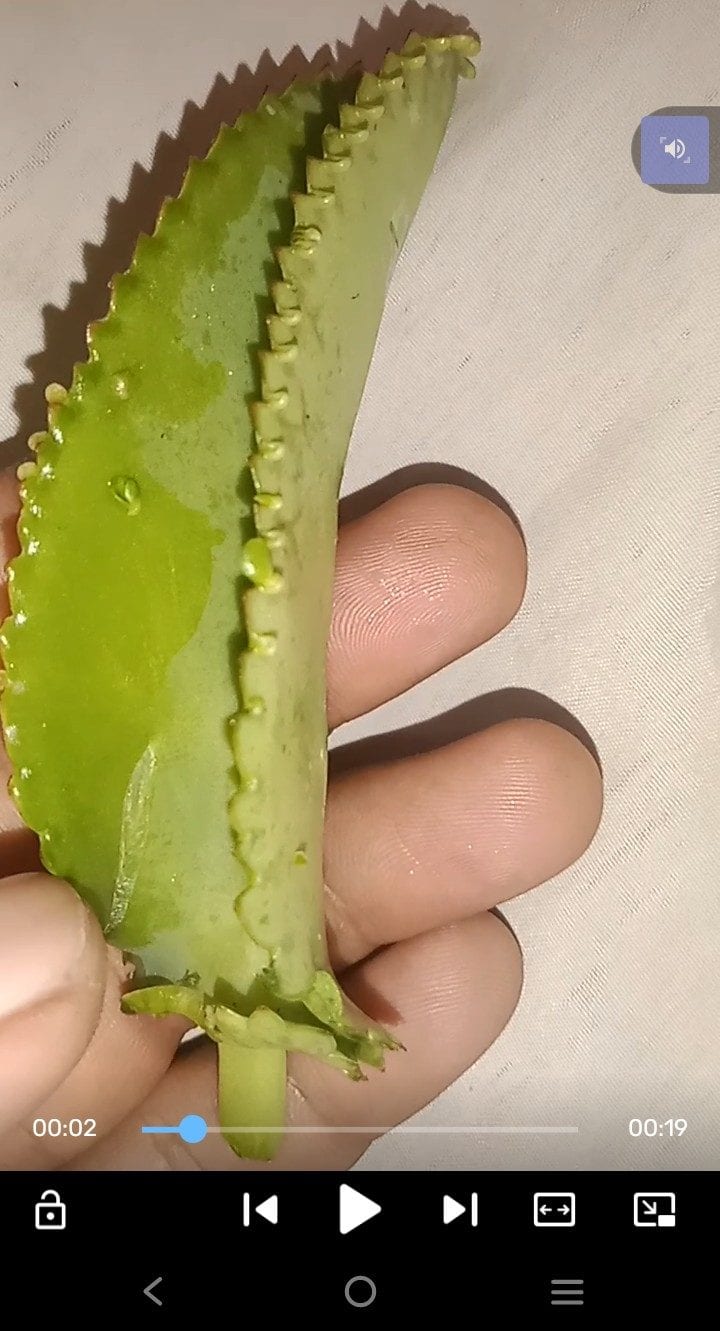
The plant in your photo shows a thick, bright-green, strap-like leaf with a serrated (spiny) margin and a rosette-like structure. The leaf surface also shows a faint banded/scale-like texture typical of many ornamental bromeliads, especially the tank-forming genera Aechmea and related hybrids (including some Guzmania/Vriesea look-alikes). Based on the combination of: (1) thick stiff leaves, (2) strongly serrated edges, and (3) rosette growth, it most closely resembles an ornamental tank bromeliad in the Aechmea type. Exact species can’t be confirmed from one close-up leaf alone, because several bromeliads share similar leaf traits, and many are sold as named hybrids. Below is care guidance that fits most Aechmea-type ornamental bromeliads (tank bromeliads). You can use this even if the plant turns out to be a closely related bromeliad. --- ## Key characteristics ### Growth habit - **Rosette-forming evergreen**: Leaves arise in a tight central cup/rosette. - Many bromeliads of this type form a **“tank”**—a small reservoir in the center that can hold water. ### Leaves - **Thick, glossy, strap-like leaves** (often with subtle striping). - **Spiny/serrated margins**—the edges may feel slightly rough or prickly. - Color is typically **bright to medium green**, sometimes with bands or a faint sheen. ### Flowers and life cycle - Bromeliads usually bloom once, then gradually decline. - Before or after flowering, they produce **offsets/pups** at the base, which continue the plant’s life cycle. - Flowering forms vary by genus and hybrid, but Aechmea types often develop a **showy central inflorescence** with colored bracts. ### Toxicity - Most ornamental bromeliads are **generally non-toxic to humans**, though individual pets may still chew plants. - For pets, assume mild irritation is possible; keep out of reach if you have cats/dogs. --- ## Light requirements - Place the plant in **bright, indirect light**. - It can tolerate **morning sun** (gentler direct rays) but avoid harsh midday sun that can scorch leaves. - If leaves begin to fade or the rosette looks stretched/loose, increase light slightly. **Good indoor spots:** near an east window, or a few feet back from a south/west window with sheer curtain. --- ## Watering: “tank bromeliad” method Because this looks like a rosette/tank bromeliad, water is managed in two ways: the tank (center) and the potting medium. ### 1) Water in the tank (center) - Keep the **central cup partially filled** with clean water. - Use **filtered or dechlorinated water** if possible. - Empty and refill the tank **regularly** (about every 1–2 weeks) to prevent stagnation. - In cooler seasons or low light, use less tank water to avoid rot. ### 2) Water the medium - When the top layer feels dry, lightly water the soil/bark mix. - Let excess water drain—roots should not sit in soggy medium. ### Simple rule - **Warm and bright = more frequent care.** - **Cool/dim = less water.** --- ## Humidity and air movement - Bromeliads appreciate **moderate humidity** (often 40–70%). - They also need **air circulation** to prevent leaf spots and rot. - In dry homes, a small humidifier or pebble tray can help. - Avoid placing in stagnant corners. --- ## Temperature - Ideal indoor range: **18–27°C (65–80°F)**. - Tolerates brief cooler periods, but avoid long exposure below **10–12°C (50–54°F)**. - Protect from cold drafts and heating vents that dry the plant. --- ## Soil / potting mix Tank bromeliads typically do best in a **fast-draining, airy, slightly acidic mix**. ### Best medium options - Orchid-style bark mix (fir bark) - A cactus/bromeliad mix - A blend of bark + perlite + a small amount of potting mix ### Pot choice - Use a pot with **excellent drainage**. - Terracotta can help keep the mix from staying too wet. - Don’t bury the rosette base deep in soil—roots anchor it, but the crown should stay near the surface. --- ## Fertilizing You can fertilize lightly because bromeliads grow slowly. ### Method - Use a **bromeliad/orchid fertilizer** or a dilute balanced fertilizer. - Use **quarter to half strength**. - Apply either: - into the tank (with care not to overdo), or - to the medium during watering. ### Frequency - During active growth (spring/summer): **every 4–6 weeks**. - During winter: **pause or fertilize very lightly** (every 8–10 weeks). ### Important caution - Don’t over-fertilize—leaf burn and salt buildup can occur. --- ## Pruning and maintenance - Remove **only dead or severely damaged leaves** by cutting near the base with clean tools. - If the tank accumulates algae or debris, flush it thoroughly. - Wipe leaves occasionally with a damp cloth to remove dust. --- ## Propagation (pups) A common bromeliad pattern: 1. The main plant blooms. 2. It gradually declines. 3. It produces **offsets (pups)** near the base. When pups are about **1/3 to 1/2 the size** of the mother plant: - Carefully separate them (or pot them with the original plant until they’re robust). - Use the same airy bromeliad/bark mix. - Keep them in bright indirect light and slightly higher humidity. --- ## Common problems and troubleshooting ### Brown tips or crispy edges - Often caused by **low humidity**, underwatering, or salty water. - Flush the tank/medium with clean water occasionally. - Increase humidity and avoid hard water if possible. ### Rot (soft base, foul smell) - Too much water in the crown or poor drainage. - Reduce tank water in cool periods. - Improve airflow and use a faster-draining medium. ### Pale leaves / weak growth - Not enough light. - Move to brighter indirect light. ### Pests - Look for **mealybugs**, scale, or mites. - Treat with insecticidal soap or horticultural oil, and remove heavily infested parts. - For tank plants, avoid harsh chemicals that may damage the tank. --- ## Related information: what to expect next If this is an Aechmea-type bromeliad, it may eventually produce a colorful flower spike from the center rosette. The plant’s lifespan includes a flowering phase followed by pup production. Even after the mother plant fades, the pups usually keep the plant going—so you may see new rosettes develop at the base over time. --- ## Quick care summary - **Light:** Bright indirect (some gentle morning sun). - **Water:** Keep central tank partially filled; refresh regularly; water medium lightly when it dries. - **Humidity:** Moderate; ensure airflow. - **Soil:** Fast-draining, bark-based mix. - **Temperature:** 18–27°C (65–80°F). - **Fertilizer:** Dilute; every 4–6 weeks in growing season. --- If you can share one more photo showing the **entire rosette, the base, and any flower/inflorescence (if present)**, I can narrow the ID and adjust care details to the exact genus more confidently.
식별 시간
2026년 9월 19일
안내
식집사의 기능은 AI를 사용하고 있어 부정확 할 수 있습니다. 단순 재미와 참고용으로만 사용해주세요.
식물 결과에서 바로 할 수 있는 일
이름을 확인한 뒤 공식 식물 DB에서 관리 정보를 바로 확인하세요.