Blackberry (Rubus spp.)
설명
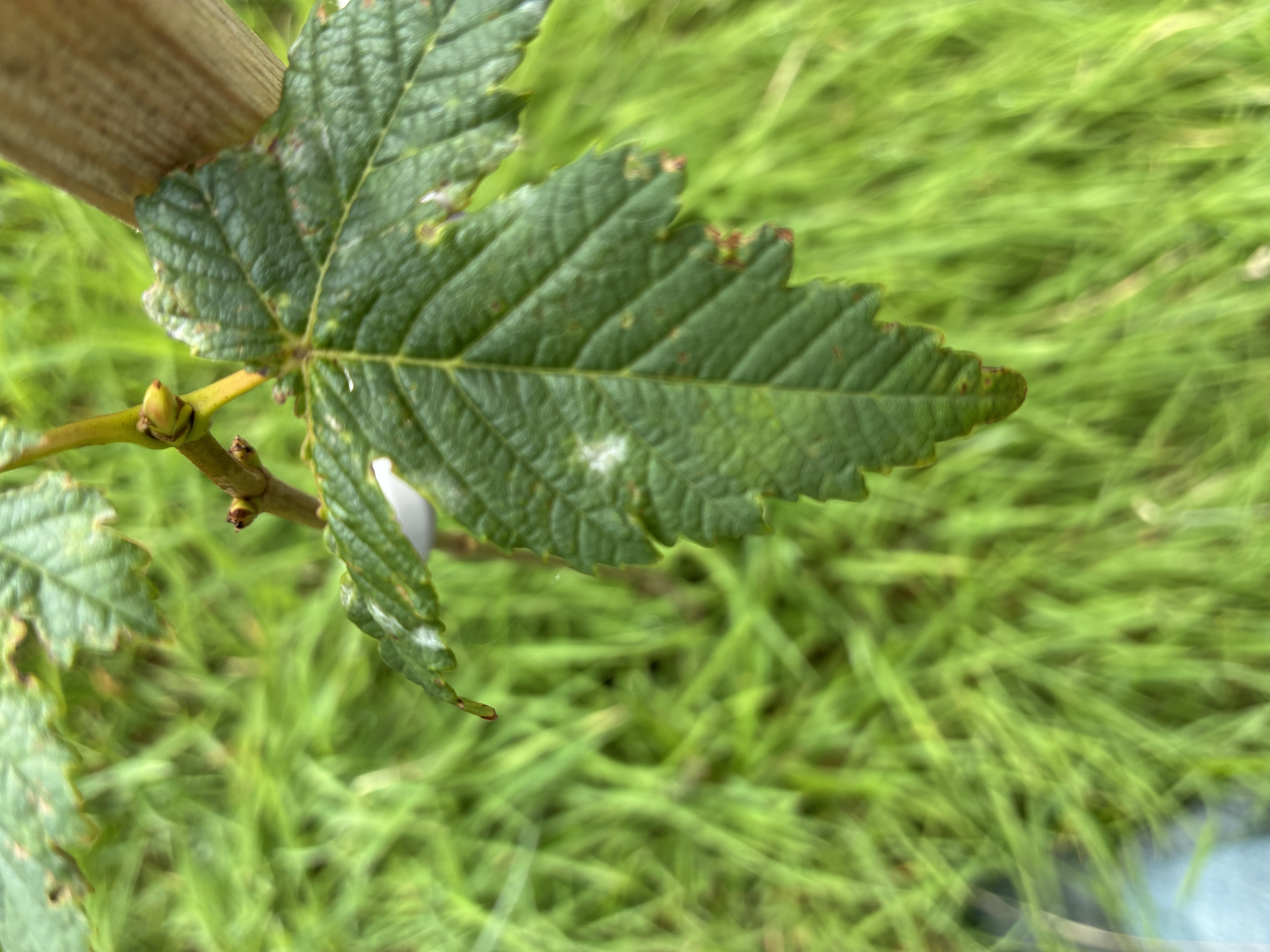
The photo appears to show a bramble plant in the genus Rubus, most likely a blackberry. What you’re seeing is a leaf that is part of a compound leaf on a thorny cane. Blackberry leaves typically occur in leaflets arranged in sets of three to five on each leaf, with the central leaflet usually larger than the side leaflets. The individual leaflet in the image is elliptical to oblong, with a finely serrated edge and a glossy, dark green surface. The veins are prominent and run in a pinnate pattern toward the serrated margins. Blackberry canes are usually vigorous and arching or upright, depending on the cultivar, and they often carry small spines or thorns along the stems. The plant is a perennial shrub that thrives in temperate regions and is widely grown for its edible fruit, which ripens from mid to late summer in most climates. Because several Rubus species share similar leaf shapes, arrangement, and thorny canes, this identification is a well-supported best guess based on the visible leaf morphology and growth habit, but it may be helpful to confirm with additional photos of the canes, the growth habit, and the fruiting clusters if possible. Key identifying features to look for in the field: thorny canes; compound leaves with 3–5 leaflets; each leaflet with a serrated margin; a strong zigzag pattern in the stem; and clusters of sweet, aggregate berries that ripen to dark purple or black when fully ripe. If you see a thicket of prickly stems producing edible black berries in late spring to summer, that strongly supports the blackberry identification. General description and ecological role: Blackberries are vigorous, clonal perennials that spread by rooting runners (underground or surface runners) and by suckers arising from the crown. They form a thicket-like shrub or vine-like hedge that provides excellent habitat and food for wildlife, especially birds that feed on ripe fruit. In cultivated settings, blackberry varieties are bred for thornless or fewer-prone thorns, larger fruit, and extended fruiting seasons, though many garden and wild forms still retain significant prickles. The leaves are typically evergreen in milder climates, but in cooler regions they may lose some gloss and hold water droplets on the surface. The plant prefers full sun and rich, well-drained soil, but it is relatively adaptable and can tolerate a range of soil types, including slightly acidic soils. Cultural requirements and care basics: - Light: Blackberry plants need full sun for best fruit production. Aim for at least 6–8 hours of direct sunlight per day. In very hot climates, some protection or afternoon shade can help reduce sun scorch on new growth, but fruiting will be reduced in shaded conditions. - Soil: Well-drained, fertile soil is ideal. They tolerate a range of pH from about 5.5 to 6.5, but perform best in slightly acidic to neutral soils rich in organic matter. Amending the bed with compost or well-rotted manure improves soil structure and fertility. - Water: Regular, deep watering is important, especially during the growing and fruiting seasons. Keep the soil consistently moist but not waterlogged. Mulching helps conserve moisture and suppress weeds. - Spacing and support: Blackberry canes can be vigorous and arching. Provide sturdy support such as a trellis, wires, or a hedge-like structure to train the canes and keep fruit off the ground. Spacing depends on cultivar and growth habit, but generally give 3–4 feet (1–1.2 m) between plants in a row. - Fertilization: In early spring, apply a balanced, slow-release fertilizer or compost. Avoid excessive nitrogen, which can promote lush, leafy growth at the expense of fruiting. A light top-dress of compost annually or every other year usually suffices for home garden plants. - Mulching: Apply 2–3 inches of organic mulch (straw, wood chips, or shredded leaves) around the base to conserve moisture, moderate soil temperature, and reduce weeds. - Pruning and training: Pruning is crucial for blackberry fruit production and plant health. There are two common systems: trailing and erect. In most systems, you remove older canes that have already fruited (floricanes) after harvest, and you encourage new primocanes to replace them. The precise method depends on whether you have summer-bearing or everbearing varieties. As a general rule, once fruiting has finished, cut back floricanes to the ground and tie in new primocanes to the trellis, selecting the strongest canes to become your new fruiting structure in the following year. Prune to maintain an open canopy to improve air circulation and reduce disease. - Pest and disease management: Blackberry plants can be attacked by several pests and diseases. Common issues include powdery mildew, cane blight, botrytis blossom and fruit rot, aphids, spider mites, Japanese beetles, and cane borers. Practicing good sanitation—removing and disposing of infected canes, cleaning up fallen fruit, and pruning to improve air circulation—helps a lot. In regions with known pressure, consider appropriate organic or conventional fungicides/insecticides on a fixed schedule, following label instructions. Regular monitoring for signs of rusts, leaf spots, or canker symptoms is important for early intervention. - Propagation and expanding: Blackberries readily propagate from dormant canes, tip layering, or from suckers that arise from the crown. For home gardeners, tip layering is a reliable method: in late summer, lay a healthy tip of primocane on the soil, partially cover with soil at a point where it can root, keep it watered, and separate it as a new plant the next season. Cuttings can be taken in winter from mature canes if desired, and rooted in a well-drained potting mix. Plant health and troubleshooting: - Plant with vigor: If canes are weak or leaves are small, check soil fertility and watering. Too little water or too poor soil can stunt growth. If the plant is overly lush with few flowers, reduce nitrogen inputs and ensure adequate sunlight. - Powdery mildew and leaf spots: If white powdery mildew appears on leaves, improve air circulation with pruning and reduce leaf wetness by watering at the base rather than overhead. Fungicidal sprays labeled for powdery mildew may be used if the problem persists in humid climates. - Botrytis and fruit rot: Botrytis cinerea can cause gray mold on berries in wet conditions. Ensure good air movement through the canopy, harvest promptly, and remove damaged fruit. In wet seasons, fungicide applications may be warranted in some regions. - Pests: Aphids and spider mites are common on new growth. Horticultural oils or insecticidal soaps can help manage these pests. If birds become a problem, use netting over fruiting areas to protect ripening berries. Varieties and growth forms to know: - Summer-bearing (floricane-fruiting) versus everbearing or primocane-fruiting types: Summer-bearing blackberries fruit on floricanes that grew the previous year, while everbearing types can fruit on primocanes in their first year. Deciding which type you have influences pruning timing and how you structure your trellis. - Thornless and nearly thornless cultivars: Many modern garden varieties have reduced thorns or are thornless, which makes harvesting easier for beginners and children. However, thornless varieties can still have some prickliness on new growth or hidden thorns, so gloves and long sleeves are wise when pruning or harvesting. - Flavor and use: Blackberry fruit flavor ranges from sweet to tart by variety, with some selections particularly well-suited for fresh eating, jams, pies, or canning. Drought tolerance and disease resistance also vary among cultivars, so choosing a locally recommended cultivar increases your chances of success. Container gardening and urban spaces: - For small spaces or patios, you can grow blackberries in large containers with a sturdy trellis. Use a deep pot (at least 18–24 inches deep) and a well-draining potting mix. Ensure the container receives full sun and has drainage holes. Regular feeding with a balanced liquid fertilizer during the growing season helps maintain vigor. You may need to water more frequently in containers, as pots dry out faster than garden beds. - Ground cover and espalier forms can be adapted to fences or walls where space is limited, provided you still give the plant enough light and air circulation. Trellising keeps berries clean and easy to harvest in these setups. Harvesting and culinary notes: - Ripeness: Berries are ready to pick when they are fully black or dark purple, plump, and come off the plant with minimal resistance. Harvesting in stages every few days during peak fruiting yields the best quality and reduces waste. - Storage: Fresh blackberries keep best in the refrigerator for a few days. For longer storage, wash gently, dry thoroughly, and freeze in a single layer before bagging. They are excellent for jams, jellies, pies, fruit sauces, and as a topping for cereals or yogurt. - Uses: Besides fresh eating, blackberry fruit is rich in vitamins C and K, fiber, and antioxidants. Flavors can vary by cultivar, with some berries lingering a bit longer on the plant to develop deeper sweetness. Ecological and landscape considerations: - In gardens, blackberries can serve as a living hedge or privacy screen, with the added bonus of fruit. To maintain a tidy appearance and limit spread, prune aggressively to control density and root expansion, and select cultivars suited to your climate and space. - In natural areas, blackberry brambles may spread aggressively and outcompete other vegetation. If you’re introducing or managing plants in native landscapes, consider containment strategies and choose non-spreading or well-managed varieties when appropriate. In summary: the plant in your photo most closely resembles a blackberry (Rubus spp.) bramble, a vigorous, fruit-bearing shrub with thorny canes and compound serrated leaves. If you’re cultivating it, focus on providing full sun, well-drained fertile soil, consistent moisture, and a trellised structure to support the canes. Prune to remove old fruiting canes after harvest and encourage new canes to replace them the following season. Monitor for common pests and diseases, apply mulch, and fertilize judiciously to promote healthy growth and abundant fruit. If you have additional photos (especially of the canes, thorns, and any fruiting clusters), or you’re unsure whether your plant is truly blackberry or a close relative such as a wild bramble, I can help refine the ID and tailor pruning and care steps to your climate and cultivar.
식별 시간
2025년 8월 10일
안내
식집사의 기능은 AI를 사용하고 있어 부정확 할 수 있습니다. 단순 재미와 참고용으로만 사용해주세요.
식물 결과에서 바로 할 수 있는 일
이름을 확인한 뒤 공식 식물 DB에서 관리 정보를 바로 확인하세요.