Snake Plant (Sansevieria trifasciata, now reclassified as Dracaena trifasciata)
설명
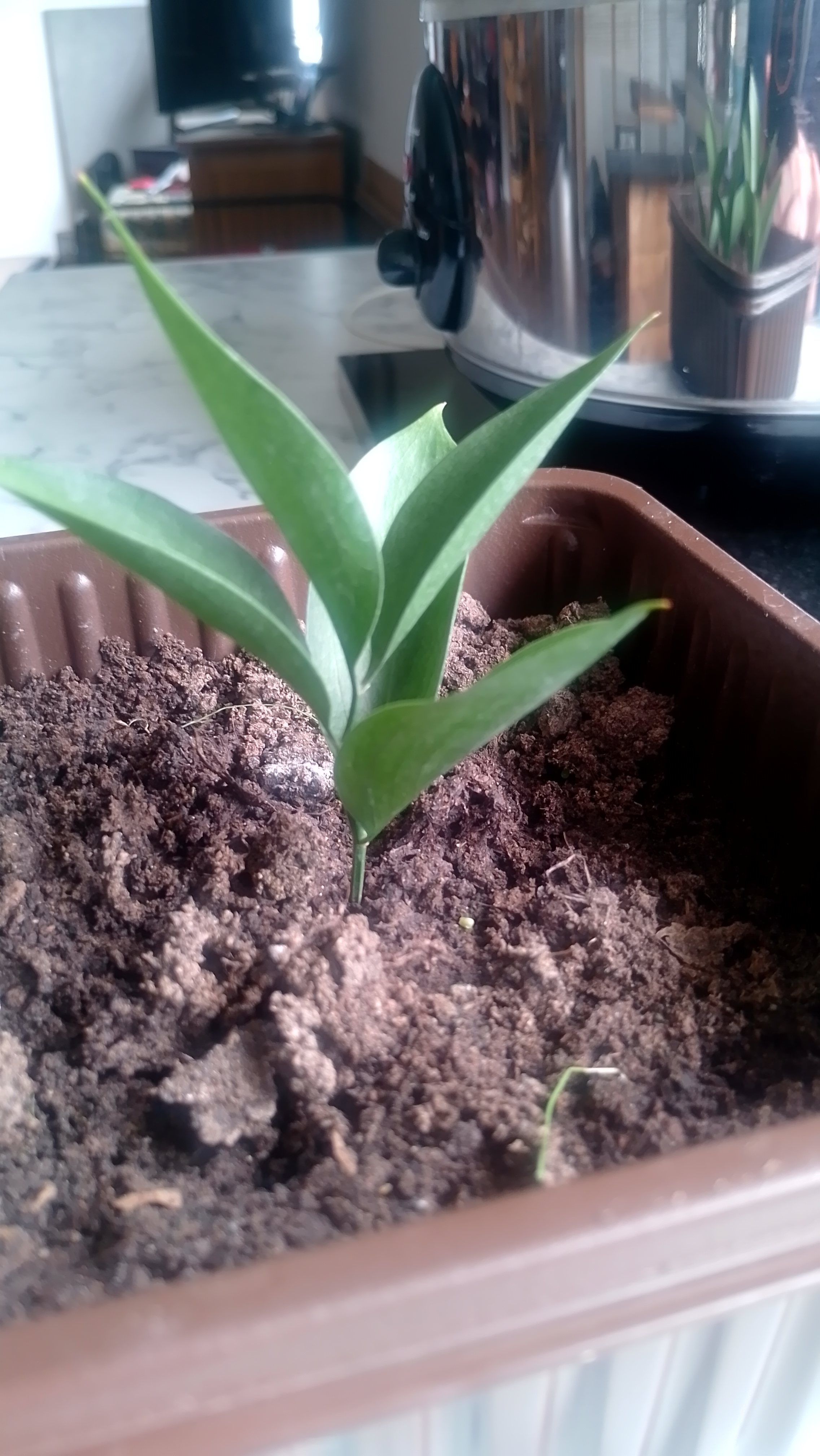
The plant shown in the image appears to be a young specimen of snake plant, commonly called mother-in-law’s tongue. This evergreen succulent is characterized by a rosette or fan of upright, sword-shaped leaves that arise from the soil or a short rhizome. In juvenile plants the clump is compact, with several leaves radiating from a single growing point. The leaves are smooth, firm, and typically a solid to dark green color in many forms, though some cultivars display lighter cross-banding or variegation. In low light the leaves may look a bit duller, but in brighter indoor conditions they retain a glossy, waxy surface that helps conserve moisture. The plant’s architectural silhouette—tall, slender, and upright—makes it a favorite for shelves, desks, and corners, where its bold vertical lines add a touch of calm, modern greenery. While there are many cultivars with different striping or edge colors, the basic form remains a compact rosette of rigid leaves that are well adapted to indoor life and dry air. Care overview Snake plants are among the most forgiving houseplants. Their succulent leaves store water, enabling them to tolerate periods of drought. They prefer well-draining soil and do not appreciate sitting in constantly damp conditions. With appropriate light, water, and occasional feeding, even beginners can grow them successfully. The plant thrives in a wide range of indoor environments, from bright, indirect light to dim corners, though light condi tions influence growth rate, leaf color, and overall vigor. Light requirements - Preferred: Bright, indirect light is ideal. In such conditions, the plant develops a strong crown and, over time, can grow taller. - Tolerates low light: It will survive in rooms with limited window exposure, but growth may slow and leaves may become darker and fewer in number. - Caution: Prolonged, intense direct sun (especially hot afternoon sun) through windows can scorch the leaves, resulting in brown tips or faded patches. If you notice leaf burn in a sunny spot, move the plant to a location with bright but indirect light. Watering and humidity - Frequency: Water sparingly. Allow the top 2 to 3 centimeters (about 1 inch) of the soil to dry out between waterings. In winter, water even more sparingly—often only once a month or less, depending on indoor humidity and temperature. - Method: It’s best to water thoroughly and let excess water drain away. Avoid letting the plant sit in a saucer of water, and ensure the pot has drainage holes. - Signs of overwatering: Yellowing lower leaves, soft, mushy tissue, and a generally droopy crown can indicate that roots are saturated or root rot is developing. - Humidity: Snake plants tolerate typical indoor humidity; they do not require high humidity and actually prefer a drier environment over constantly damp air. Soil and repotting - Soil: Use a well-draining potting mix. A standard houseplant mix amended with perlite or coarse sand works well, or a cactus/succulent mix for even faster drainage. - Pot and drainage: A pot with drainage holes is essential. While terracotta pots can help wick moisture away from the soil, any pot with good drainage is fine. - Repotting: Young plants can be repotted every 1–2 years as they outgrow their container. Move to a slightly larger pot when roots become crowded, ideally in spring or early summer. If you want to divide the plant, you can separate offsets or pups that form at the base and pot them individually. Temperature and safety - Temperature: Snake plants prefer average room temperatures between 60–85°F (15–29°C). They tolerate cooler nights but should be protected from freezing temperatures. - Drafts: Avoid placement near cold drafts or heating vents, which can stress the plant. - Toxicity: Snake plants are mildly toxic to pets (cats and dogs) if ingested, and can cause digestive upset. They are not poisonous to humans, but always keep it out of reach of curious pets that tend to chew on leaves. Feeding - Fertilizer: Feed sparingly in the growing season (spring and summer). A balanced, water-soluble fertilizer diluted to half the recommended strength once a month is typically sufficient. Do not over-fertilize; excessive fertilizer can cause tip burn or leaf edge discoloration. - Winter feeding: Do not fertilize during the dormant period in fall and winter. Propagation - Offsets: As the plant matures, it often produces rhizome offsets or pups at the base. These can be carefully separated from the mother plant and potted individually. - Leaf cuttings: You can propagate from leaf cuttings by cutting a leaf into sections and placing the cut ends into moist soil to root; this method may take several weeks to show new growth and is less reliable than offsets. - Patience: Snake plants are slow to establish after repotting or division. Keep conditions stable and avoid disturbing the roots while they recover. Common issues and troubleshooting - Brown tips: Often caused by under-watering, low humidity, or too much fertilizer. Trim brown tips and adjust watering and feeding accordingly. - Leaf yellowing: Could indicate overwatering or root rot. Check soil moisture and inspect roots if yellowing persists after adjusting watering. - Pests: Mealybugs, scale, and spider mites can appear, especially in dry indoor spaces. Wipe leaves with a damp cloth, and treat infestations with an insecticidal soap or neem oil as needed. - Etiolation: In very low light, leaves may stretch toward the light and the plant may appear leggy. Providing brighter indirect light will help maintain a compact form. Aesthetic and practical benefits Snake plants have earned a reputation for their architectural beauty and air-purifying properties. They are among the easiest plants to care for in homes and offices. Besides contributing a striking vertical accent, they are hardy and forgiving of routine neglect, making them ideal for people who travel, forget to water, or simply prefer low-maintenance greenery. In the NASA Clean Air Study and subsequent summaries, snake plants were highlighted as one of the species capable of removing certain indoor air pollutants, such as formaldehyde and xylene, while still thriving in low light. While they should not be counted on as a sole air-cleaning solution, they do contribute to a healthier indoor environment when grouped with other green plants. Placement ideas and design notes - Office corners or desks: The plant’s upright form makes it an excellent focal point in small spaces. A compact, young plant like the one in your photo can gradually fill its pot and then be used to propagate new plants. - Living rooms and bedrooms: Place near a window that receives bright, indirect light to maintain leaf color and shape without risking sunburn. - Terrarium and shelves: Snake plants can be grown in shallow containers for a modern, minimal look, provided the soil remains well-drained and the pot offers good drainage. Bottom line From a practical standpoint, the plant in your photo is most consistent with a young snake plant, a hardy, adaptable, and attractive choice for indoor spaces. Its thick, sword-like leaves, compact growth habit, and tolerance of a range of light and moisture conditions make it an enduring favorite for beginners and seasoned plant lovers alike. With basic care—well-draining soil, minimal but regular watering, bright but indirect light, and occasional feeding—you’ll likely enjoy a healthy, upright crown of leaves that can be easily propagated to expand your indoor greenery collection. If you’re new to plant care, this species is one of the best entry points into the world of houseplants, combining resilience with classic, striking aesthetics.
식별 시간
2025년 10월 18일
안내
식집사의 기능은 AI를 사용하고 있어 부정확 할 수 있습니다. 단순 재미와 참고용으로만 사용해주세요.
식물 결과에서 바로 할 수 있는 일
이름을 확인한 뒤 공식 식물 DB에서 관리 정보를 바로 확인하세요.