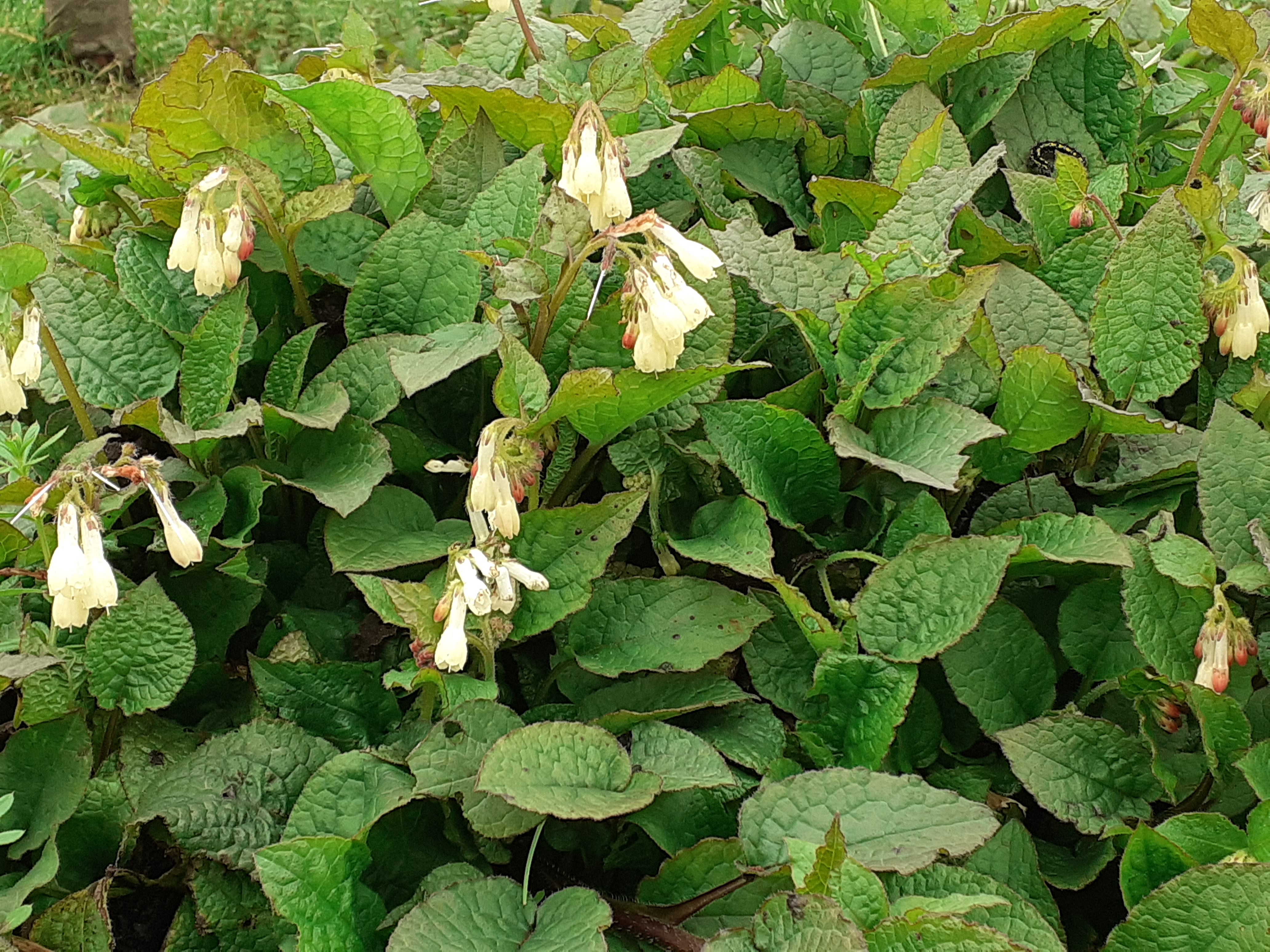
Epimedium (barrenwort, bishop's hat) — likely Epimedium pinnatum or Epimedium x versicolor
설명
The plant in the photo resembles an Epimedium, a group of evergreen or semi evergreen perennials commonly grown as a ground cover in shade gardens. Epimediums are valued for their sophisticated foliage and delicate, arching sprays of flowers that rise above the leaves in spring. The leaves in the image are large, heart to oval shaped, with a crinkled or quilted texture and strong venation. They form a dense, low-growing clump that stays close to the ground, making it an excellent choice for shaded borders, woodland gardens, or under trees. The flowers are pale, creamy to yellowish bells that hang from slender stems, often in small clusters, and can have a hint of pink or red at the base. This combination of lush foliage and subtle, spare flowers is characteristic of Epimedium species and cultivars, especially those in the evergreen or semi evergreen groups. Key identifying features - Growth habit: low, spreading perennial that forms a carpet or clump via creeping rhizomes. Height typically ranges from 6 to 12 inches (15–30 cm), with flower stalks rising slightly higher. - Foliage: leaves are evergreen or semi evergreen, deeply veined, and have a quilted or crinkled texture. They are generally heart‑shaped or oval with a slightly serrated edge and can appear in pairs or in small clusters along creeping stems. - Flowers: delicate, pendant bells or spurred blossoms that emerge above the foliage in spring. Colors range from white to pale yellow, often with pinkish or reddish tints at the base or along the throat. Flowers are usually produced on short stalks, sometimes arranged in small clusters. - Habitat: a woodland or shaded garden plant, tolerant of dappled light to full shade, thriving in rich, well drained soil. Natural history and color varieties Epimedium is a diverse genus with many cultivars that offer variations in foliage color and flower tone. The pale yellowish white flowers seen in the photo are a common and favored range for ornamental Epimediums. Some varieties display stronger yellow or white flowers, while others show pink, red, or orange tints. The foliage tends to stay green throughout the year in temperate climates, though some leaves may take on bronze or purplish hues in winter, depending on the cultivar and light exposure. Epimediums are deciduous in cooler climates for part of the year in some regions, while others remain nearly evergreen in mild zones. Care and kultur tips - Light and location: Epimedium thrives best in partial to full shade, especially in hotter climates where afternoon sun can scorch the leaves. A location with dappled light or morning sun with afternoon shade is ideal. In milder climates or shadier spots, they can tolerate a bit more sun, provided the soil remains consistently moist. - Soil: plant in well drained, fertile soil rich in organic matter. Refrain from heavy clay that stays waterlogged. Amending the bed with compost or well rotted leaf mold helps to improve texture and moisture retention without becoming soggy. - Watering: keep the root zone evenly moist during establishment. Once established, Epimediums are relatively drought tolerant for short periods but perform best with regular moisture, particularly in hot summers or very sunny sites. Avoid letting the soil dry out completely between waterings. - Mulching and soil structure: a layer of organic mulch (leaf mold, compost, or shredded bark) helps conserve moisture, suppress weeds, and maintain a cool root environment. Mulch also protects shallow roots in winter and can shield the crowns from cold damage in marginal climates. - Fertilizing: in early spring, apply a light, balanced fertilizer or incorporate a slow release organic fertilizer into the planting bed. Avoid heavy feeds that promote excessive leaf growth at the expense of flowering. A yearly top-dressing with compost can support nutrient availability and soil structure. - Pruning and maintenance: Epimediums require relatively little pruning. Remove any dead or damaged leaves in late winter or early spring to make way for new growth and to brighten the plant’s appearance before flowering. Some gardeners trim back older foliage to encourage fresh growth in spring; this is optional and depends on the desired look. - Propagation: division is the most reliable method. Do this in early spring or immediately after flowering, carefully separating rhizomes with a portion of the crown and roots. Plant divisions at the same depth as the parent plant and water well after planting. Seed propagation is possible but slow and less predictable for maintaining cultivar traits. - Pests and diseases: Epimedium is relatively pest resistant. Slugs and snails may nibble at young growth in damp conditions, so monitoring during damp seasons helps. Root rot can occur in poorly drained soils, so ensuring good drainage is important. Powdery mildew is uncommon but can occur in very crowded, humid plantings; proper spacing and air circulation help prevent it. - Winter care: in milder climates they can stay evergreen, while in colder regions some foliage may die back; new growth typically emerges in spring. A light mulch can protect crown tissue in winter where temperatures dip below freezing. Design tips and garden use - Understory planting: Epimedium is a classic understory plant. It pairs beautifully with ferns, hostas, pulmonarias, and other shade lovers. The delicate flowers add a touch of brightness early in the season before many shade perennials come into full bloom. - Ground cover and erosion control: due to its creeping rhizomes, Epimedium can help stabilize shady slopes or bank edges where foot traffic is light. The dense foliage also helps suppress weeds. - Seasonal interest: the combination of evergreen or semi evergreen foliage with spring to early summer flowers provides multi season interest. In some cultivars, foliage remains attractive even after flowering, sustaining color and texture in the garden. - Pairings and contrasts: use Epimedium beside dark foliage plants, variegated hostas, or with pale bloomers for a soft and refined look. The pale yellows in the flowers pair well with purples, blues, and pinks, while the green foliage acts as a neutral backdrop. Common cultivar notes (examples you might encounter) - Yellow or pale flower forms: cultivars selected for yellowish or pale blooms are particularly valued for brightening shady corners. The exact shade can range from creamy white to pale lemon. - Foliage forms: some cultivars have leaves that stay more compact, while others spread more aggressively. If you need tighter ground cover, look for varieties described as having denser growth or slower spread. - Hardiness: Epimedium cultivars generally perform well in USDA hardiness zones 5 through 9, with some robust varieties tolerating zone 4 winters. If you garden in a warmer or cooler climate, check the cultivar description for winter survival and heat tolerance. What to expect in a mature planting - After flowering, Epimedium leaves remain a prominent feature. In many climates, the foliage will keep its shape and color through winter, though the plant may slow its growth in extreme cold. A healthy, mature patch can produce a soft, evergreen carpet that slowly expands over the years. - Flowering typically occurs in spring, sometimes continuing into early summer depending on the cultivar and growing conditions. The flowers drift above the foliage on slender stalks, creating a delicate, light, and airy effect in shaded beds. - Maintenance is modest. The plant benefits from occasional division every 4–6 years to maintain vigor and prevent crowding, especially in very fertile soils where the patch might become lush but less floriferous due to dense leaf cover blocking some blooms. Why this plant fits well in many shade gardens Epimediums combine easy care with beauty and versatility. They tolerate a range of soils as long as drainage is good and organic matter is present. They appreciate protection from the hottest sun and benefit from a cool, damp root zone, which makes them ideal for beneath deciduous trees, along the edges of woodlands, and in shaded borders. Their long life and low maintenance can make them a reliable backbone of a shade garden, providing seasonal color, texture, and a sense of elegance that complements ferns, grasses, and mossy garden features. In summary The plant shown in the image is most consistent with an Epimedium species, commonly known as barrenwort or bishop's hat. It features a dense, ground-hugging habit with quilted, evergreen-like foliage and slender stems that bear delicate pale yellow to white hanging flowers in spring. Cultivation is straightforward: provide shade or partial shade, rich, well drained soil, and consistent moisture; avoid waterlogged conditions and excessive sun. With patience, a patch will fill in to form a refined, evergreen ground cover that brings soft color and a refined texture to shaded corners, while requiring only modest pruning, occasional division, and simple seasonal care. Whether you are creating a woodland vignette, lighting a shady border, or stabilizing a slope, Epimedium offers enduring beauty with relatively little fuss.
식별 시간
2026년 3월 9일
안내
식집사의 기능은 AI를 사용하고 있어 부정확 할 수 있습니다. 단순 재미와 참고용으로만 사용해주세요.
식물 결과에서 바로 할 수 있는 일
이름을 확인한 뒤 공식 식물 DB에서 관리 정보를 바로 확인하세요.