Chili pepper plant (Capsicum annuum)
설명
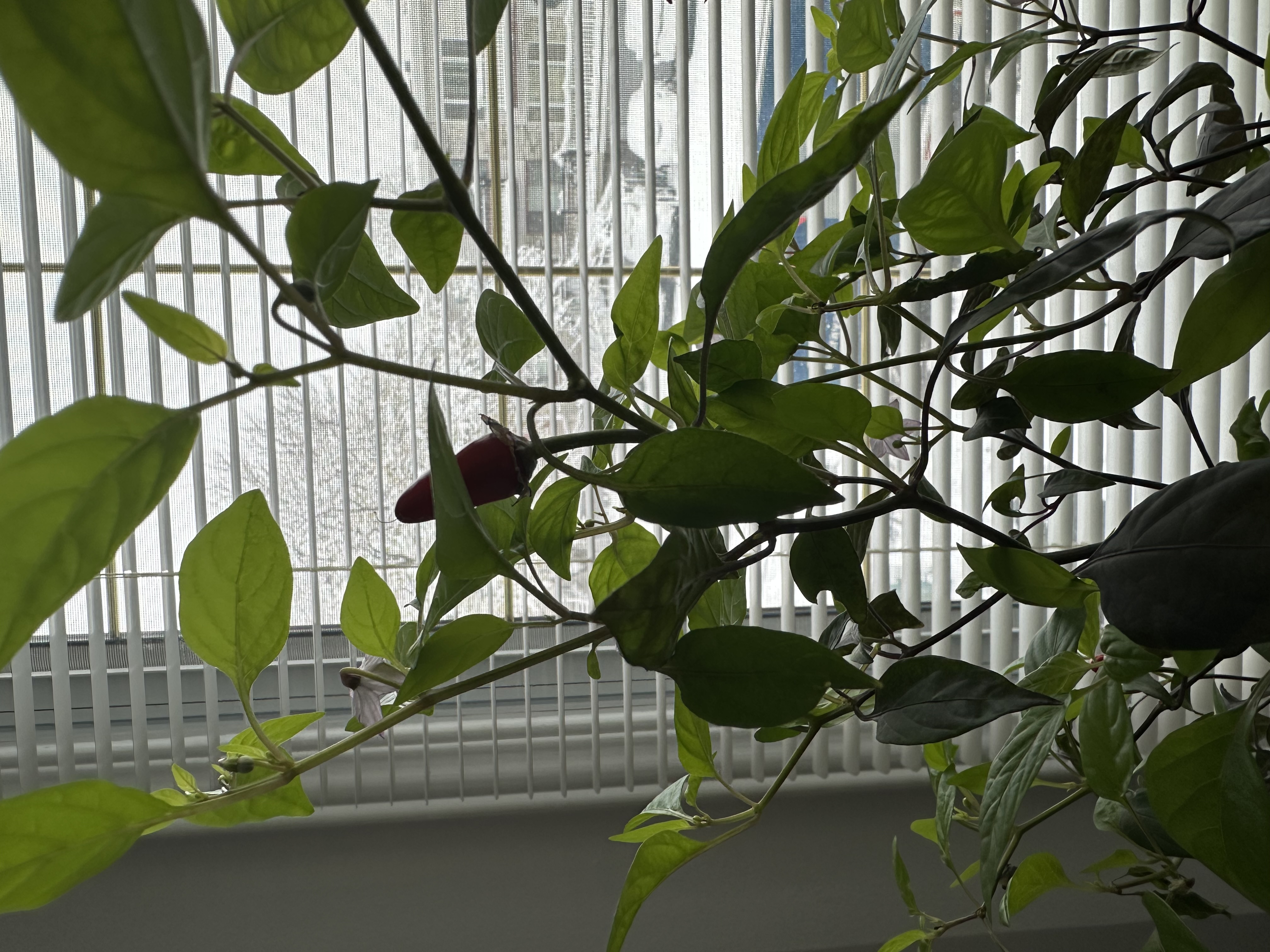
The plant shown in the image appears to be a chili pepper plant, a Capsicum annuum commonly grown as a kitchen pepper. It is an upright, branching herb with smooth, glossy green leaves that are oval to lanceolate and pointed at the tip. A small, conical pepper fruit can be seen in the photo, suggesting a hot pepper variety. Pepper plants like this are warm-season perennials in their native tropics but are typically grown as annuals in temperate climates or as container plants indoors. They can reach a height of roughly one to three feet or more in favorable conditions, with a sturdy framework of stems that bears leaves, flowers, and fruit at the leaf axils. When grown indoors near a bright window, as depicted, these plants can still produce fruit, though they may require a little extra care to simulate outdoor sun and warm temperatures. The peppers start green and typically ripen to red, yellow, or orange depending on the cultivar, and the fruit shape can range from small conical chilies to longer bells, even though the plant in the photo shows a small pointed fruit that resembles a hot pepper variety. Caring for this plant involves supplying ample light, warmth, proper watering, and nutrition, as well as some light pruning and pollination assistance when grown indoors. Light is a critical factor; pepper plants perform best with at least 6 to 8 hours of bright light each day. In an apartment or house with windows facing south or west, a sunny windowsill is ideal. If natural light is limited, supplement with grow lights placed a few inches above the canopy to replicate outdoor sun exposure. Temperature should be kept consistently warm; daytime temperatures around 21 to 29 degrees Celsius (70 to 85 degrees Fahrenheit) are ideal, with nighttime temperatures not dropping significantly below 16 degrees Celsius (60 degrees Fahrenheit). Avoid cold drafts, sudden temperature swings, and air-conditioned or heated air directly pointing at the plant, as these can stress the foliage and reduce fruit set. Soil and potting mix should be well-draining and rich in organic matter; a high-quality potting mix that contains perlite or vermiculite for drainage is suitable. Aim for a slightly acidic to neutral pH, roughly 6.0 to 6.8, which helps nutrient availability. Containers should have drainage holes, and as the plant grows, you may want to move it to a larger pot—ideally 2 to 5 gallons—so roots have space to expand and to support heavier fruit loads. Watering should be regular and even, keeping the soil consistently moist but not waterlogged. Allow the top inch of soil to dry slightly between waterings to prevent root rot. In indoor environments, watering can be steadier if you bottom-water or use a moisture meter. Humidity should be moderate; very dry air can lead to leaf curling or blossom drop, while overly damp conditions can encourage fungal issues. If air is very dry, you can increase humidity with a pebble tray or a light misting, though avoid overdoing it. Fertilization supports strong growth and fruiting. Start with a balanced, water-soluble fertilizer (for example, a 10-10-10 or 5-5-5 formulation) once every two weeks during vegetative growth. As flowers appear and fruit begins to set, you can switch to a fertilizer with a higher phosphorus and potassium ratio to promote flowering and fruit development (for instance, a 5-10-10 or 3-4-6 balance) but avoid excessive nitrogen, which encourages lush foliage at the expense of fruit. Some gardeners alternate with a tomato-style fertilizer that emphasizes fruiting. It is wise to reduce feeding once fruit set slows or the plant enters a slower growth phase, to prevent nutrient burn. Pruning is optional but helpful for pepper plants, especially indoors where light is limited. Pinching the growing tips when the plant is leggy can encourage branching and a bushier habit, which in turn can increase the number of flowering sites and potential fruit. Remove any dead, yellowing, or damaged leaves to improve airflow and reduce disease pressure. Staking or supporting tall, heavy branches helps prevent bending or breaking as fruit develops. Pollination in indoor settings can be less reliable due to subdued air movement. Capsicum plants are self-pollinating, but light mechanical agitation helps set fruit in a stagnant environment. You can gently tap the flowering stems or use a small brush to transfer pollen between anthers and stigma on flowers a few times a day during peak bloom to improve fruit set. When to harvest depends on the variety and personal preference. Many hot peppers start green and change to red, orange, or yellow as they mature. If you prefer heat and flavor at peak, pick when they have reached their full size and color but before they begin to shrivel. Cutting peppers with clean, sharp scissors or a knife helps prevent damage to the plant and reduces the risk of disease entry through torn tissue. After harvest, peppers can be stored in the refrigerator for up to one to two weeks or frozen, dried, or pickled for longer-term use. Pests such as aphids, whiteflies, spider mites, and thrips can affect pepper plants, especially indoors where air circulation may be limited. Regular inspection and prompt treatment with insecticidal soap, neem oil, or horticultural oil can keep populations under control. Encourage good airflow by providing spacing between plants and pruning to avoid dense canopies that promote disease. If powdery mildew or other fungal issues occur, improving air movement, avoiding overhead watering, and applying appropriate fungicides as needed will help. Leaf nutrient deficiencies can also appear as yellowing or mottling; common causes include imbalances in nitrogen, iron, or magnesium or improper pH. If leaf yellowing appears, test the soil pH and adjust with lime or sulfur to bring it into the recommended range. Root problems can arise from overwatering or poor drainage, manifested as wilting despite adequate moisture, stunted growth, or rotting roots; ensure pots have drainage holes and consider repotting into fresh, well-draining mix if this occurs. Finally, there are many cultivars with varying fruit colors, sizes, and heat levels, so your exact variety may not be fully identifiable from the photo alone. Nevertheless, the plant in the image aligns well with a chili pepper variety that produces upright or downward-hanging conical fruit and compact, multi-branched growth, which is manageable with careful light, temperature, watering, and feeding practices. In sum, this plant is best treated as a chili pepper plant requiring bright light, warmth, steady moisture with good drainage, regular feeding, occasional pruning to maintain shape, and gentle pollination assistance indoors to maximize fruit set and yield. With attentive care, it will continue to produce fresh peppers that can be used in a wide range of culinary applications and will provide the visual and fragrant joy of a living kitchen plant.
식별 시간
2025년 11월 11일
안내
식집사의 기능은 AI를 사용하고 있어 부정확 할 수 있습니다. 단순 재미와 참고용으로만 사용해주세요.
식물 결과에서 바로 할 수 있는 일
이름을 확인한 뒤 공식 식물 DB에서 관리 정보를 바로 확인하세요.