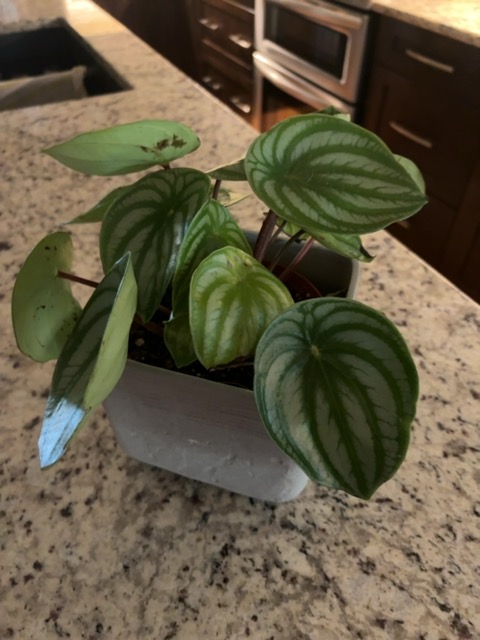
Watermelon Peperomia (Peperomia argyreia)
설명
The plant in the photo resembles Watermelon Peperomia, scientifically known as Peperomia argyreia. This compact, clump-forming perennial from the pepper family is a popular houseplant due to its attractive round to heart-shaped leaves and its distinctive watermelon-like variegation. Each leaf is fleshy and glossy, typically about 1.5 to 3 inches across, with a thick, succulent-like texture that helps the plant tolerate occasional drying between waterings. The hallmark of this species is the decorative pattern on the leaf surface: alternating bands of lighter and darker greens that resemble the rind of a watermelon. In most lighting conditions the bands run roughly parallel to the leaf margins, creating a striking, symmetrical look. The leaves grow on short, slender stems that rise from a compact crown, producing a tidy, low-growing mound or small tabletop shrub. The overall habit is very forgiving, making it a favorite for beginners as well as more experienced plant lovers who want a striking focal point in a bright bathroom shelf or a sunny kitchen windowsill. While the leaves are the star, the plant also tends to form offsets or “pups” over time, which can be detached and rooted to propagate new plants, helping to maintain a full, lush appearance without constant pruning. The plant’s coloration is influenced by light: brighter indirect light helps maintain the vivid variegation, while too little light can dull the pattern and cause leggy growth. Outdoors, the Plant can tolerate warm climates but must be kept out of direct, harsh sun that can scorch the leaves. Indoors, it thrives in a bright room with steady temperatures and good drainage. In short, Watermelon Peperomia is prized for its decorative foliage, easy-care nature, and compact size, which makes it suitable for shelves, desks, or small tabletops in homes and offices. The plant’s appearance also varies slightly among individual plants and cultivars, so you may see subtle differences in leaf size, pattern sharpness, and the depth of the green tones, but all share the same general, watermelon-inspired artistry. For anyone seeking a low-maintenance plant with a bold foliage motif, this peperomia offers a reliable and stylish option. Care-wise, it sits in a comfortable middle ground between truly succulent and typical common-houseplants, preferring a well-draining mix, moderate watering, and bright but indirect light. It is also relatively forgiving if you occasionally forget a watering or if the room’s humidity fluctuates, which further explains why it has become so widely recommended for people just starting to build a plant collection as well as seasoned plant enthusiasts looking for a reliable accent plant. In terms of maintenance, Watermelon Peperomia does not demand high humidity or intense feeding, though a little attention to soil moisture and light will keep it thriving year-round. A word of caution: like many peperomias, it dislikes cold drafts and should be moved away from air-conditioned blowers in summer or chilly window sills in winter. If you live in a very dry indoor climate, occasional misting or a light humidity increase can help the leaves keep their glossy finish, but avoid letting the soil stay soggy. The plant’s tolerance for a range of conditions makes it ideal for tabletops, kitchen counters, and bright office spaces where it can be admired at close range, since the leaf patterns are best appreciated up close. When choosing a potting mix, look for a formulation that drains quickly but retains a little moisture, because this plant does not like to sit in waterlogged soil. A well-draining potting mix such as a standard houseplant mix amended with perlite or orchid bark fragments typically works well. A pot with drainage holes is essential, as is using a pot size that allows for growth without overpotting the plant, which can lead to overly damp soil and root problems. The beauty of this plant is that it remains compact and easily fits into small spaces, yet with a little attention it can look lush and well-formed for many years. In terms of potting and repotting, you’ll generally only need to repot every 2 to 3 years as the plant grows, or sooner if the roots have completely filled the pot. When you do repot, choose a container only slightly larger than the current one to avoid excess soil moisture and to encourage healthy root development. In terms of fertilization, a light feeding during the growing season (spring through early autumn) is sufficient. Use a balanced houseplant fertilizer at half the label’s recommended strength, applying once a month or every six weeks depending on how vigorously the plant is growing. Avoid heavy feeding in winter when plant growth slows. If you notice leaf tips turning brown or the new growth looking pale or distorted, it can be a signal that you’re either over-fertilizing or using water with high mineral content. In such cases, flush the soil with clean water to remove excess salts, and consider using distilled or filtered water for future irrigation. Light is a central factor for maintaining the leaf variegation. If the plant is placed in too dim a location, the characteristic striped pattern can fade, and leaves may become larger with less defined markings. Conversely, very bright, intense sun may scorch the leaves, leading to brown or pale patches. Ideally, position the plant where it receives bright, indirect light for several hours each day—near a north- or east-facing window is often perfect for indoor growth. If you lack natural light, a simple grow light can help preserve the striking pattern while encouraging compact, full growth. Watering is another key aspect of maintenance. The Watermelon Peperomia benefits from a careful watering routine: water thoroughly until water comes out of the drainage holes and then allow the top 1 to 2 inches of soil to dry out before the next watering. The exact frequency will depend on your home’s temperature, humidity, and the potting mix’s drainage; in warmer, drier rooms you may need to water more frequently, while in cooler months, water less often. Always err on the side of slightly drier soil rather than soggy soil, because overwatering is a common cause of root rot in peperomias. A good habit is to check the soil before watering by feeling the top inch—if it’s dry, water; if it still feels damp, wait a few more days. Apart from watering and light, humidity is a modest consideration. Watermelon Peperomia does not demand tropical humidity, but it appreciates a pleasant indoor climate. Moderate humidity is fine, and occasional misting or placing the pot on a humidity tray can help in very dry homes without creating damp conditions that invite fungal problems. If you notice the leaves curling or becoming brittle, it may be due to low humidity or inconsistencies in watering; addressing both can restore the plant’s plump appearance. When it comes to pests, peperomias can occasionally fall prey to mealybugs, spider mites, or scale. A quick check of the undersides of leaves and the leaf axils will help you catch issues early. If pests are present, wipe the leaves with a soft damp cloth to physically remove them, and consider a mild insecticidal soap or horticultural oil, following label directions. Repeated infestations may require more thorough treatment or quarantining the plant from other houseplants. In terms of pet safety, peperomias are generally considered non-toxic to cats and dogs, though it’s always wise to monitor curious pets with any houseplants and consult a veterinarian if ingestion occurs frequently or if you notice unusual reactions. Finally, this plant’s maintenance routine rewards patient observation. The watermelon pattern on the leaves is not just decorative; it signals the plant’s health and hydration status. If you see dull or pale variegation, or a general lack of vigor, reassess lighting, watering, and soil drainage first. Under bright indirect light with a well-draining soil mix and a careful watering schedule, the Watermelon Peperomia can maintain vivid variegation and form a compact, attractive clump that remains healthy for many years. In the end, this plant offers a satisfying combination of visual appeal, ease of care, and versatility, making it a gratifying choice for windowsills, tabletops, small kitchens, and office corners where its lush foliage can be admired up close.
식별 시간
2025년 8월 25일
안내
식집사의 기능은 AI를 사용하고 있어 부정확 할 수 있습니다. 단순 재미와 참고용으로만 사용해주세요.
식물 결과에서 바로 할 수 있는 일
이름을 확인한 뒤 공식 식물 DB에서 관리 정보를 바로 확인하세요.