진단 결과
설명
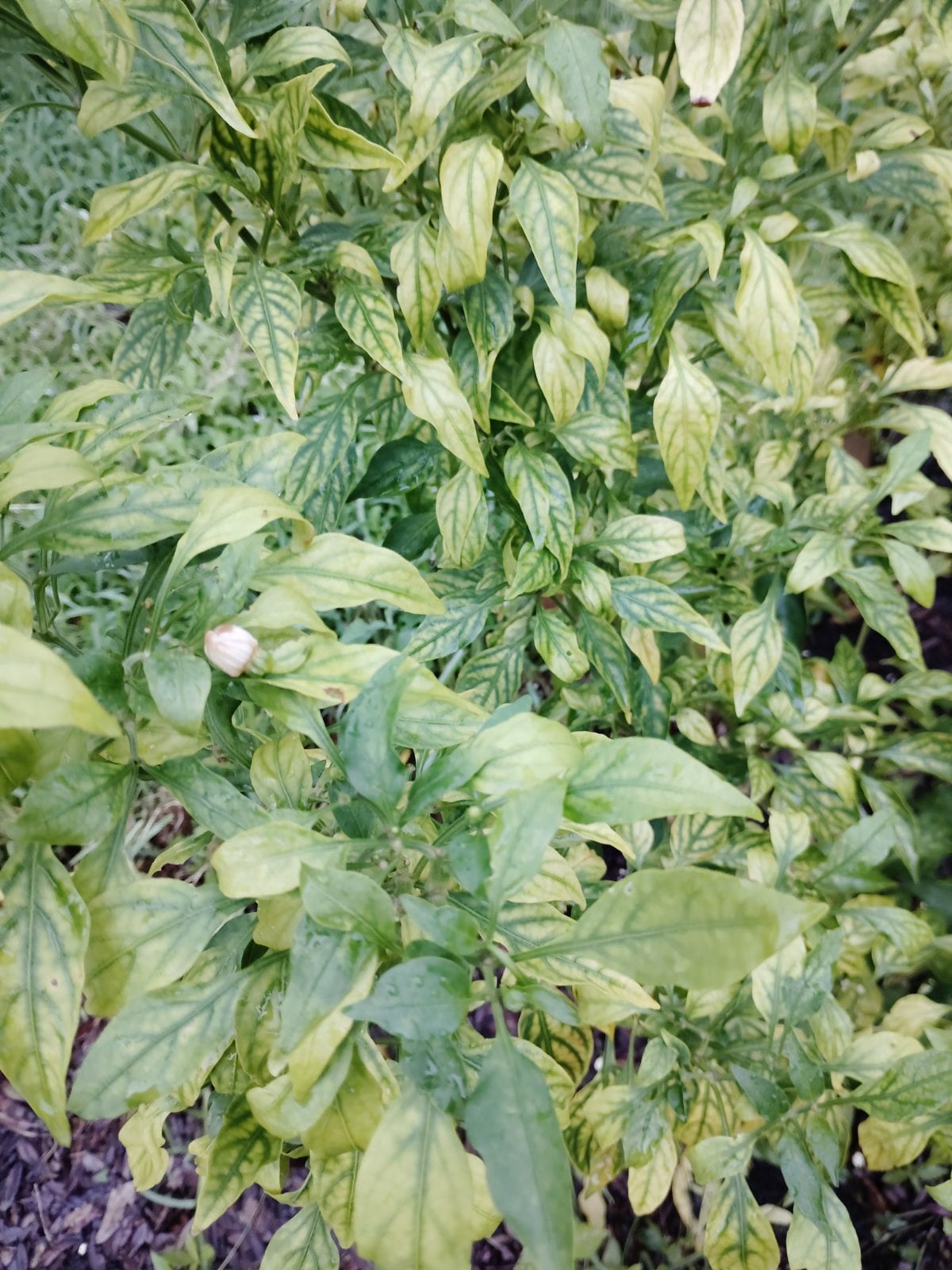
From the photo, the pepper/chili foliage shows widespread paling and light yellowing (chlorosis) rather than distinct patchy lesions, fuzzy growth, or clear ring-shaped spots. Many leaves appear uniformly light—especially on new growth—while the plant still has green tissue mixed with increasingly pale leaves. This pattern is more typical of a nutrient/feeding problem (commonly nitrogen, sometimes iron/magnesium) and/or stress from poor uptake (overwatering, compacted soil, low root oxygen, or an imbalanced fertilizer program) than it is of a fungal/bacterial disease, which usually produces visible spots, necrotic areas, or patterned damage. Because peppers are highly responsive to nitrogen and micronutrients, chronic mild chlorosis across many leaves often points to insufficient available nutrients or disturbed absorption rather than an infectious agent. The confidence is moderate because the image does not show the underside close-up, and some viral issues can also cause chlorosis, but the overall look here most strongly matches nutrient deficiency and uptake stress.
해결 방법
1. Check and correct feeding: If the overall plant is pale/light yellow with reduced vigor, apply a balanced fertilizer plus extra nitrogen. For peppers in the ground or containers, a practical approach is to side-dress with a slow-release complete fertilizer (e.g., 10-10-10 or 12-12-12) and then follow with a water-soluble fertilizer if growth is sluggish. Use the label rate; for yellowing, a mild nitrogen-forward formula can help (for example, 21-0-0 or a higher-N blend) but avoid “overfeeding” because peppers can burn and salts can worsen uptake. If you have access to soil/leaf test results, adjust accordingly. Repeat every 1–2 weeks until new leaves emerge green, then taper to a regular feeding schedule. 2. Improve root uptake conditions: Nutrient deficiencies can be “caused” by roots that can’t absorb (even if fertilizer is present). Ensure the soil is well-draining (no standing water), avoid frequent heavy watering, and mulch lightly to reduce temperature swings. If plants are in containers, confirm drainage holes are clear and the mix isn’t compacted or exhausted. Water deeply but allow the top few centimeters to dry slightly between waterings. Also check for root stress after transplanting, recent cold snaps, or prolonged heat—peppers may show temporary chlorosis from slowed root function. 3. Address possible micronutrient chlorosis and prevent recurrence: If the newest leaves are the most pale (especially with green veins), iron deficiency is common; foliar feeding can provide faster relief. Use an iron chelate product (follow label instructions) as a foliar spray to see improvement in 7–14 days. If magnesium seems likely (older leaves yellow between veins), you can apply Epsom salt (magnesium sulfate) at label-safe rates. To prevent recurrence, keep a consistent feeding rhythm and consider refreshing/adding compost to improve nutrient availability and soil buffering. If you notice distortion, mosaic patterns, or progressive symptom spread despite corrected nutrition/watering, re-check for possible viral issues and remove heavily affected plants to protect the rest of the crop.
안내
식집사의 기능은 AI를 사용하고 있어 부정확 할 수 있습니다. 단순 재미와 참고용으로만 사용해주세요.