진단 결과
설명
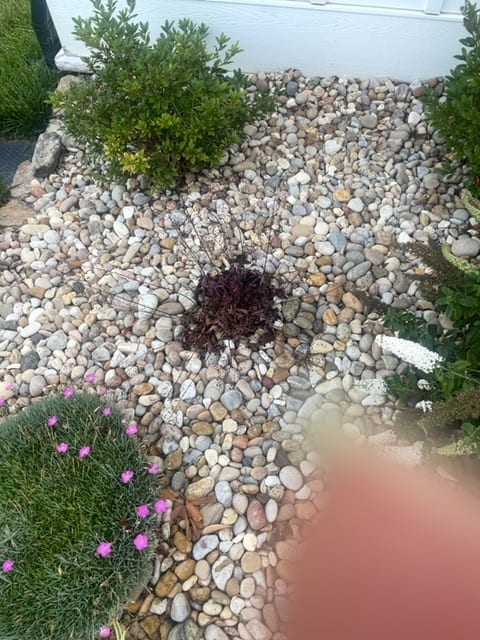
From the photo, the central plant shows a noticeably collapsed, dark/brown, very compact-looking crown with the foliage appearing withered and “matted” rather than uniformly spreading normally. The surrounding area is a gravel bed with visible stones packed close to the plant base, suggesting the plant may be sitting in consistently damp soil pockets around the crown. Rot diseases typically start at the crown or upper roots: tissues turn brown/black, roots lose function, and the plant rapidly wilts and declines even if the rest of the landscape looks fine. While the exact pathogen can’t be confirmed from an image alone, the combination of (1) sudden decline/wilting, (2) brown/black collapsed center, and (3) likely moisture retention near the crown in a rocky/gravel setting is most consistent with crown/root rot from waterlogging or recurring saturated conditions.
해결 방법
1. Improve drainage and remove moisture around the crown: If you can, gently check the crown area by lightly digging back a small section of stones/gravel around the base (don’t tear roots). If the soil is consistently wet, waterlogged, or smells sour/rotten, carefully lift the plant (if feasible) and trim away any black, mushy, or foul-smelling roots/crown tissue with sterilized scissors or a knife. Then replant so the crown sits slightly above the surrounding soil line and ensure there’s free air space and drainage around the base. In a gravel bed, it helps to create a small mound or raised planting pocket so excess water can escape rather than pooling at the crown. 2. Sanitize and adjust watering immediately: Until the plant shows healthy new growth, stop any frequent watering and only water deeply when the surrounding area has dried noticeably (often allowing the top several centimeters of soil to dry). Water at the soil line, not into the crown. If you use a drip line, confirm it isn’t running directly under or against the plant’s crown where water can collect. If the bed has edging or buried landscape fabric trapping moisture, consider removing or lifting portions near the affected plant to prevent persistent saturation. For the current plant, avoid fertilizing now—extra nitrogen can worsen rot by stimulating soft, susceptible growth when roots are stressed. 3. Apply a protective fungicide and/or biological control (after assessing rot): After pruning away rotten tissue and improving drainage, you can treat remaining roots/crown zone to reduce further spread. Use a drench labeled for crown/root rot on ornamentals (follow the label exactly for rate and timing). Look for active ingredients such as phosphites/phosphorous acid products (often used for oomycete-type rot like Phytophthora/Pythium) or broad-spectrum fungicides appropriate for soil-borne rot. Alternatively, use a beneficial biological soil treatment (e.g., Bacillus-based products) to help suppress pathogens, applied according to label directions. Re-treatment may be needed after heavy rains. Monitor weekly for signs of recovery (new shoots, firmer crown). If the crown is fully collapsed and no green tissue remains, replacing the plant is often the most reliable long-term solution because rot can continue even after surface symptoms fade.
안내
식집사의 기능은 AI를 사용하고 있어 부정확 할 수 있습니다. 단순 재미와 참고용으로만 사용해주세요.