진단 결과
설명
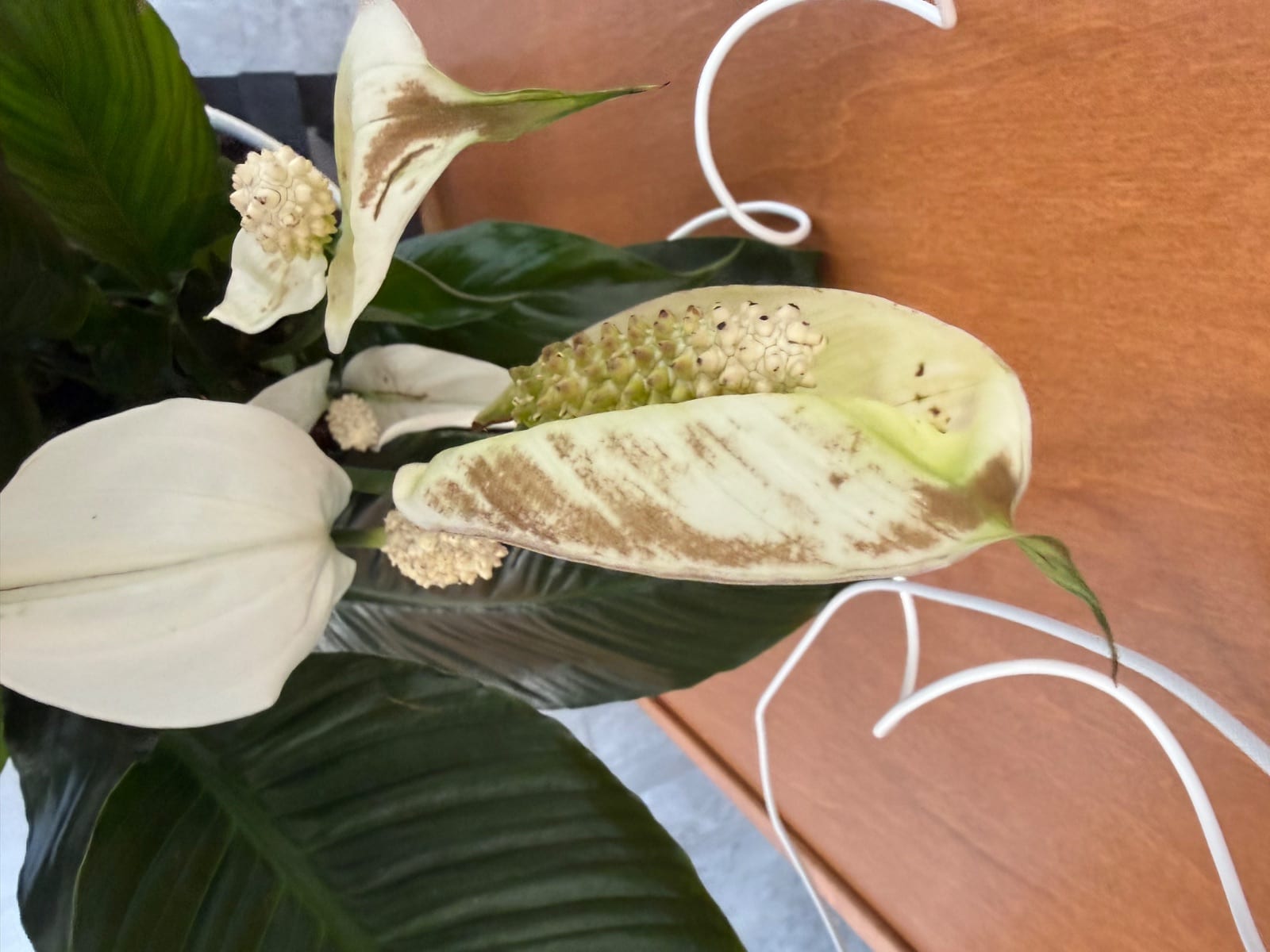
From the photo, the affected leaves show tan-to-brown necrotic patches with darker speckling and some irregular “burned” areas on a newly developing/older leaf while the surrounding tissue remains green. There also appears to be an area on the underside/top consistent with either spore growth on dead tissue (Botrytis/gray mold) or secondary infection entering through wounds. On indoor/houseplants, Botrytis typically presents as grayish fuzzy growth under high humidity and on spent flowers/leaf tips, with nearby tissue turning tan to brown as it collapses. When water sits in crevices or flowers/leaf bases stay wet, or when leaves are damaged (handling, pruning cuts, rubbing), opportunistic fungi/bacteria rapidly colonize the dead areas, leaving mottled, brown patches and speckling. This pattern is more consistent with a moisture/condensation-driven spot/bloat-and-collapse process than with nutrient deficiency (which usually causes more uniform, symmetrical patterns). Definitive confirmation would require checking for gray fuzzy mold (Botrytis) during humid conditions and whether the lesions expand rapidly during wet periods; however, the necrotic, patchy, speckled lesions strongly suggest an infection associated with wetness and prior injury.
해결 방법
1. Isolate and remove damaged tissue: Move the plant away from others to reduce spread. Using sterile scissors (wipe blades with 70% alcohol and let dry), trim off the affected leaf portions back to healthy green tissue. If blossoms are present, remove spent flowers/parts with lesions. Dispose in trash (do not compost). This reduces the amount of infected plant material that Botrytis can sporulate from and prevents bacteria/fungi from advancing from existing necrosis. 2. Improve airflow and dry the foliage quickly (most important for Botrytis): Increase ventilation around the plant (fan nearby if safe), keep humidity moderate, and avoid wetting leaves/flowers when watering. Water only at the soil level and only in the morning so any incidental moisture can dry by evening. If the plant is in a decorative cover pot, ensure excess water can drain and the potting mix never stays soggy. Consider spacing plants apart, and keep the leaf surfaces drier than the air (especially if you notice condensation overnight). 3. Apply a targeted control: After pruning, treat with a fungicide labeled for Botrytis/gray mold on ornamentals/houseplants (common active ingredients include chlorothalonil, myclobutanil, or another label-approved anti-Botrytis product). Thoroughly coat both sides of leaves and the area around the cut/lesions. If you see true gray fuzzy growth, repeat according to the label (often every 5–7 days for 2–3 rounds). If lesions are spreading quickly with a “water-soaked” look and little/no gray fuzz, a bacterial component may be involved—cultural changes and removal are still primary; in that case, use only products labeled for bacterial spot on ornamentals if available in your region, otherwise rely on sanitation and drying. Always follow label rates and protect pollinators/pets by keeping the room ventilated until sprays dry.
안내
식집사의 기능은 AI를 사용하고 있어 부정확 할 수 있습니다. 단순 재미와 참고용으로만 사용해주세요.