진단 결과
설명
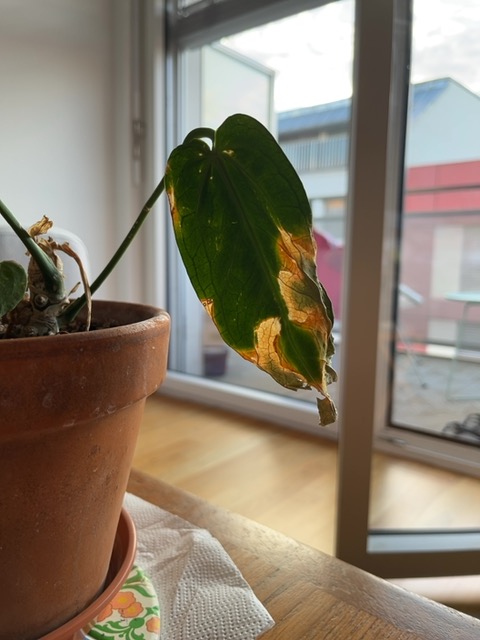
The photographed leaf shows yellowing with brown, crispy margins along the edges and a drooping, damaged appearance. This pattern is most consistent with leaf scorch caused by direct sun exposure and the accompanying dry indoor air, especially on a plant that prefers bright indirect light. The window scene suggests the plant can receive intense light through the glass, which can magnify heat and burn the tissue. In addition, indoor conditions (low humidity, potential irregular watering) can amplify water loss from the leaf, leading to tip and edge browning. While infections or pests are possible, the uniform edge browning and yellowing without distinct spot patterns point toward light/heat and moisture stress rather than a disease. The plant appears to be a vining philodendron/pothos type, which typically tolerates bright indirect light and does not thrive with harsh sun on the leaves. Recovery hinges on removing the stressor (direct sun), stabilizing moisture, and supporting tissue repair with proper care.
해결 방법
3. Humidity, nutrition timing, and tissue recovery strategies. Alongside light and water management, environmental humidity plays a crucial role in a plant’s ability to recover from leaf scorch. Increase local humidity to support epidermal tissue when environmental air is drier than the plant can tolerate—use a humidifier, place a shallow tray of damp pebbles under the pot (ensuring the pot rests above the water line), or group plants together to create a microclimate with higher humidity. Mist the plant lightly in the morning if you notice additional browning later in the day, but avoid heavy misting in the late afternoon or evening to prevent fungal issues. Remove all severely damaged leaves to conserve energy for healthier growth and to reduce disease risk. After 1–2 weeks, assess new growth; if new leaves emerge with a healthy green color and no additional edge browning, you have achieved a favorable response to improved humidity. Regarding nutrition, with the plant in recovery, avoid high-dose fertilization. If you did not repot recently and the soil composition allows, apply a diluted balanced fertilizer (e.g., 20-20-20 or 10-10-10) at one-quarter to one-half strength only once a month during active growth. Do not fertilize during periods of bare dormancy or when the plant is still showing stress signs. Keep monitoring for pests such as spider mites or scale, which can exacerbate stress symptoms. If pests are found, treat with a suitable houseplant-ready pesticide or a diy alternative (washing leaves with mild soap solution) and repeat as necessary after the recommended interval. With consistent light management, careful watering, improved humidity, and staggered feeding, the plant should recover and produce new, healthy foliage in 4–8 weeks. If the plant continues to decline after these steps, consider consulting a local horticulturist for an in-person diagnosis to check for other issues such as root damage or systemic nutrient imbalances.
안내
식집사의 기능은 AI를 사용하고 있어 부정확 할 수 있습니다. 단순 재미와 참고용으로만 사용해주세요.