진단 결과
설명
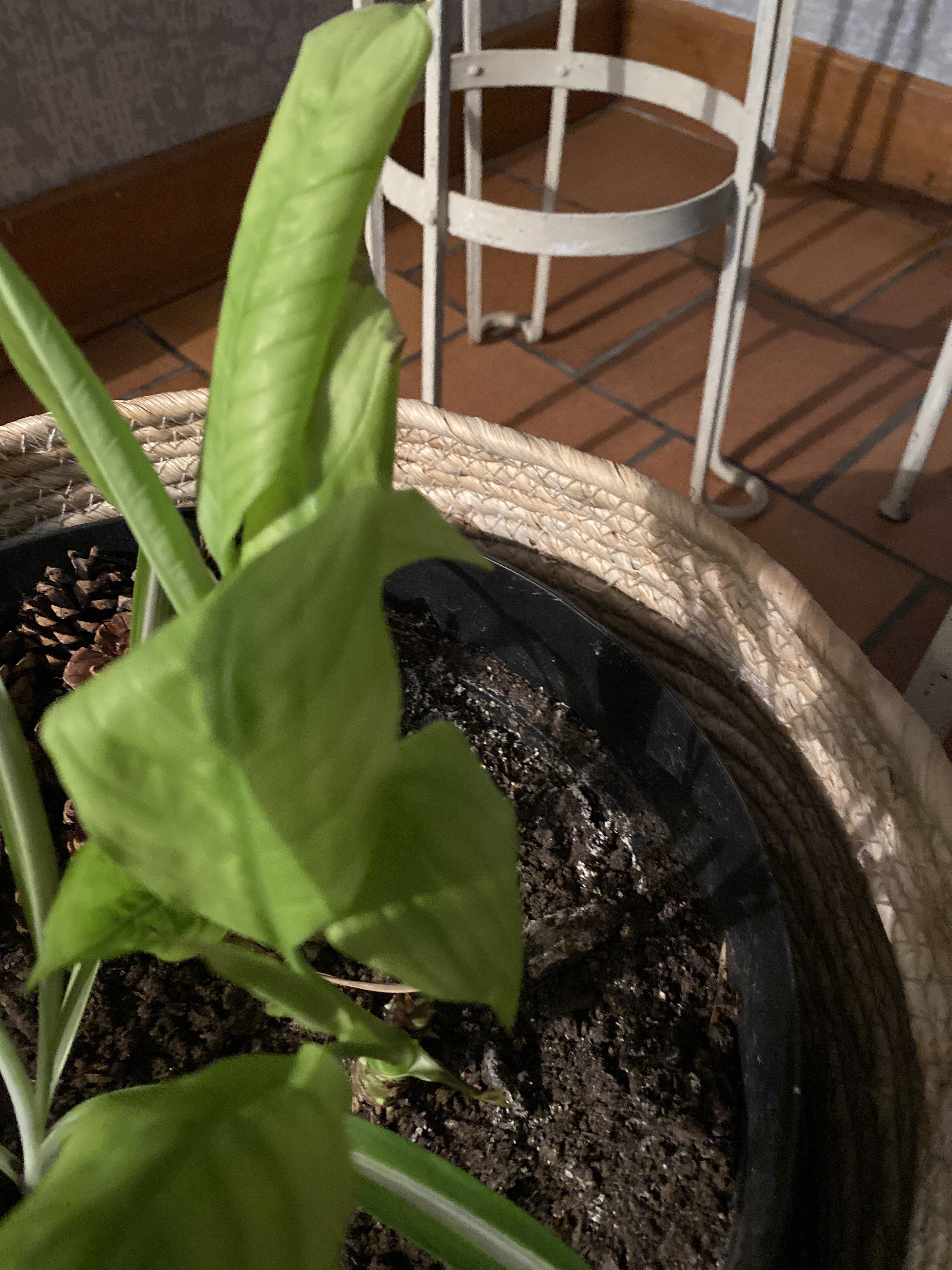
The plant in the image shows drooping, pale green leaves with slight folding and potential edge burn, all of which are common symptoms when roots are stressed or decaying. In potted tropicals with large leaves and a pseudostem, persistent moisture around the root zone fosters decay caused by soil-dwelling fungi such as Pythium and Fusarium, and sometimes by broad-spectrum pathogens when drainage is poor. Overwatering, compacted soil, or a pot without adequate drainage holes can lead to saturated soil, decreased oxygen at the root zone, and soft, brown, rotten roots. Visual signs at the soil line, including a foul odor or mushy texture, often accompany the leaf symptoms. While a photo cannot confirm the exact pathogen, the combination of leaf droopiness and likely waterlogged soil strongly points to root rot as the primary issue.
해결 방법
1. Immediate rescue and root health recovery - Carefully remove the plant from its pot and gently shake off excess soil. Inspect the root system: healthy roots are white and firm; rotted roots are brown/black, mushy, and may give off a foul odor. Using clean, sharp scissors or pruning shears, trim away all clearly rotten roots and any severely damaged root tissue. Sterilize your tools (alcohol or a flame briefly) between cuts to avoid cross-contamination. After trimming, rinse the remaining roots lightly with room-temperature water to remove soil particles. Soak the roots in a fungicidal or sanitizing solution for 10–15 minutes. A diluted hydrogen peroxide solution (3% peroxide mixed 1:4 with water) is a common home remedy to kill surface pathogens and oxygenate tissues; do not soak too long to prevent tissue damage. After treatment, let the roots dry briefly in a shaded, breezy spot for 1–2 hours before repotting. This step reduces the pathogen load and prepares the plant for a fresh start.
안내
식집사의 기능은 AI를 사용하고 있어 부정확 할 수 있습니다. 단순 재미와 참고용으로만 사용해주세요.