진단 결과
설명
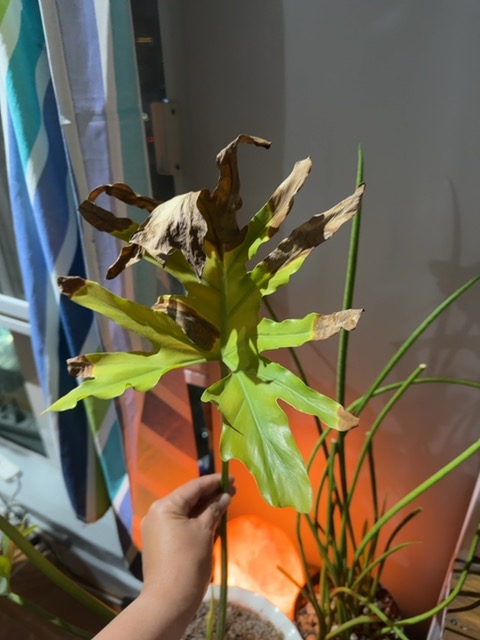
The plant shows brown, crispy margins on several large lobed leaves with部分 yellowing. This pattern is characteristic of abiotic stress rather than a clear fungal or bacterial disease: leaf scorch from excessive direct sunlight, dehydration, or rapid environmental changes can cause tissue death at the tips and margins, especially on older leaves. Other contributing factors may include dry indoor air (low humidity), inconsistent watering (over- or under-watering), fertilizer salt buildup, and exposure to cold drafts or heat vents. The pictured symptoms do not show obvious mold, spots, or pests that would point to a contagious pathogen, so the primary diagnosis is sun/scorch and related abiotic stress, with root/watering issues potentially amplifying the damage.
해결 방법
3. Prevention-focused, resilience-building plan for ongoing health: Create a stable microclimate that minimizes stressors year-round. Position the plant where it receives bright, indirect light for most of the day, with a short, gentle sun exposure only in non-peak hours if tolerated. Use a high-quality, well-draining potting mix and ensure a pot with drainage; check that the pot height allows enough root space without letting excess soil stay saturated. Establish a practical watering rhythm by measuring soil moisture rather than following a calendar; during active growth, water when the top 2–3 cm are dry, and reduce watering during dormancy or cooler months. Keep humidity consistently moderate (50–60% or higher if possible) by using a humidifier or by grouping plants and maintaining a moisture-friendly environment. Regular fertilization should be light—apply a balanced fertilizer at a quarter strength every 6 weeks during the growing season and flush the soil every few months to prevent salt buildup. Clean the leaves weekly to remove dust that can suppress photosynthesis. Schedule periodic root checks every 6–12 months, repot as needed, and monitor for signs of stress or pest pressure. If any damaged foliage remains, prune to direct plant energy toward healthy growth and propagation; consider taking cuttings from vigorous growth to create new plants as backups. By maintaining steady conditions and responding promptly to early stress signals, you’ll minimize browning and promote robust, resilient growth.
안내
식집사의 기능은 AI를 사용하고 있어 부정확 할 수 있습니다. 단순 재미와 참고용으로만 사용해주세요.