진단 결과
설명
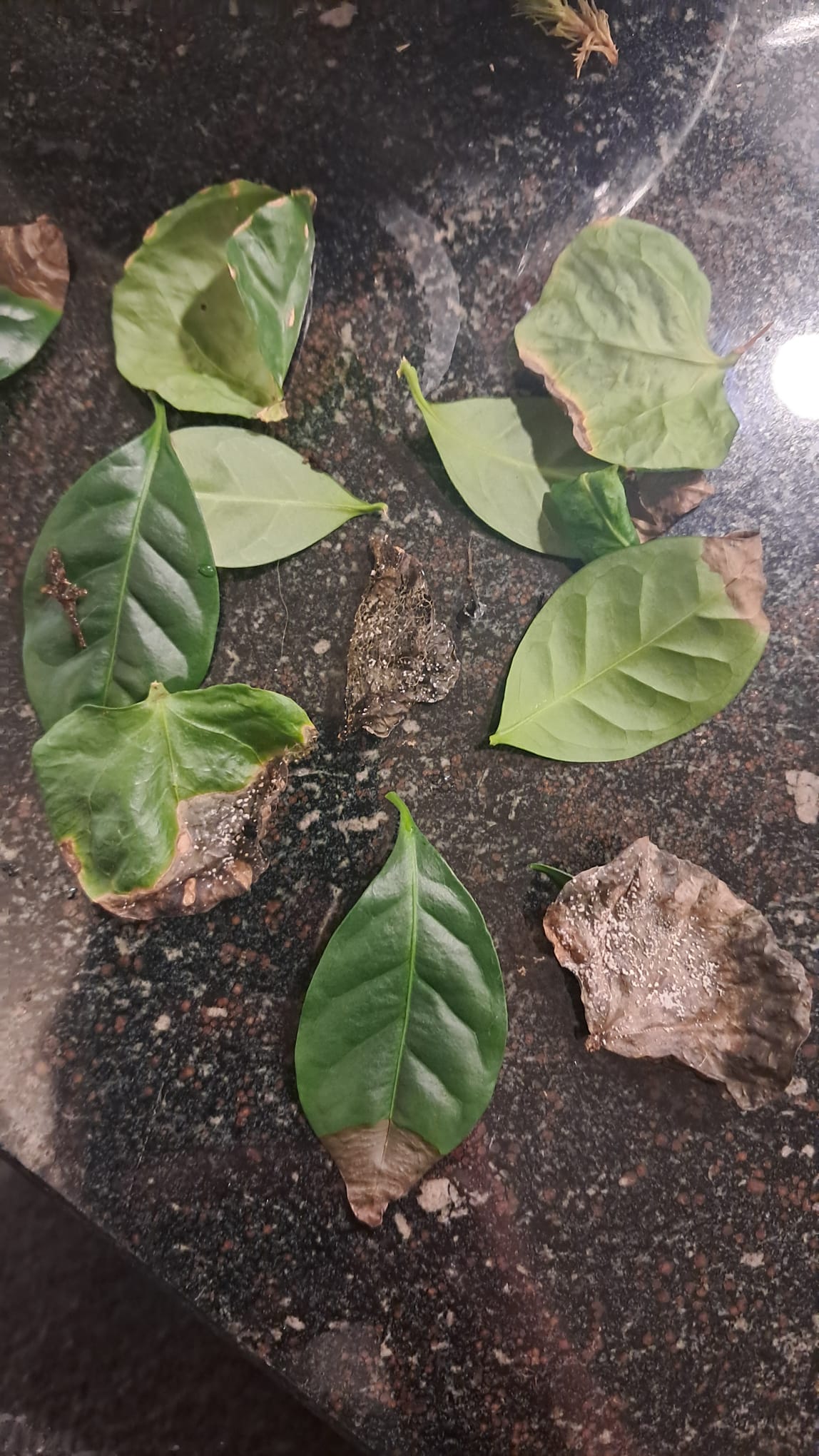
The leaves shown have browning and crisping at the margins, with several leaves turning brown along the tips and edges while the centers remain green. This pattern is most commonly caused by environmental stress rather than a distinct botanical pathogen. Possible contributors include inconsistent watering (either too dry or too wet), low humidity, or salt/mineral buildup in the soil from fertilizers or municipal water. There is no clear evidence of a widespread fungal or bacterial leaf spot (e.g., circular lesions or fuzzy growth), which would present as spots with defined margins or a moldy/silvery appearance. To confirm, inspect soil moisture, root health, and recent watering/fertilizer history; monitor for changes in new growth. If the plant is kept in a bright, dry indoor area or near a heating vent, that can intensify scorch. In short, the observations are most consistent with environmental leaf scorch, possibly aggravated by irrigation practices.
해결 방법
1. Immediate recovery and pruning: - Gently inspect the plant and remove the most severely browned leaves to reduce the source of stress and to redirect the plant's energy to new growth. - Sterilize your pruning scissors with alcohol before each cut to avoid spreading any potential pathogens. - Do not over-prune; remove only damaged tissue so the plant can recover, leaving healthy green tissue intact. - If you suspect root stress, gently loosen the root zone and inspect for signs of soggy soil or mushy roots; avoid tearing healthy roots. 2. Watering and soil management (addressing irrigation and salt buildup): - Check soil moisture before watering: insert a finger about an inch into the soil; water only when the top 1–2 inches feel dry to the touch. For many indoor plants, deep watering followed by thorough drainage is preferred, but never allow the pot to sit in standing water. - Ensure the pot has good drainage and use a well-draining potting mix (a blend with perlite or orchid bark can help). - If your tap water is very hard or salty, consider using filtered or distilled water occasionally and flush the soil every 4–6 weeks by watering thoroughly until water drains from the hole, to reduce mineral buildup. - Fertilize sparingly and at half-strength with a balanced fertilizer during active growth (every 4–6 weeks) rather than weekly, and avoid applying fertilizer to dry soil. 3. Humidity, light, and temperature optimization: - Increase ambient humidity around the plant if the room is dry (aim for 40–60% humidity). Grouping plants together, using a humidifier, or placing the pot on a shallow tray with pebbles and water can help raise humidity without over-wetting the soil. - Place the plant in bright, indirect light rather than direct hot sun, which can scorch tender leaf margins. Rotate the plant occasionally to promote even growth and avoid uneven scorching on one side. - Maintain a stable temperature, avoiding drafts, sudden temperature swings, or proximity to heating/cooling vents, which can stress leaves and accentuate browning. - Monitor for signs of pests (scale, spider mites, and whiteflies) which can stress foliage; treat with appropriate consumer-safe controls if detected. 4. Monitoring and long-term prevention: - Over the next 2–4 weeks, track new growth. If new leaves emerge healthy and green with no browning at the margins, you’re on the right track. - Keep a consistent routine for watering, feeding, and light exposure. Sudden changes are often the cause of scorch and can lead to recurring edge burn. - If the browning spreads or if you notice root rot signs (soft, brown/black roots or a foul odor in the soil), move to more aggressive root health measures or consult a local extension service for a diagnosis and treatment plan. 5. When to seek professional help: - If there is no improvement after 3–4 weeks despite optimized watering, soil, humidity, and light, or if you observe symptoms that suggest a pathogen (spotting that expands rapidly, mold growth on leaves, or root decay), obtain a professional diagnosis. A horticulturist can perform a closer examination of the root zone and may test for common indoor plant pathogens or nutrient deficiencies and recommend targeted treatments. Overall, this condition is most likely environmental leaf scorch with possible subtle root/soil issues. Address moisture balance, soil drainage, humidity, and light to support healthy regrowth, and patiently monitor new growth for signs of recovery.
안내
식집사의 기능은 AI를 사용하고 있어 부정확 할 수 있습니다. 단순 재미와 참고용으로만 사용해주세요.