진단 결과
설명
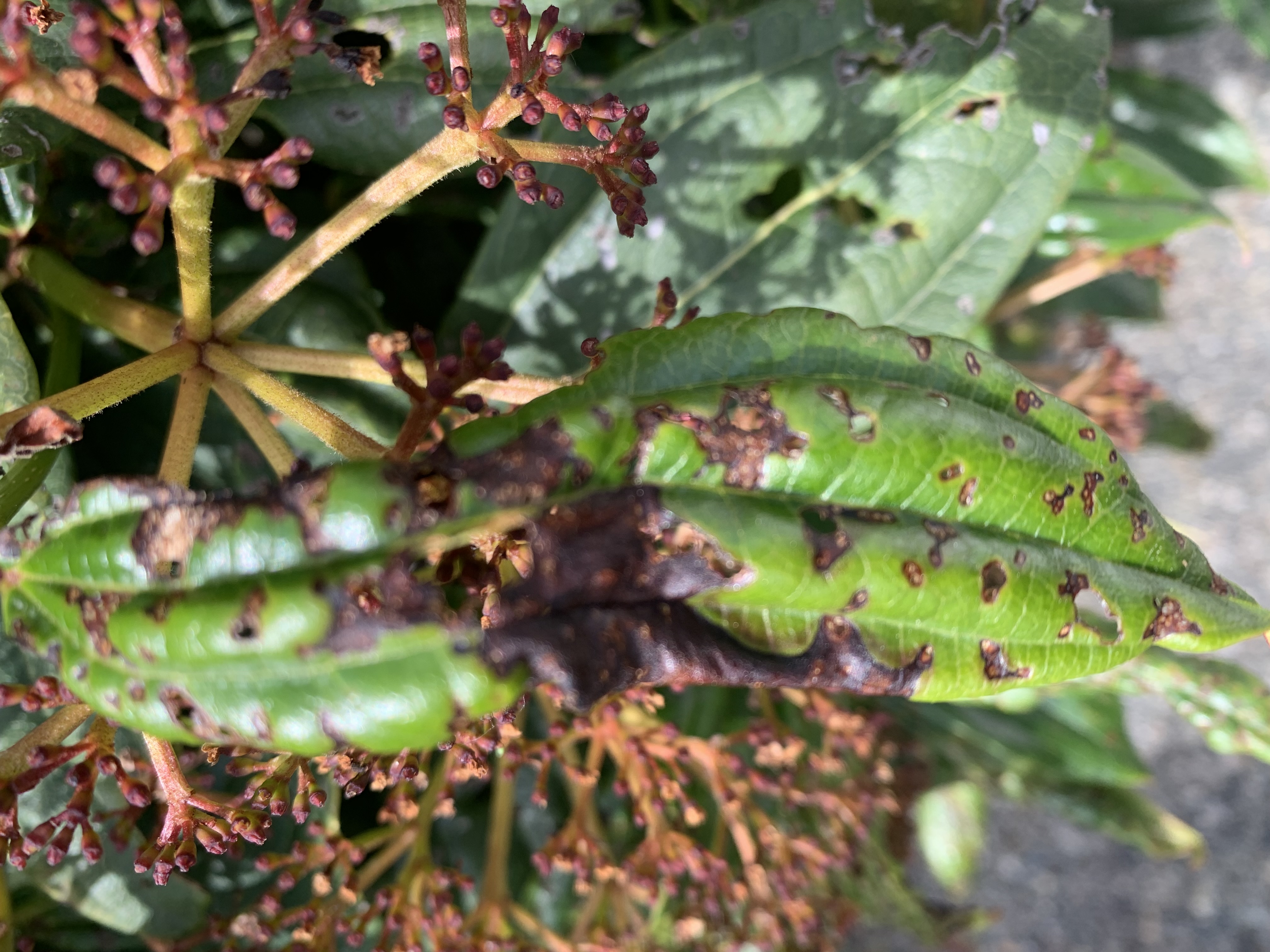
The plant shows widespread dark brown to black irregular spots and speckling on leaves, along with browning and dieback concentrated near tender growth and developing buds/inflorescences. Several leaves appear mottled with small necrotic lesions, and affected areas look dry and papery rather than uniformly water-soaked. This pattern is commonly seen with leaf-spot diseases such as anthracnose and related foliar fungi, which thrive when foliage stays wet (rain, heavy dew, overhead irrigation) and when plants have dense canopy or poor airflow. While bacterial spotting or nutrient issues can sometimes mimic spotting, the combination of multiple necrotic lesions across foliage plus blossom/bud browning strongly points to a fungal foliar pathogen (anthracnose-type) or a similar leaf-spot complex. Without a closer look at lesion margins and any spore growth under magnification, I can’t be 100% exact, but fungal leaf spot/anthracnose is the most likely diagnosis from the photo.
해결 방법
1. Remove and reduce infected material immediately: Prune off badly spotted leaves, browned clusters, and any stems showing dieback, cutting back into healthy tissue (disinfect pruners between cuts). Bag and trash the removed plant parts—do not compost. After pruning, gently thin crowded growth to improve airflow so leaves dry faster after rain or irrigation. 2. Improve watering and hygiene to break the disease cycle: Water at the base (drip irrigation or soaker hose) early in the day so foliage dries quickly. Avoid overhead watering and reduce sprinkler timing. Keep leaf litter and fallen infected debris cleared from around the plant because many leaf-spot fungi overwinter in that material. If the plant is in a container, ensure the pot drains well and empty saucers so splashing and humidity around the foliage are minimized. 3. Use a targeted fungicide program (especially if wet weather continues): Spray a labeled fungicide for leaf-spot/anthracnose at the first sign and repeat according to the product label (often 7–14 day intervals during active outbreaks). Common effective active ingredients include chlorothalonil (where permitted), mancozeb, or a strobilurin/DMIs such as azoxystrobin or difenoconazole—choose products that are specifically labeled for the plant species you have and for the diseases in question. Thorough coverage is critical (both leaf surfaces and petioles), and you should rotate FRAC codes between sprays to reduce resistance. If the disease is progressing rapidly, start treatment promptly after pruning.
안내
식집사의 기능은 AI를 사용하고 있어 부정확 할 수 있습니다. 단순 재미와 참고용으로만 사용해주세요.