진단 결과
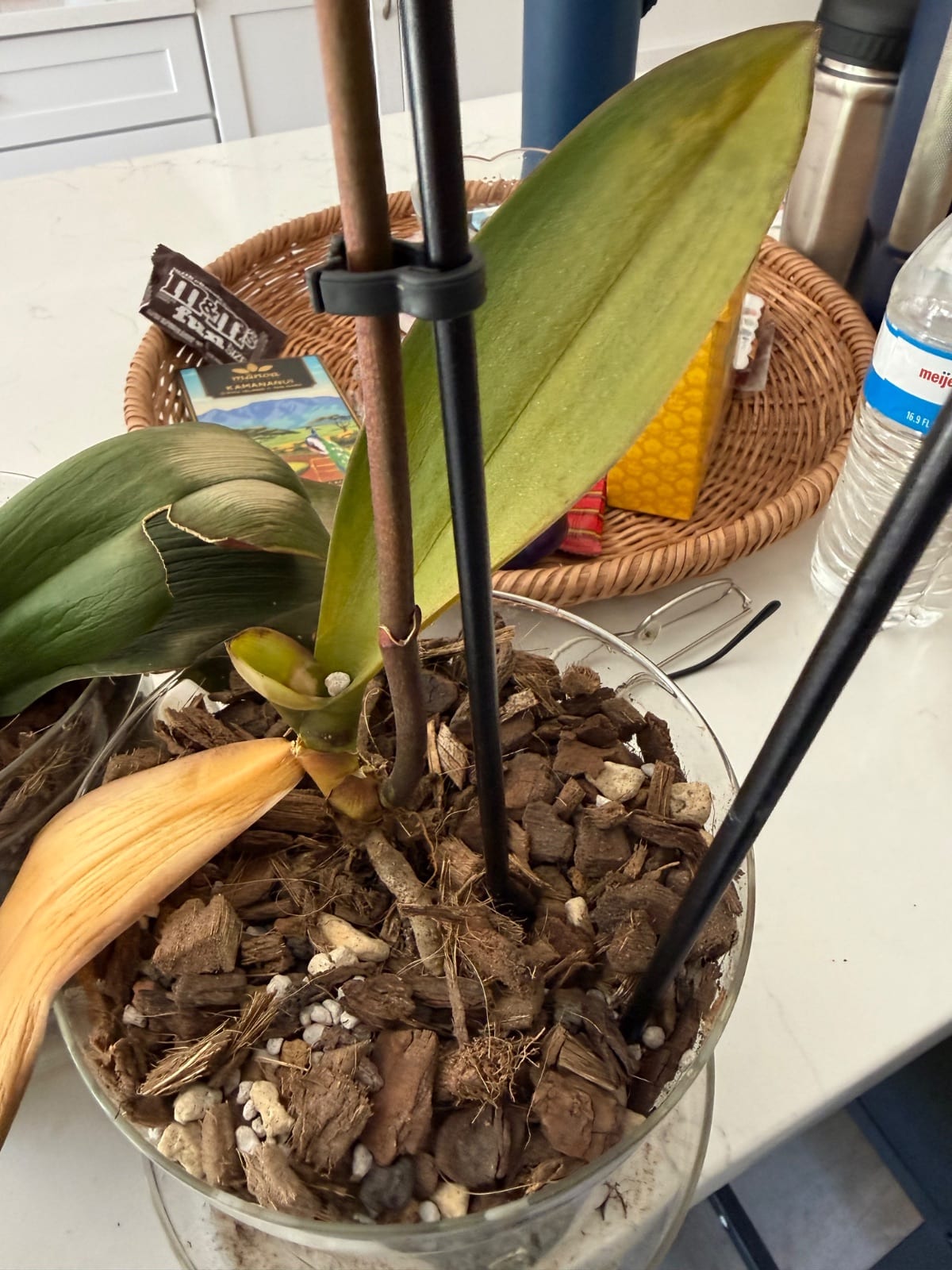
설명
From the photo, the plant appears to be a Phalaenopsis-type orchid (thick leaf, upright growth) that is potted in bark/large chunks, but the crown/near the soil line shows a damaged, wet-looking or darkened area and an abnormal yellowing of leaf tissue. The overall context—diminished vigor and localized dark discoloration near the base—fits best with root stress transitioning into rot, where opportunistic fungi or water molds take advantage of constantly damp, oxygen-poor conditions. While yellowing can also be caused by nutrient issues, sun scorch, or mechanical damage, the combination of basal/crown damage plus likely moisture retention strongly points to root/crown rot rather than a simple leaf spot. A common follow-on sign (not fully visible) would be mushy roots, hollow or blackened crown tissue, and new growth stalling. Because rot spreads internally, early intervention matters: removing compromised tissue and correcting watering and drainage conditions often determines survival.
해결 방법
1. Unpot and inspect immediately: Stop watering right away and carefully remove the orchid from the pot. Gently rinse or brush off the bark so you can see roots and the crown/base area. Healthy roots are firm and whitish/green; rotting roots are dark brown/black, translucent, smelly, or mushy and they may pull off easily. If the crown/base tissue is dark, soft, or emits an odor, that tissue should be treated as infected. Using sterilized scissors (alcohol flame or wipe with 70% isopropyl), cut away all black/mushy roots and any soft/black crown tissue until you reach firm, pale tissue. This prevents the rot organism from continuing to spread. 2. Treat and dry/callus: After trimming, dust the cut surfaces with a cinnamon powder (light application) or a horticultural fungicide labeled for orchids/houseplants (follow label rates). If you have access to a systemic fungicide suitable for ornamental orchids, you can use it according to the manufacturer directions, but the key is sanitation and removing diseased tissue. Then let the plant air-dry in a clean, bright spot with good airflow for several hours (often 4–12 hours) so wounds can callus. Avoid sealing wounds in plastic wraps or keeping the plant constantly wet—rot thrives under low-oxygen, soggy conditions. 3. Repot correctly and adjust watering to prevent recurrence: Repot into fresh, fast-draining orchid bark (or a chunky mix with perlite/charcoal for extra aeration). Ensure the pot has drainage holes and never let it stand in water. Water thoroughly—until water drains completely—then allow roots/media to dry toward the “mostly dry” stage before watering again (orchids generally want wet/dry cycles, not constant moisture). A good rule is to water when roots are silvery and the pot feels light. If your current potting mix stays damp for many days, switch to larger, more airy bark and a slightly smaller pot so the mix doesn’t stay waterlogged. For recovery, keep bright indirect light and stable temperatures; avoid cold drafts and direct scorching sun. Monitor weekly: new root tips and firmer leaves indicate recovery; increasing blackening, foul smell, or spreading soft tissue means you likely need to repeat trimming and extend drying.
안내
식집사의 기능은 AI를 사용하고 있어 부정확 할 수 있습니다. 단순 재미와 참고용으로만 사용해주세요.