진단 결과
설명
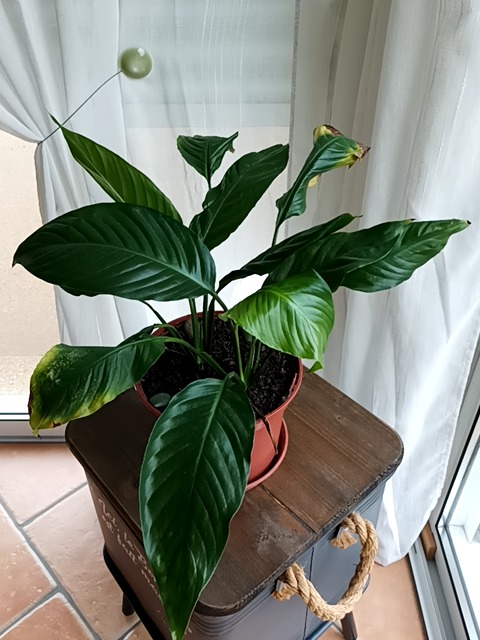
The plant shows common signs of root distress in Peace Lilies: yellowing starting at the lower leaves, brown tips and margins, and drooping foliage while the soil may feel consistently damp. Overwatering or poor drainage is the most likely cause, leading to oxygen-deprived roots that rot and cannot uptake water and nutrients effectively. Additional contributing factors can include low light, cold drafts, fluoride/salt buildup from tap water, and high humidity with stagnant air. The pictured plant appears to be displaying early to moderate symptoms rather than advanced collapse, so a rescue plan focused on root inspection, soil refreshment, and careful watering should give it a good chance of recovery.
해결 방법
3. Pest and abiotic issue check and long-term prevention: - Inspect for pests and clean leaves: If symptoms persist after the rescue, examine the undersides of leaves and the leaf axils for signs of pests such as spider mites (tiny specks or fine stippling), scale (brown bumps on stems or leaf undersides), or mealybugs (white cottony clusters). Start with a thorough wipe-down using a soft damp cloth to remove residues. If pests are present, apply an appropriate insecticidal soap or horticultural oil according to label directions. Repeat applications every 7-10 days for 2-3 cycles to break the life cycle. For heavy infestations, isolate the plant to prevent spread and consider professional advice. - Abiotic factors and nutritional balance: If yellowing continues despite proper watering, test for nutrient imbalances or salinity buildup. Salt accumulation from fertilizers can cause leaf tip burn and marginal chlorosis; flush soil with water or repot to remove excess salts. Use filtered water if your tap water is particularly mineral-rich. Carefully follow fertilizer instructions, avoiding high concentrations. Regular soil checks and a modest feeding schedule will keep roots healthier and reduce susceptibility to disease. - Water quality and prevention of leaf burn: Peace Lilies are sensitive to fluoride and chlorine commonly found in tap water. Use filtered, distilled, or let water stand overnight to dissipate chlorine before use. If you notice persistent brown leaf tips even after adjusting water quality, consider reducing fertilizer frequency and intensity. Maintain a stable growing environment with consistent light, temperature, and humidity, which together minimize plant stress and make disease and pest outbreaks less likely. - Hygiene and cross-contamination prevention: Sanitize pruning tools and pots between uses with rubbing alcohol or a bleach solution to prevent cross-contamination. Keep fallen leaves cleared away, as decaying material can harbor pathogens. If you propagate from healthy cuttings, ensure clean propagation tools and sterile medium. A routine that emphasizes hygiene, environmental stability, and proactive monitoring will help your Peace Lily recover from current stress and prevent future issues from taking hold.
안내
식집사의 기능은 AI를 사용하고 있어 부정확 할 수 있습니다. 단순 재미와 참고용으로만 사용해주세요.