진단 결과
설명
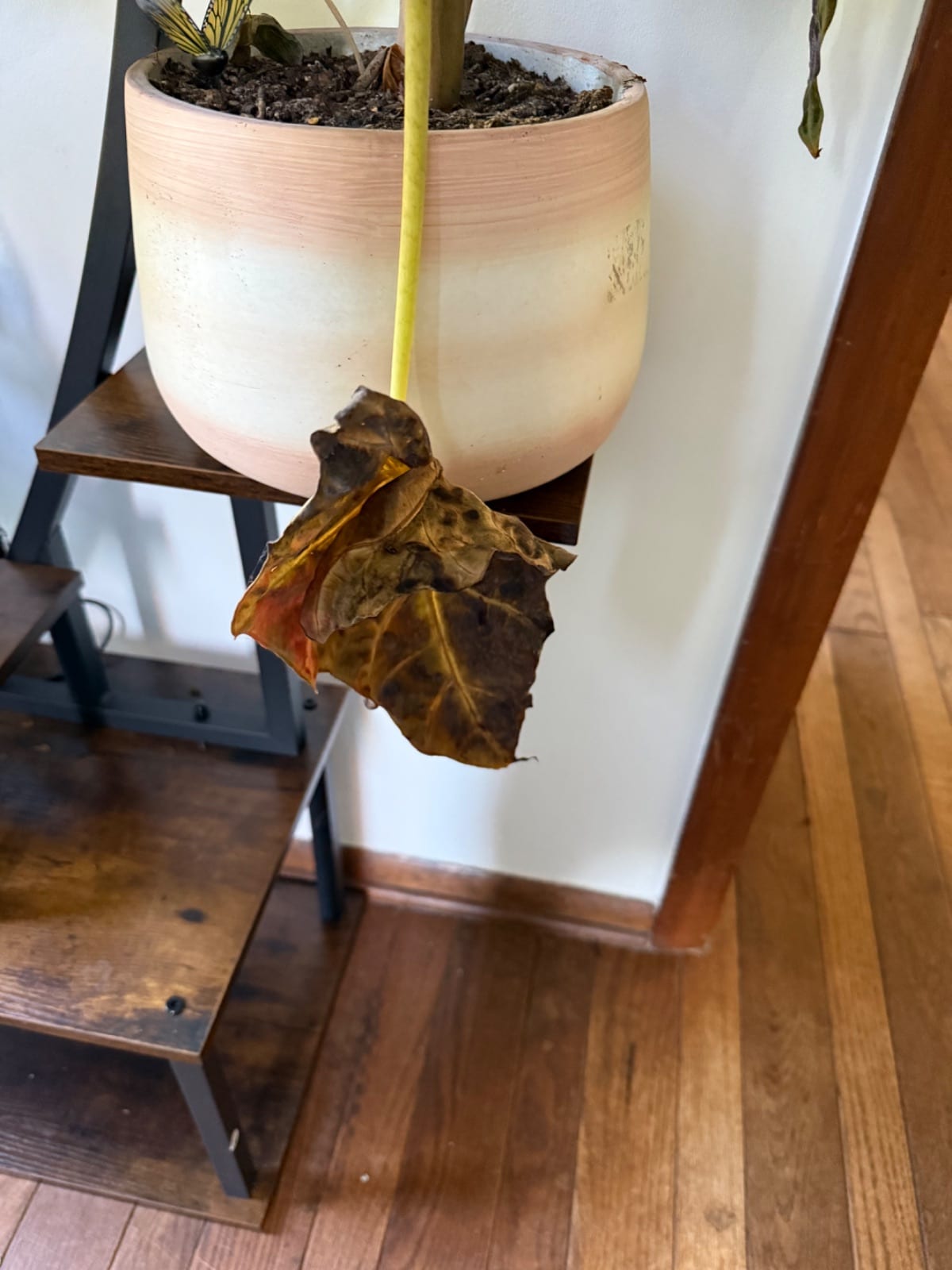
From the photo, the plant’s leaf shows irregular browning and dark, water-soaked-looking patches that turn tan to dark brown, with some orange/russet tones at the edges. The affected areas look more like blotches and blight/spotting than a uniform dry burn. This pattern is commonly seen when leaves stay wet too long (from overwatering splashes, humid air with poor airflow, misting, or watering that wets foliage). Leaf blights/spotting can be caused by fungi (e.g., Botrytis/leaf spot organisms) or bacteria; they often enter through natural openings or minor wounds and spread locally during humid, cool, or intermittently wet conditions. The blackened/dark margins and irregular lesions plus the “blighted” appearance of multiple areas on the leaf are consistent with foliar blight/spot diseases. Because the image shows only one leaf and not close-up signs like fuzzy growth (fungus) or translucent/oozing wet tissue (bacteria), exact ID is uncertain, but the overall presentation strongly points to a foliar blight/spot problem driven by excess leaf wetness and reduced airflow.
해결 방법
1. Remove and discard diseased foliage immediately: Using clean scissors/pruners, cut off the affected leaf (and any other leaves showing early spotting). Bag and throw it away (do not compost). Wipe tools with 70% alcohol or a diluted bleach solution between cuts. This reduces the amount of infectious tissue and prevents further local spread. If only part of a leaf is affected, you can trim to healthy tissue, but since lesions appear extensive, full removal is safer. 2. Change watering and humidity practices to stop leaf wetness: Water the plant only at the soil line (not over the leaves). If you use a saucer, empty runoff after watering so the root zone doesn’t stay waterlogged. Avoid misting and avoid spraying the plant unless it is very dry and you can ensure fast drying. Improve airflow around the plant (space it from walls/other plants, run a small fan nearby for gentle air movement, and keep the room ventilated). Aim for drying of leaves within a few hours after watering. Wet foliage overnight is especially risky. 3. Use a targeted treatment approach and repeat: After removing the worst leaf, treat the remaining foliage with a protectant fungicide if the symptoms are fungal or unclear (many foliar blights respond to routine protectants). For home use, look for products containing copper (copper hydroxide/“copper soap” type) or a chlorothalonil/captan-style fungicide where permitted. Spray thoroughly so both upper and lower leaf surfaces are coated, then repeat according to the label schedule (often every 5–10 days early on). If you suspect bacterial blight (lesions that spread rapidly, water-soaked appearance, or oozing), copper sprays can still help slow bacterial spread, but sanitation and removing infected tissue are the primary controls. Always follow the label for rates and do not apply in strong sun/heat to prevent leaf burn.
안내
식집사의 기능은 AI를 사용하고 있어 부정확 할 수 있습니다. 단순 재미와 참고용으로만 사용해주세요.