진단 결과
설명
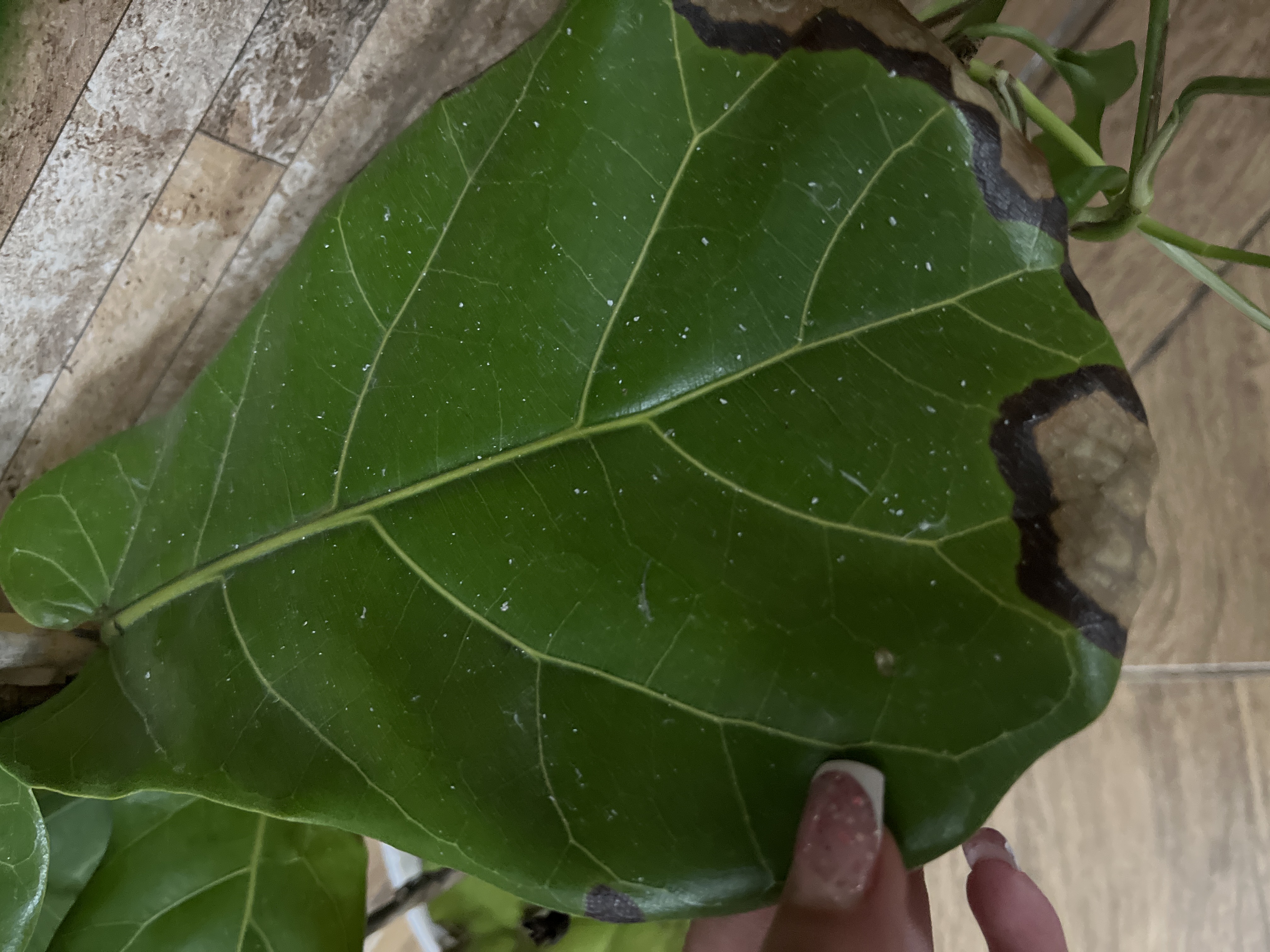
The photo shows a large, glossy, broadleaf leaf with a distinctly damaged margin at the bottom edge. The necrotic area along the leaf margin appears dark brown to black, irregular in shape, and the tissue around it looks dehydrated or scorched. A few small white specks are scattered across the leaf surface, which could be mineral/dust residues, residual scale, or early signs of sporulation depending on the exact pathogen or pest presence. The overall habit suggests a broadleaf evergreen plant (possibly a rubber tree/ficus-type or avocado-family plant) kept in a container, with symptoms suggesting a combination of leaf scorch and a fungal leaf-spot infection that thrives with leaf wetness, poor air circulation, and high humidity. This pattern is commonly caused by fungal pathogens such as Colletotrichum or Phyllosticta family members, or by environmental stress that weakens the plant’s defenses and allows secondary infections. A differential diagnosis should consider sun/heat scorch, irrigation-related salt burn, or bacterial leaf spot, but the most likely primary issue given the necrotic margins is a fungal leaf spot with marginal necrosis, aggravated by moisture on the leaf surface.
해결 방법
3. Diagnostics, alternative scenarios, and escalation plan - If symptoms persist after 2–3 weeks of good cultural practices and a single or limited foliar fungicide treatment, re-evaluate the diagnosis. Consider the possibility of bacterial leaf spot or a different fungal pathogen not initially identified. In this case, collect a few symptomatic leaves (bagged to avoid spreading spores) and seek advice from a local extension service or a plant pathology lab, which can perform microscopy or PCR-based testing for definitive pathogens. If a bacterial disease is confirmed or strongly suspected, copper-based products or specific bactericides may be recommended, but avoid indiscriminate use of antibiotics and follow regulatory guidance. If environmental conditions were the primary driver, you may not need repeated chemical treatments once the etiologic factor has been removed, but you should still maintain strict sanitation and monitoring. For stubborn infections or high-value plants, consider a more aggressive approach such as a targeted systemic fungicide labeled for indoor use and compatible with your plant species, always following label directions for application timing, dosage, and safety. In severe cases where leaf tissue is extensively necrotic or the root system is compromised, you may need to consider replacing the plant or propagating from healthy cuttings to preserve the genetic lineage while eliminating the infected material. Throughout all steps, protect yourself with gloves and eye protection when applying fungicides, and keep children and pets away from treated areas until safe. Regular documentation of symptoms, environmental conditions, and treatment responses will help you refine a long-term prevention strategy and increase the likelihood of successful recovery.
안내
식집사의 기능은 AI를 사용하고 있어 부정확 할 수 있습니다. 단순 재미와 참고용으로만 사용해주세요.