Hardy geranium (cranesbill) groundcover, likely Geranium macrorrhizum or a close relative
Description
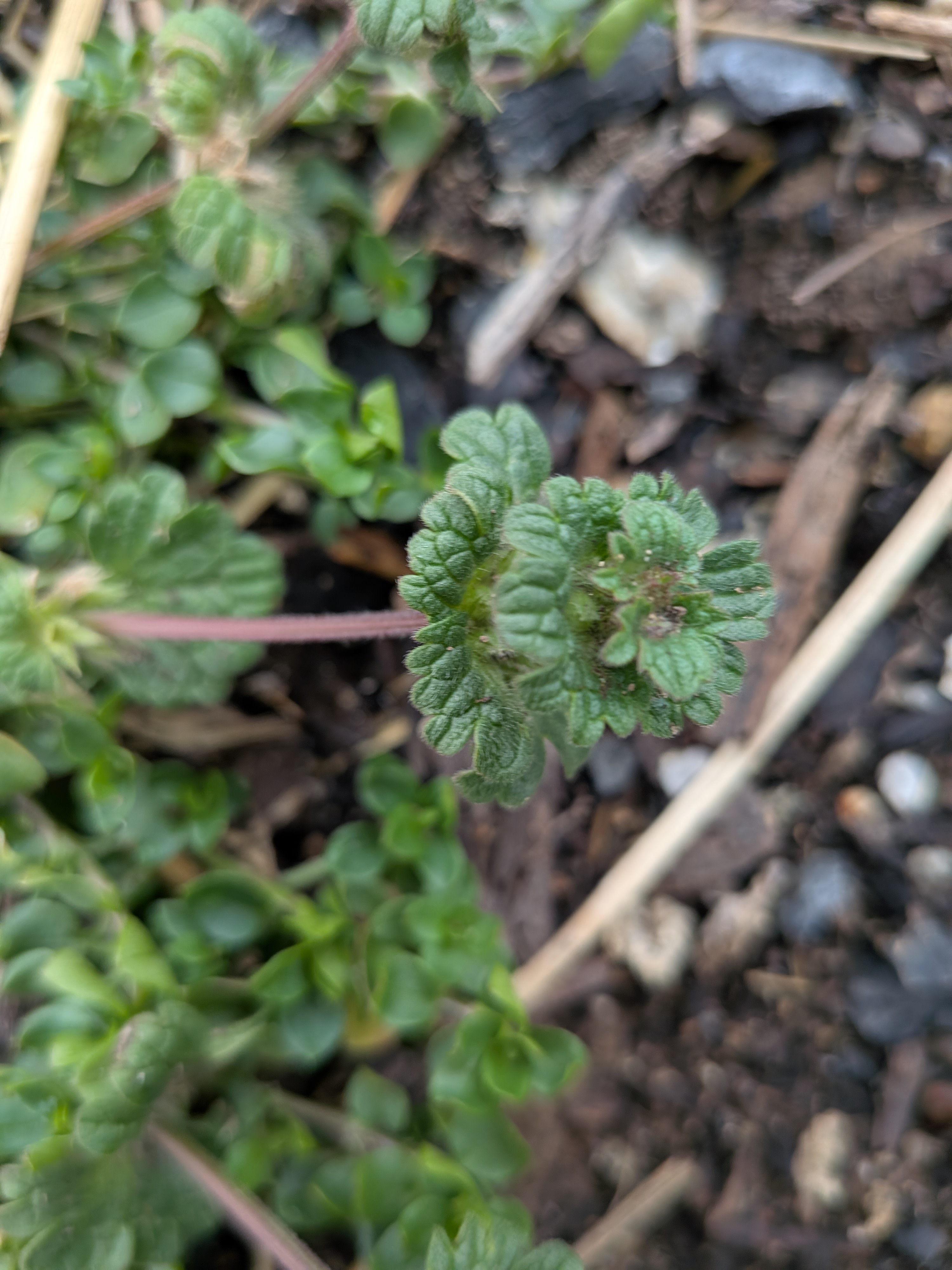
What you have in the photo resembles a low-growing groundcover in the geranium family, commonly called a hardy geranium or cranesbill. The foliage in your image shows small, rounded to kidney-shaped leaves with crinkled, quilted texture and a fine, soft (fuzzy) pubescence. The leaves appear opposite on creeping stems that are tinged red, and at the tip of the shoot you can see a compact cluster of leaves forming a rosette-like appearance. This combination of a creeping habit, small rounded leaves with scalloped or crenate margins, and a soft, fuzzy surface is characteristic of many hardy geraniums (genus Geranium). The best way to confirm the specific species or cultivar is to note the flowers when they appear, as many Geraniums are grown primarily for their blooms, which come in pink, magenta, purple, or white and appear on tall slender stalks above the foliage. If your plant does flower, noting the color, size, and timing can help distinguish between geraniums such as Geranium macrorrhizum, Geranium cinereum, and other garden varieties. In the absence of flowers, the identification remains a best-guess based on foliage habit and texture. Why this plant is a good fit for many gardens: - Growth habit: It forms a dense, spreading mat that can cover bare soil and suppress weeds. It is well-suited to rockeries, borders, groundcovers, and container spillovers. - Foliage: The small, rounded leaves with a soft, fuzzy texture create a decorative texture even when not in bloom. The foliage color is typically green, sometimes with a bronze or purplish tinge on new growth. - Aroma: Many hardy geraniums release a pleasant, somewhat pine-like or resinous scent when leaves are crushed, which can help with pest deterrence and add to the garden experience. - Hardiness: Most hardy geraniums are durable, cold-hardy perennials that tolerate a range of climates, though exact hardiness depends on the species or cultivar. Care and cultivation (roughly 1000 words on how to grow and maintain): Light and placement - Most hardy geraniums prefer full sun to light shade. In hotter climates, they appreciate some afternoon shade to prevent leaf scorch, especially on younger plants. A site with bright light but some relief during the hottest part of the day will promote more compact growth and better flowering. - Because they are groundcovers, place them where you want long-term ground cover or edging along paths, rock gardens, or under taller shrubs. They can tolerate slope and poor soil, as long as drainage is good. Soil and drainage - These plants are adaptable to a range of soils but perform best in well-drained soil. They do not like to sit in constantly wet conditions, which can lead to root rot. - If your soil is heavy clay or tends to stay wet, improve drainage with organic matter and consider raised beds or mounding of planting areas. A slightly alkaline to neutral pH is generally acceptable, but they are not particularly fussy about pH. - Mulching lightly around the crown can help retain moisture and suppress weeds, but avoid piling mulch against the crown itself, which can cause rot. Watering and humidity - Water regularly when establishing, allowing the top 1–2 inches of soil to dry out between waterings. Once established, many hardy geraniums are relatively drought-tolerant, but they will perform best with regular moisture in the growing season. - Do not overwater; keep the soil evenly moist but not waterlogged. In regions with high humidity, ensure good air circulation to minimize fungal issues. Temperature and hardiness - Hardy geraniums are cold-hardy perennials for many USDA zones (typically zones 4–8, depending on the species and cultivar). Some sub-tropical or Mediterranean forms may be less cold-hardy. - In very hot and humid climates, providing light shade and good air flow helps reduce leaf scorch and diseases. Protect potted specimens from extreme temperatures by placing them in a sheltered outdoor spot or indoors during severe freezes, if needed. Fertilizer and feeding - These plants generally do not require heavy feeding. A light top-dressing of compost in spring supports healthy growth. If growth looks leggy or flowers are sparse, you can apply a balanced, slow-release fertilizer at low rates in early spring. - Avoid high-nitrogen fertilizers, which can promote lush foliage at the expense of flowers and compact form. Pruning and maintenance - After flowering, you can deadhead spent blooms to encourage repeat flowering in some cultivars and maintain a tidy habit. - For a more compact, mop-like shape, shear back the plant lightly after the main flush of growth. This also helps promote fresh foliage and a neat appearance. - In late summer or early fall, trim back any overly long shoots to keep the plant dense and ready for winter. Remove any dead or damaged leaves to reduce disease risk. - Divide or transplant every few years if the plant becomes too sparse or crowded. This is usually done in early spring or fall and helps rejuvenate older patches. Propagation - Propagation is straightforward and can be done by division or from cuttings. - Division: In spring or fall, lift a clump, gently separate the runners and replant the divisions at the same depth they were growing. Water well after replanting. - Cuttings: Take 4–6 inch semi-hardwood cuttings in late spring or early summer, dip in rooting hormone, and place in a well-draining propagation mix. Keep consistently moist until roots form. - Seed: Some cultivars can be grown from seed, but many garden geraniums are sterile or hybridized and may not come true to type. If you want to attempt seed propagation, sow outdoors after the last frost or indoors in a warm, bright spot. Pests and diseases - Common pests include aphids, slugs, and snails. Regular monitoring and early intervention help keep populations in check. Hand-picking slugs and snails at dusk, or using organic controls, can be effective for small patches. - Powdery mildew can occur in damp, crowded conditions with poor air circulation. Ensure good spacing, sun exposure, and air movement around the plant to reduce disease risk. If mildew appears, remove affected leaves and treat with appropriate fungicides only if necessary (prefer organic options first). - Root rot is a risk in poorly drained soils. Ensure drainage is good and avoid overwatering. If you notice yellowing leaves or collapse of the plant in wet soils, check drainage and amend as needed. - Other issues may include leaf spots or rust in susceptible cultivars. Removing affected foliage and improving air circulation typically helps. Winter care - In areas where winter temperatures dip below the plant’s hardiness range, provide protection such as a light mulch over the crown or move container plants indoors or to a sheltered location. - Some hardy geraniums stay evergreen in milder climates, while others will die back to the crown and re-emerge in spring. Expect variation by species and cultivar. Flowering and ornamental use - Flowering stems rise above the foliage and display clusters of blooms, which can add seasonal color and attract pollinators. The typical bloom period is spring to early summer, with some cultivars offering an extended bloom depending on climate and pruning. - For landscape design, these plants work well as groundcovers, in rock gardens, under shrubs, or cascading over the edge of containers. The foliage also has winter appeal in milder climates, providing texture even when not in bloom. - Fragrance varies among cultivars but is often pleasant and piney-resinous. Some people enjoy the aroma when touching or brushing against the leaves, while others may use crushed leaves in dried arrangements for subtle scent. Safety and edible considerations - Although many geranium species are grown for ornamental use, not all are edible. If you are considering consuming any part of the plant, first confirm the species and consult reliable sources. Some geranium oils are used in perfumery and traditional remedies, but ingestion is not universally advised. Final notes on identification and care - If you have not yet seen flowers on your plant, the safest approach is to observe overall habit, leaf shape, size, texture, and stem color. The rounded, scalloped, slightly fuzzy leaves on a creeping stem with a dense, mat-forming habit strongly point toward a hardy geranium type, such as Geranium macrorrhizum or a closely related cultivar. If flowers appear, record their color, bloom time, and height above the foliage to refine identification. - Regardless of the exact cultivar, the care guidance above is broadly applicable to many hardy geraniums: bright light, well-drained soil, moderate watering, light feeding, periodic pruning, and attention to pests and diseases. With proper conditions, these plants are reliable, long-lived groundcovers that bring texture, color, and resilience to mixed borders, rock gardens, and container displays. In summary, the plant in your photo most closely resembles a hardy geranium (cranesbill) groundcover, prized for its creeping habit, softly textured leaves, and seasonal blooms. By providing sun to light shade, well-drained soil, careful watering, and light maintenance, you can enjoy a vigorous, attractive mat that enriches the garden with color, scent, and enduring form.
Identification Time
February 17th, 2026
Notice
The function of Plantypia is using AI, so it may be inaccurate. Please use it for fun and reference only.