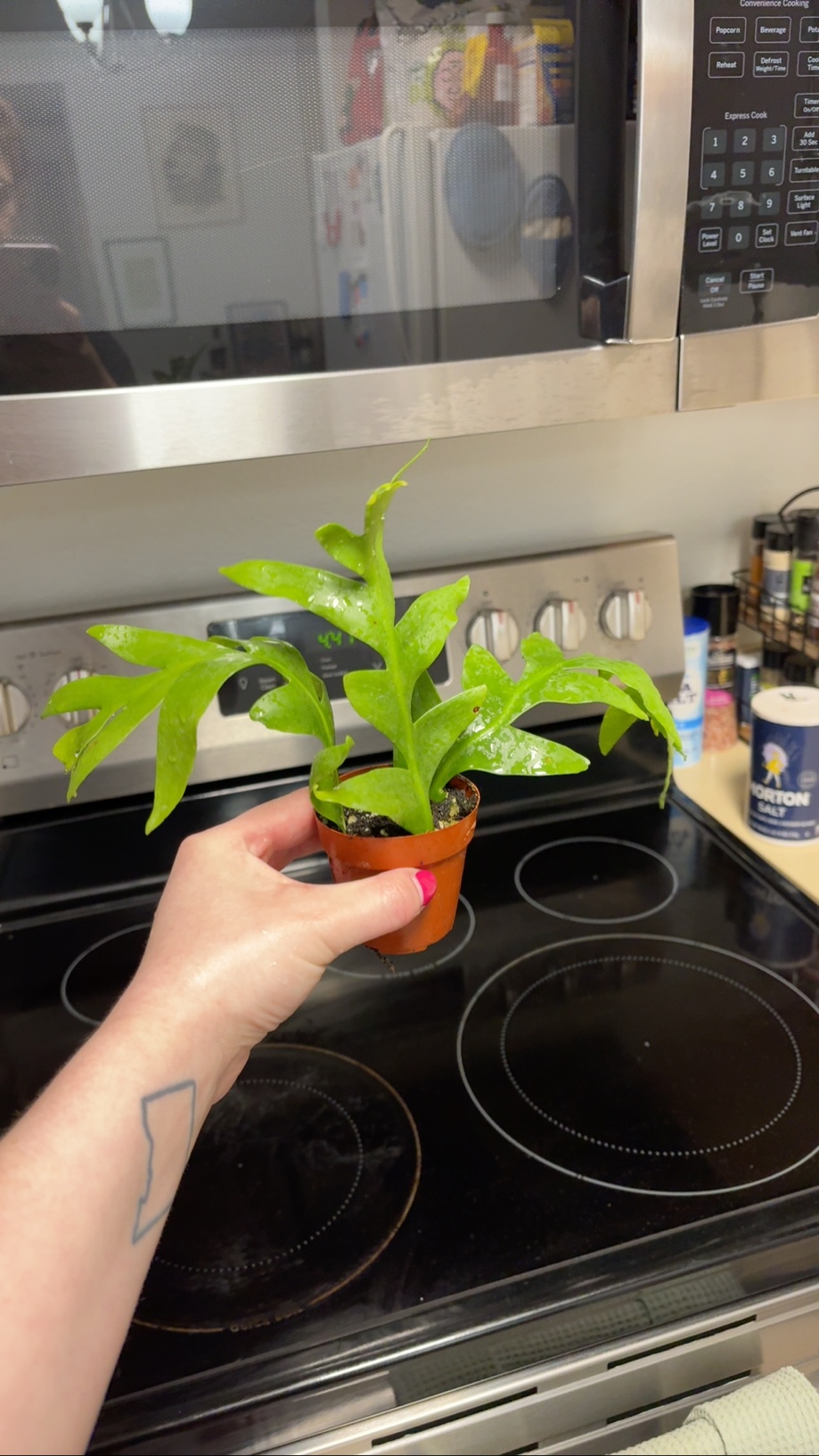
Kalanchoe pinnata (Bryophyllum pinnatum) – a lobed-leaf succulent (likely a kalanchoe/bryophyllum cultivar)
Description
What this plant most closely resembles in common houseplant form is a kalanchoe/bryophyllum type, such as Kalanchoe pinnata (often sold as Bryophyllum pinnatum). It is a fleshy, succulent perennial with bright green to lime-green leaves that are arranged on short stems in a rosette-like habit. The leaves in your photo are relatively broad, glossy, and have shallow to moderately deep lobes or undulating margins, giving the foliage a somewhat serrated, fingered look. This general leaf shape and succulent growth habit are characteristic of several kalanchoe/bryophyllum cultivars, many of which share similar care requirements. Because houseplant cultivars can vary a lot in leaf shape, color, and size, this identification is best considered a well-supported guess based on the visible features: a hardy, sun-loving succulent with lobed, fleshy leaves that can tolerate an indoor kitchen environment, and a tendency to form a compact, upright or cascading growth habit depending on light and pot size. If you have a plant that occasionally produces small plantlets along the leaf margins or a more upright rosette with slightly serrated edges, that would further support Bryophyllum/Kalanchoe pedigrees, but even without plantlets, many cultivars of this group look very similar when young. General characteristics - Growth habit: A compact, succulent perennial that forms a rosette of leaves around short stems. In good light it often grows upright with a sturdy but flexible stem; in lower light it may become a bit leggy or sprawling. The stems and petioles are typically thick and can store water, helping the plant survive periods of neglect. - Leaves: Succulent, bright to medium-green leaves that are broad and fleshy. Edges are lobed or wavy, giving a cordate- to oblong-lobed appearance. Leaves are arranged alternately along the stems in a way that creates a lush, cushioned look. The surface is usually smooth and may feel slightly waxy or glossy. - Size: In a small pot like the one shown, the plant is likely to stay relatively compact for a year or two, reaching anywhere from 6 inches to 18 inches tall depending on light and pruning. In optimal conditions it can become larger, with more leaves and a fuller rosette. - Light tolerance: Prefers bright light; can tolerate some direct sun, especially in the morning, but may scorch under intense mid-day sun. Indoors near a bright window is ideal. - Temperature: Likes warmth and does not tolerate frost. Typical indoor temperatures (60–80°F or 15–27°C) are comfortable. - Soil and drainage: Best in a well-draining, sandy or gritty succulent mix. A standard cactus/succulent potting mix with added perlite or pumice works well. Good drainage is crucial to prevent root rot. - Watering: Like most succulents, it prefers a “soak and dry” approach. Water thoroughly when the top 1–2 inches of soil feel dry to the touch, then allow excess water to drain. In winter, water sparingly as growth slows. Avoid letting water sit in the saucer, and ensure the pot has drainage holes. - Humidity: Tolerates average household humidity; high humidity is not essential, and excellent air circulation helps prevent fungal issues. - Fertilizer: During the active growing season (spring and summer), feed lightly with a balanced, water-soluble fertilizer (half strength) every 4–6 weeks. Do not over-fertilize; dormant periods in fall/winter require minimal to no fertilizer. Care and maintenance guide - Light and placement: Place the plant where it can receive bright, indirect light for most of the day. A south or east-facing windowsill is often ideal. If the plant starts to look pale or stretch toward the light (etiolation), consider moving it closer to the light source or supplement with a small grow light. Rotate the pot occasionally to keep growth even. - Watering routine: Check the soil before watering. Let the top inch of soil dry out between waterings. In hotter months or in a dry apartment, you may need to water a bit more frequently, but never keep the soil constantly wet. If the plant is in a very sunny, hot kitchen, the soil may dry out quickly; adjust water accordingly. - Potting mix and repotting: Use a fast-draining mix designed for succulents. If the plant becomes crowded or outgrows its pot, repot in spring into a slightly larger container. When repotting, gently tease apart any roots if they are densely circling the pot, and prune leggy growth to encourage a bushier shape. - Pruning and shaping: Occasional pruning helps maintain a compact shape and prevents plants from becoming leggy. Clip back the tips of the stems to encourage branching. Remove any dead, yellowing, or mushy leaves near the base to keep the plant healthy and attractive. - Fertilizing: Feed during the growing season with a diluted, balanced fertilizer. Avoid heavy fertilization, which can cause leggy growth and reduce the plant’s natural drought tolerance. Do not fertilize in winter when the plant is resting. - Propagation: One of the appealing features of kalanchoe/bryophyllum is its ease of propagation. You can propagate from leaf or stem cuttings. Let cut ends callus for a day or two, then plant in a well-draining medium. Roots typically appear within a few weeks. If your plant has leaf margins that occasionally produce small plantlets (a common trait in many Bryophyllum), those plantlets can be rooted once they detach and touch moist soil. - Pest prevention and treatment: Common pests include mealybugs and scale insects. Wipe leaves with a damp cloth to remove dust and inspect regularly. If pests appear, treat with insecticidal soap or a mild alcohol wipe on affected areas. Ensure good air circulation to discourage fungal problems. - Temperature and humidity considerations: Most indoor environments are suitable. Avoid exposing the plant to freezing temperatures or drafts. If your kitchen vents or air conditioning are strong, provide some protection or place the plant slightly away from direct drafts. - Safety and pet considerations: Kalanchoe species contain compounds that can be toxic to pets if ingested. If you have curious cats or dogs, place the plant out of reach or supervise their interactions. For households with small children, keep it in a location inaccessible to nibblers. - Seasonal behavior: In cooler months, growth slows. Expect minimal watering and light feeding during this rest period. In spring and summer, growth accelerates, and you can resume more regular watering and feeding. Why this plant can be a good choice for indoor growing - Low maintenance: Once established, this type of plant is relatively forgiving. It tolerates a range of indoor conditions and does not require daily care. - Visual appeal: The glossy, fleshy leaves and the potential for interesting leaf shapes (lobed margins, undulations) add texture and color to indoor spaces without being a demanding plant. It can work well as a focal point on shelves, in a kitchen window, or as part of a succulent collection. - Versatility in lighting: While it prefers bright light, it can adapt to a range of indoor lighting conditions, making it suitable for apartments and houses with varying sun exposure. - Propagation ease: For plant lovers who enjoy expanding their collection or sharing plants with friends, this group of plants is easy to propagate from cuttings or, in some cultivars, from leaf margins that produce plantlets. This makes it a satisfying plant for beginners and seasoned growers alike. Common problems and troubleshooting tips - Yellowing or soft, mushy leaves: Often indicates overwatering or poor drainage. Check the soil moisture, inspect the roots if you can, and ensure the pot has drainage holes. Allow the soil to dry out more between waterings and consider refreshing the soil and potting mix. - Edges browning or crispy leaf tips: Might be due to underwatering, low humidity, or overly strong sun exposure. Adjust watering frequency, offer a bit more humidity if the air is very dry, and filter intense sun with a sheer curtain or move the plant slightly away from direct midday sun. - Etiolation (leggy growth): If the plant becomes leggy with long bare stems, it’s a signal that it needs more light. Move it to a brighter spot or provide a supplemental grow light to encourage compact, bushier growth. - Pests: Mealybugs, scale, and spider mites can appear. If you see small bumps or a cottony residue, wipe with isopropyl alcohol on a cotton swab or use a product labeled for succulents. Increase air circulation and avoid overcrowding the plant to reduce pest pressure. Cultural notes and practical tips - The plant thrives with a routine that mimics its natural desert-adapted behavior: bright light, well-draining soil, and a brief, thorough watering followed by drying periods. Resist the urge to keep the soil constantly wet, as this is a common killer of many succulent houseplants. - If you’re new to succulents, start with a small specimen like the one in your photo and observe how your environment affects its growth. You’ll learn how fast your plant uses water, when it needs more light, and how to adjust your care schedule seasonally. - If you want a fuller look, you can pinch back the top growth to encourage branching. For a taller, more upright appearance, allow new growth to extend and lightly prune to shape as needed. - Consider combining this plant with other succulents that have similar light and water needs for a visually appealing, low-maintenance display. In summary, the plant pictured most closely matches a lobed-leaf kalanchoe/bryophyllum type (most likely Kalanchoe pinnata or a closely related cultivar). It is a succulent with fleshy, lobed leaves, adapted to bright light and well-draining soil. Care involves bright light, careful watering (let the soil dry between waterings), a sandy/succulent potting mix, and occasional pruning. It tolerates typical indoor temperatures and moderate humidity. With minimal fuss, this plant will produce attractive foliage and, in some cases, plantlets along the leaf margins, making it a versatile and rewarding choice for kitchens, living rooms, or office spaces. Regular observation will help you fine-tune water, light, and feeding to keep the plant healthy and looking its best.
Identification Time
April 10th, 2026
Notice
The function of Plantypia is using AI, so it may be inaccurate. Please use it for fun and reference only.
A plant result page that leads to the next useful action
After checking the name, continue into official plant database results.