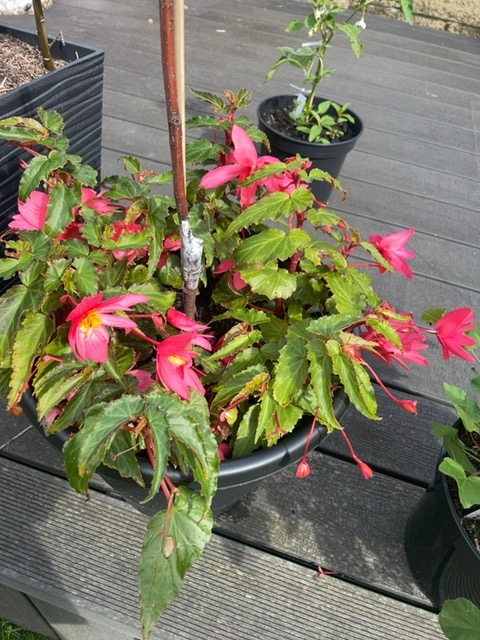
Begonia (pink flowering begonia, likely fibrous/wax type)
Description
The plant in the photo appears to be a begonia, a pink flowering begonia commonly grown in containers and hanging baskets. The leaves are green with serrated edges, and they have an asymmetrical shape that is characteristic of begonias. The plant bears clusters of bright pink flowers with yellow centers that hang along the stems, creating a cascading display. The stems are slender and the plant grows densely, which suggests it is well suited to pots and hanging planters. While there are many begonia cultivars, the overall look points to a fibrous rooted or wax begonia type that is frequently used for summer container plantings. New growth sometimes takes on a bronze or reddish tint, a common trait in many begonia varieties. In warm regions this kind of begonia behaves as a perennial, whereas in cooler climates it is treated as a tender annual. The plant benefits from regular pruning and pinching to maintain fullness and to prevent legginess, especially when grown in a protected pot or hanging basket where light might be uneven. Given its ability to bloom heavily through the growing season, it is a popular choice for color in decks, patios, and entryways. The flowers are the key ornamental feature, but the foliage adds contrast and texture with its glossy surface and serrated margins. The plant also tolerates periods of light shade, though it will flower best with bright, indirect light. This identification is based on the visible traits in the photo, and there are many begonia cultivars with similar forms, so exact cultivar name may vary. Care and culture overview Light and placement: Begonias in containers prefer bright, indirect light. Placing the pot where it receives morning sun or filtered light is ideal, while avoiding intense direct sun in the hottest part of the day. In strong sun or hot climates, leaves may scorch, and overly deep shade can reduce flowering. If the plant becomes leggy or your flowers slow, it is a sign that light is inadequate or that the plant has grown too large for its pot. A bright balcony or terrace with morning sun and afternoon shade works well. Indoors, place the pot near a bright window with filtered light. Rotating the container every week or two helps keep growth evenly distributed and encourages fuller branching. Temperature and humidity: Begonias prefer moderate temperatures. A comfortable range is roughly 60 to 75 F (15 to 24 C). They do not tolerate frost and should be protected from cold drafts. Humidity is beneficial; if indoor air is dry or if you notice leaf edges browning, increase humidity by grouping plants, placing the pot on a humidity tray, or using a room humidifier. While they tolerate average indoor humidity, higher humidity during the growing season can promote more vigorous growth and abundant blooms. Watering and soil drainage: The most important cultural trait for begonia is even moisture without waterlogging. Water thoroughly when the top inch of soil dries to the touch, then allow excess water to drain completely. In hot weather, the plant may need more frequent watering, especially if it is in a sunny spot or a small pot. Do not leave the plant sitting in a saucer of water, as this can lead to root rot. A well draining potting mix is essential. A peat based or coco coir mix with perlite or pumice provides good drainage and air contact for roots. Soil and repotting: Use a light, well draining potting mix. Begonias prefer slightly acidic to neutral soil (pH around 5.5 to 6.5). If the plant becomes pot bound or new growth slows, repot in a container only slightly larger than the current one. Fresh potting mix each spring, combined with occasional feeding, helps maintain vigor. Avoid heavy garden soil that compacts easily, as begonias like air in the root zone. Fertilization: Furnishing begonias with a balanced, water soluble fertilizer promotes flowering and foliage quality. Apply a balanced fertilizer (for example an NPK around 10-10-10 or 14-14-14) every two to three weeks during the growing season. In very hot weather with abundant flowering, you can reduce frequency to every four weeks. Do not overfertilize with high nitrogen, which can encourage leaf growth at the expense of blooms and may lead to legginess. In winter, when growth slows, reduce feeding or stop altogether. Pruning, training, and propagation: For a bushier, fuller plant, pinch back the tips every few weeks, removing the growing tip to encourage lateral branching. Deadhead spent flowers to encourage additional blooming and prevent the plant from directing energy to spent blooms. If the plant becomes leggy, trimming back some of the elongated stems can rejuvenate the appearance and improve air circulation, reducing disease risk. Begonias can be propagated from stem cuttings or by layering. Take 4–6 inch cuttings with a couple of nodes, remove lower leaves, insert into moist potting mix, and keep warm and humid until roots form. This makes a reliable way to multiply plants for pots or for sharing with friends. Pests and diseases: Common issues include aphids, whiteflies, mealybugs, and red spider mites. Regular inspection and prompt treatment with insecticidal soap or horticultural oil can keep infestations under control. Powdery mildew and leaf spots can occur in humid, stagnant air or when air movement is limited. Ensure good air circulation around the plant, avoid overhead watering on the leaves, and apply a appropriate fungicide if needed. Root rot is a risk when soil remains soggy; use well draining soil and a pot with drainage holes, and adjust watering accordingly. Seasonal care and overwintering: In many temperate regions, these begonia types are grown as annuals. If you live in a warmer climate, they can be treated as perennials. In winter, indoors, keep them in a bright location with consistent temperatures and reduced watering. Some growers with tuberous begonias may need a dry resting period in winter, but fibrous or wax begonias generally do not require a formal dormant phase and will resume growth when days lengthen and temperatures rise. Growth habit and aesthetic value: The plant presents a dense, trailing to upright growth habit depending on the cultivar and the support provided. The pink flowers create visual appeal in containers, with the foliage providing a lush green backdrop and occasional bronze or red tones on new growth. The combination of bright flowers against glossy leaves makes this plant a strong focal point in mixed plantings or as a specimen pot on a balcony, deck, or entryway. For a fuller effect in a hanging basket, allow for multiple stems to cascade over the edge and keep up with regular pinching to promote lateral branching. Safety and toxicity: Begonias are considered mildly toxic if ingested by humans or pets, and sap can be irritating to the skin for some people. If you have curious pets or small children, place the plant out of reach or monitor access, and wash hands after handling. In summary: The plant appears to be a pink flowering begonia suitable for containers and hanging planters. With bright, indirect light, regular but not excessive watering, and periodic feeding, it will typically produce abundant blossoms through the growing season. It benefits from pinching to maintain fullness, deadheading to promote new blooms, and vigilance against common pests and diseases. Given the photo, it is a robust, ornamental choice for adding color to outdoor seating areas or indoor bright spots, and with appropriate care it can be a repeat performer year after year in warm climates or as a seasonal annual elsewhere.
Identification Time
September 10th, 2025
Notice
The function of Plantypia is using AI, so it may be inaccurate. Please use it for fun and reference only.
A plant result page that leads to the next useful action
After checking the name, continue into official plant database results.