Rosemary (Salvia rosmarinus, formerly Rosmarinus officinalis)
Description
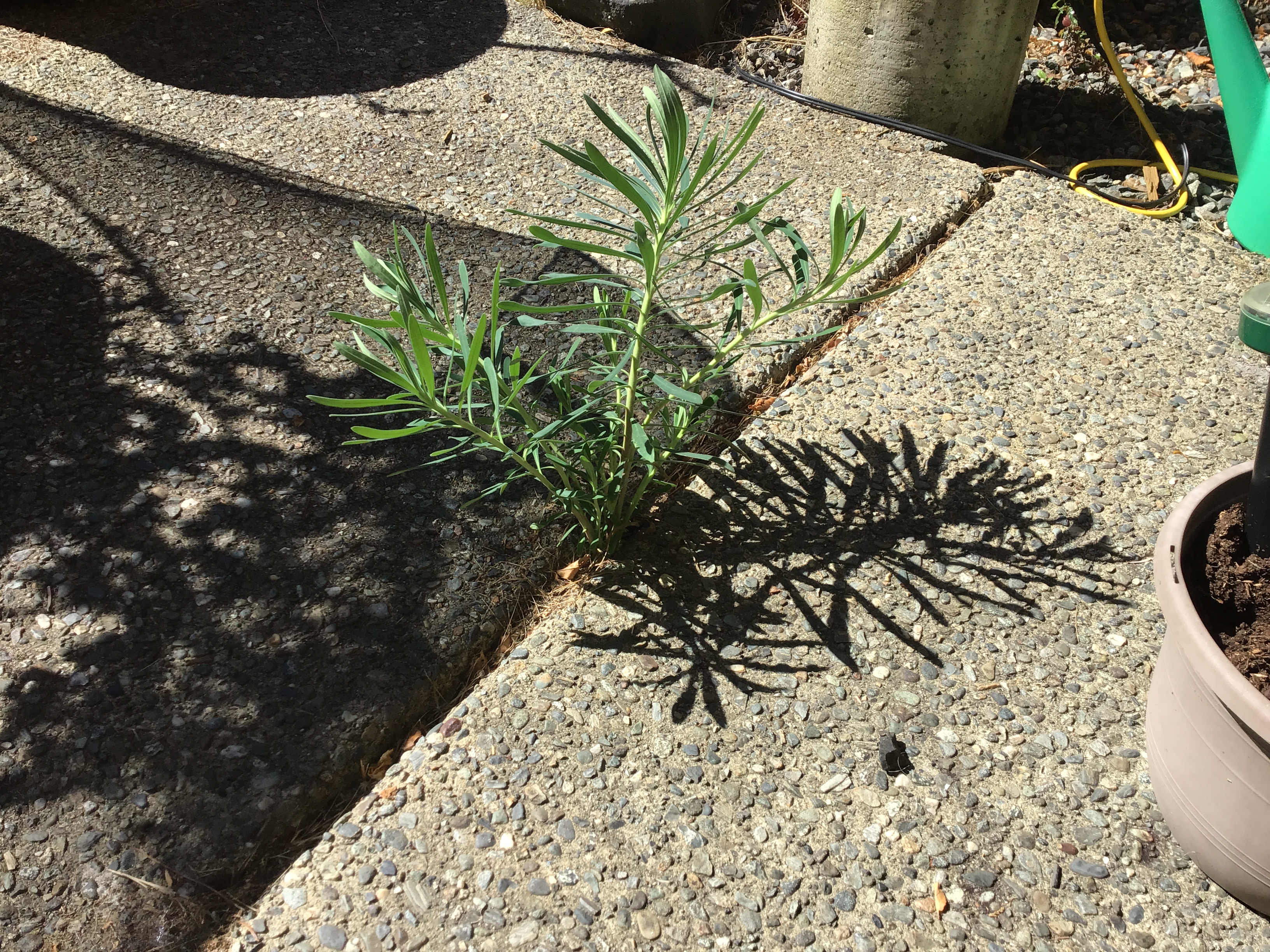
The plant in the photo is best identified as rosemary, a woody, evergreen herb commonly grown for culinary uses and ornamental value. In its juvenile form it grows as a small, bushy shrub with slender, upright stems and narrow, needlelike leaves. The leaves are typically dark green on the upper surface and lighter and sometimes slightly fuzzy beneath, about 2 to 4 centimeters long. They have a distinctive, aromatic scent when crushed, which is a hallmark of rosemary. In ideal conditions, rosemary forms a woody backbone with many flexible, year‑round stems and can eventually reach a height and spread of about a meter or more, though potted or constrained plants stay much smaller. In the image itself the plant appears to be a young specimen growing from a crack in paving, which is a common way rosemary self-seeds or resprouts in favorable microhabitats where drainage is good and sun exposure is ample. The plant’s leafy, evergreen appearance and its slender, upright habit are typical of many cultivated rosemary varieties used in gardens and landscapes. Growing conditions and care - Light and temperature: Rosemary is a sun-loving plant that performs best in full sun, ideally receiving at least six to eight hours of bright light per day. In hotter, drier climates it can benefit from some afternoon shade, but it still prefers strong sun. It is a Mediterranean plant by origin and tolerates heat very well. Cold tolerance varies by cultivar, but in general rosemary prefers mild, dry winters and is not reliably frost-hardy in regions with freezing temperatures. In very cold climates it is common to grow rosemary in a container that can be moved indoors during winter, or to provide winter protection with mulch and a windbreak. - Soil and drainage: The key to rosemary’s health is excellent drainage. It thrives in sandy or loamy soil with good aeration and very low to moderate fertility. Heavy clay or constantly wet soil leads to root rot and poor vigor. If you are planting rosemary in ground with heavier soil, amend with organic matter and sand or grit to improve drainage, or plant in a raised bed. The ideal soil pH is near neutral to mildly alkaline, though rosemary can tolerate slightly alkaline conditions which suit many Mediterranean herbs. - Watering: Rosemary is drought-tolerant and does not like to sit in wet soil. Water deeply when the top inch of soil dries, then allow the soil to dry out again before the next watering. In pot culture, ensure the pot has drainage holes and avoid letting water accumulate in saucers. Overwatering is a common problem that weakens the plant and can promote root diseases. In hotter sunny periods, you may need to water more frequently, but always ensure drainage and avoid prolonged soggy roots. - Feeding: Rosemary does not require heavy fertilization. A light application of balanced fertilizer or a winter or early spring feeding with a complete or Mediterranean-specific fertilizer is usually enough. Overfeeding with nitrogen can lead to lush, soft growth with fewer essential oils and poorer flavor. A top-dressing of compost in spring is a gentle option that improves soil structure and nutrients without encouraging excessive leafy growth. - Pruning and shaping: Regular pruning is important to keep rosemary compact, encourage dense foliage, and maintain airflow through the plant. Pinch or prune new growth after flowering to encourage bushier shape and to prevent the plant from becoming long, leggy, and woody. For woody, old stems that have become too thick or unproductive, selectively cutting back to healthy, greener wood can rejuvenate the plant. In containers, annual or semiannual pruning keeps rosemary tidy and productive. - Propagation: Rosemary is easily propagated from cuttings. Take 4–6 inch (10–15 cm) semi-hardwood cuttings from healthy shoots, remove the lower leaves, and root them in moist, well-draining potting mix or a rooting hormone. Layering is another option, and seeds can be used, though germination can be slow and variable. Cuttings establish quickly in warm, bright conditions with high humidity. - Pests and diseases: Rosemary is generally robust and pest-resistant, which makes it a favorite for low-maintenance gardens. Common issues include aphids or spider mites in very dry conditions, or fungal diseases if drainage is poor and humidity is high. Good air circulation, proper drainage, and avoiding overhead watering help prevent problems. If pests appear, treat with appropriate insecticidal soap or biological controls, and ensure plants are not stressed by drought or nutrient deficiencies. Harvesting and uses - Harvesting: Leaves can be harvested whenever the plant is well established. For the most intense aroma and flavor, pick sprigs on sunny days after morning dew has dried. Harvesting is best done before flowering or during early flowering, while the leaves are still tender and flavorful. Do not remove more than a third of the plant at one time to avoid stressing it. - Culinary and aromatics: Rosemary leaves are widely used to flavor meats such as lamb, chicken, and pork, as well as potatoes, vegetables, breads, and marinades. The essential oils in rosemary give a piney, resinous fragrance and taste that complements many savory dishes. Fresh rosemary can be dried by hanging sprigs in a cool, dry place or by oven-drying at a low temperature. The plant also yields a pleasant fragrance that is often used in potpourri and sachets. - Landscaping and garden use: In ornamental terms, rosemary is valued for its evergreen foliage, drought tolerance, and versatility. It is used in herb borders, as a low hedge, in Mediterranean-style gardens, or as a potted specimen on patios. Its woody stems and arching to upright habit add architectural interest, and flowering plants along with the herb can provide seasonal color in late spring to summer when tiny blue or pale purple flowers appear on some cultivars. - Environmental considerations: Rosemary, being drought-tolerant and evergreen, contributes to a low-water landscape once established. It can act as a deterrent for some pests simply through its aroma and essential oils. It’s also relatively tolerant of saline spray, making it suitable for coastal planting where salt tolerance is beneficial. Practical notes for growing rosemary in small spaces or hard-to-grow spots - The plant in the photo growing in a crack shows rosemary’s capacity to establish in challenging microhabitats where there is sun and good drainage. However, long-term success in such a position depends on ongoing maintenance. If you intend to keep a rosemary plant in a crack or a similar narrow growing space, water drainage and root space remain critical. If roots become compacted or waterlogging occurs, growth will stall and the plant may decline. In such settings, you can supplement with a shallow mulch layer to conserve moisture during hot periods while ensuring that drainage channels remain open. - If you plan to move the plant into a container, choose a pot with one or more drainage holes and use a well-draining potting mix, such as a cactus or succulent mix amended with organic matter. In containers, rosemary benefits from a slightly larger volume to develop a robust root system. Regular repotting every 2–3 years awakens the plant and prevents it from becoming root-bound, which can stunt growth and reduce vigor. - Companion planting: Rosemary pairs well with other Mediterranean herbs like thyme and oregano. Its strong scent can help repel certain pests when planted alongside vegetables. It also tolerates salty conditions well, so it can be included in coastal or sandy garden beds with proper drainage. Summary Rosemary is a versatile, evergreen herb that suits herb beds, borders, and containers. It thrives in full sun, well-drained soil, and relatively low fertility, and it tolerates drought quite well once established. Regular pruning keeps it compact and productive, while careful watering and good drainage prevent the most common problems. Its aromatic leaves and blue flowers (on many varieties) add beauty to the garden and practicality to the kitchen. The plant in the image is a classic example of how rosemary can push through in a crack in a paved area, showcasing its resilience and the beauty of a Mediterranean herb growing even in unlikely places.
Identification Time
August 30th, 2025
Notice
The function of Plantypia is using AI, so it may be inaccurate. Please use it for fun and reference only.
A plant result page that leads to the next useful action
After checking the name, continue into official plant database results.