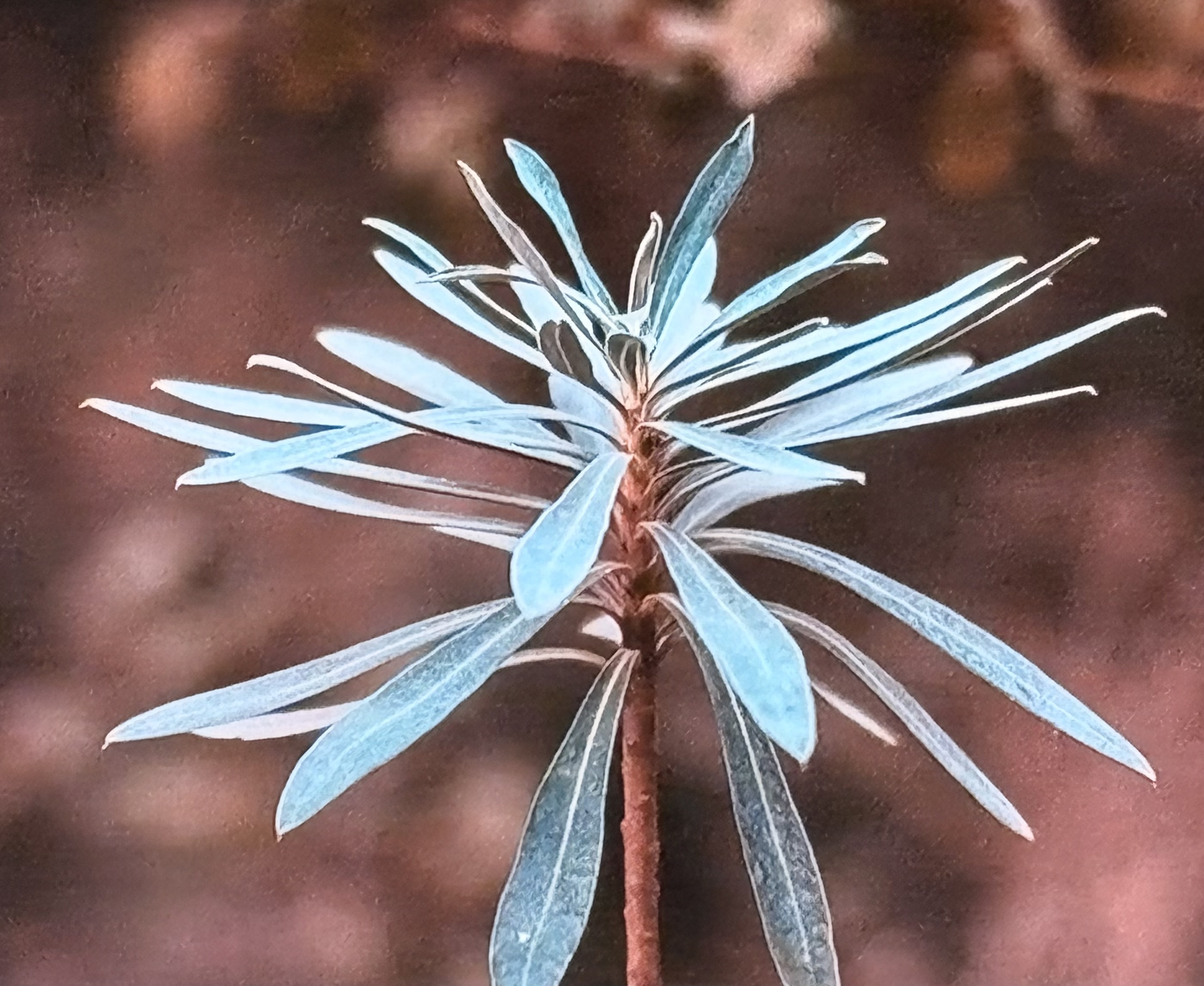
Eucalyptus (blue gum) – likely a blue leaf cultivar such as Eucalyptus gunnii or a related blue-glaucous eucalyptus
Description
The plant in the photo appears to be a young eucalyptus, commonly referred to as a blue gum, with glaucous blue–green, slender leaves arranged in a radiating whorl at the growing tip. The stem is a reddish brown color, and the leaves are long and narrow, giving a starburst or pompom appearance at the tip. This look is characteristic of many eucalyptus species when they are young or when they are cultivated as ornamental with blue or silver foliage. Because many eucalyptus species share similar blue–glaucous juvenile foliage, and because the plant shown is in a very young growth stage, a precise species identification from a single image can be challenging. Nevertheless, the overall form and leaf coloration strongly suggest a member of the blue gum group (genus Eucalyptus), and in particular the kinds that are prized for their blue, powdery foliage such as Eucalyptus gunnii or related cultivars. The following notes describe the general features of this group and provide care information typical for cultivated blue gum eucalyptus, which should be broadly applicable to the plant shown. What the plant is like and how it grows -General appearance: An evergreen tree or shrub with a slender trunk. In young plants or in compact cultivars, the crown forms a rosette or a small rounded tuft of leaves at the end of a stem. Leaves are lanceolate to linear-lanceolate, 5–15 cm long, with a bluish to silvery blue surface due to a waxy, glaucous coating. The leaves are smooth-edged and lighter on the underside, often with a slightly curved blade. In youth, many eucalyptus species display opposite or close-to-opposite leaf arrangements at the tips, producing a striking starburst of foliage—as seen in the photo—before the leaves mature into the typical alternate arrangement along a taller, more vertical stem. -Texture and aroma: Leaves feel stiff and leathery. When crushed, they release the characteristic eucalyptus aroma—cool, resinous and medicinal. The aromatic oils are concentrated in the leaves and bark. -Growth habit in cultivation: In containers or garden settings, many blue gum eucalyptus stay relatively compact for years, but they still grow faster than most ornamentals if given plenty of light and warmth. In the landscape, they can form tall trees with smooth, sometimes mottled bark that sheds in patches. In potted form, growth is controlled by pruning and root space; without regular pruning, a healthy specimen can be quite vigorous. -Flowers and fruit: In mature trees, eucalyptus produces clusters of small, powder-white to cream flowers surrounded by conspicuous floral buds. The fruit that follows is a woody capsule. In indoor or small outdoor plantings, flowering may be infrequent, especially if light and warmth are not ideal. The decorative value for this plant in the photo is primarily the unique foliage color and form rather than flowers. Key care considerations -Light requirements: Eucalyptus species generally crave bright, full sun. Outdoors, place them where they receive at least 6–8 hours of direct sunlight daily. Indoors, position near a very bright south- or west-facing window or provide supplemental grow lights to maintain leaf color and encourage compact growth. Insufficient light tends to make the plant leggy and weak. -Temperature and climate: Blue gum types prefer warm conditions. They are not frost-tolerant like many temperate houseplants; prolonged freezing can damage or kill a young plant. Some hardier blue gum cultivars tolerate light frosts when established, but if you are growing this in a container, protect it during cold snaps or bring it indoors if temperatures drop near freezing. In general, aim for daytime temperatures in the range of about 60–85 F (15–29 C) and avoid extended exposure to below-freezing temperatures. -Soil and potting mix: Use a well-draining soil mix. A sandy loam or a potting mix with added perlite or pumice works well. Eucalyptus hates “wet feet,” so good drainage is essential to prevent root rot. If you are growing in a container, ensure the pot has drainage holes and consider a slightly acidic to neutral pH (roughly pH 6.0–7.5). -Watering: Young plants require more frequent watering to establish root systems, but the soil should dry slightly between waterings. Once established, many eucalyptus tolerate drought fairly well. In pots, water when the top inch of soil feels dry. Be cautious not to overwater, especially in cooler months, as soggy soil can lead to root rot. -Fertilization: Feed sparingly. A balanced, slow-release fertilizer in spring can support steady growth, but avoid high-nitrogen formulations that encourage soft, leggy growth and increased susceptibility to pests. If you use liquid fertilizer, apply at a diluted rate every 6–8 weeks during the growing season. -Pruning and shaping: Pruning is a powerful tool to keep a eucalyptus compact and attractive in a pot or small garden. Lightly trim new growth to encourage a bushier habit and to maintain a desired size. Remove any dead or damaged leaves and lower branches to improve air circulation. Avoid heavy pruning in very hot weather or in winter when the plant is stressed, as this can lead to sunburn on exposed trunks or shock. -Container repotting: For potted specimens, repot every 2–3 years or when roots fill the pot. Choose a pot only a bit larger than the current root ball to maintain stability and reduce waterlogging risk. Use fresh, well-draining potting mix after removing dead roots and pruning as needed. -Pests and diseases: Common problems include aphids, scale insects, spider mites, and occasionally mealybugs. A strong stream of water can remove many pests, followed by a horticultural oil or insecticidal soap if infestations persist. Overwatering can lead to root rot and fungal issues, so ensure good drainage and avoid constantly wet soil. Powdery mildew is uncommon on blue gum foliage but can occur in very dry or crowded indoor environments; provide air movement and avoid overhead watering to minimize risk. -Propagation: Eucalyptus can be propagated from seeds or cuttings. Seeds germinate best in a warm, bright location with a consistent moisture supply; seed trays should be kept evenly moist until germination occurs. Cuttings are commonly taken from semi-hardwood or hardwood material in warm conditions, dipped in rooting hormone, and placed in a well-draining cutting mix under humidity cover until roots form. Proper sanitation and sterile tools help prevent disease when taking cuttings. -Environmental considerations and safety: Eucalyptus leaves and oils are highly aromatic and concentrated, which can be irritating to some people and pets if ingested or if there is prolonged contact. Wear gloves when handling if you have sensitive skin. In households with small children or curious pets, place the plant where it cannot be easily chewed or ingested. If you intend to harvest leaves for essential oil or flavoring uses, research proper distillation or preparation methods and use caution in the home. Special notes on identification and variability - While the image clearly shows a rosette of blue-tinted leaves at the growing tip, many eucalyptus species share this appearance in juvenile stages. To assign a precise species name, you would typically look for features such as mature leaf arrangement (alternate along the stem), bark texture, cone shapes, and ultimately flowers and fruit. The plant in the photo most closely resembles a blue leaf eucalyptus, with the distinctive glaucous foliage that makes these plants popular for ornamental use as accents or focal points in warm climates and in containers. - If you aim for a similar look in your garden or home, you can select cultivars specifically marketed for compact growth and striking blue foliage. Examples include compact blue gum forms and cultivar selections bred for ornamental leaf color. When shopping, examine plant size, growth habit, and container compatibility to match your space and climate. Practical care outline for a typical home grower - Place in full sun if outdoors; indoors, provide bright, direct light or supplement with grow lights. - Use a bright, well-draining potting mix and a container with drainage holes. - Water thoroughly when the top inch of soil dries; ensure soil dries out slightly between waterings to prevent root rot. - Feed lightly in the growing season with a balanced fertilizer; avoid heavy nitrogen loads. - Prune to maintain size and shape; remove dead leaves and any crowded growth to maintain air circulation. - Monitor for pests and treat promptly with appropriate insecticidal soap or horticultural oil if needed. - Protect from frost if your climate is cool; consider growing in a container so you can move the plant indoors during cold weather. Summary Overall, the plant shown is best described as a blue gum eucalyptus with glaucous, slender leaves arranged in a rosette at the growing tip. It embodies the striking blue foliage and architectural form that make eucalyptus an attractive focal point in warm-grown landscapes and in bright indoor spaces with adequate light. While precise species identification from a single image can be tricky, the care recommendations provided here apply broadly to blue leaf eucalyptus and will help you maintain a healthy, visually striking specimen. With proper light, drainage, and pruning, this plant can thrive and provide year-round visual interest through its unique color, aroma, and slender, elegant form.
Identification Time
February 1st, 2026
Notice
The function of Plantypia is using AI, so it may be inaccurate. Please use it for fun and reference only.
A plant result page that leads to the next useful action
After checking the name, continue into official plant database results.