Curry leaf plant (Murraya koenigii)
Description
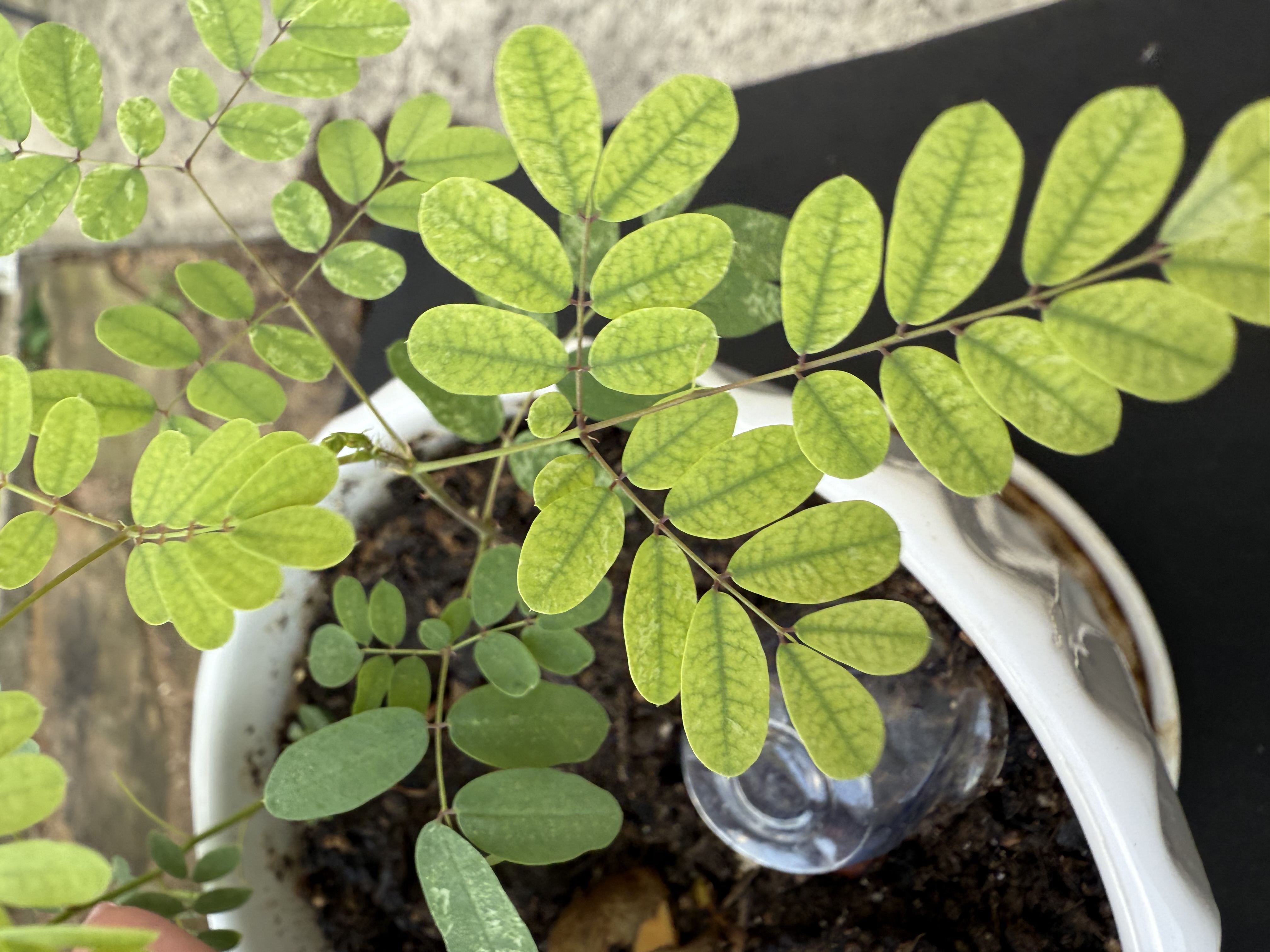
The plant in the photo appears to be a curry leaf plant, scientifically known as Murraya koenigii. This evergreen shrub or small tree is a member of the citrus family (Rutaceae) and is widely grown for its aromatic, culinary leaves. The leaves are pinnate, meaning each leaf is composed of a central rachis with many small oval leaflets arranged along it. In mature plants you typically see 9 to 17 leaflets per leaf, though the exact number can vary with age and cultivar. The leaflets themselves are oval to oblong, about 1 to 3 centimeters long, with smooth (entire) margins and a glossy surface. In the image, the leaflets are a bright lime to yellow-green color, which could reflect new growth or a nutrient/light condition—new growth in curry leaves often appears lighter before darkening to a deeper green as the plant matures. The stems are slender and can have a reddish or purple hue, and the plant habit is arching and somewhat rambling when grown in a pot, which is typical for many curry leaf specimens that are pruned for indoor growth or used for culinary hedges outdoors. Origin and natural history: Murraya koenigii is native to parts of India, Sri Lanka, and other tropical regions of Asia. It thrives in warm climates and is well adapted to full sun to bright, indirect light. In outdoor landscapes, it can grow into a multi-meter-tall shrub or small tree, but in containers it remains compact and can be shaped with pruning. The leaves release a distinctive curry-like aroma when crushed, a hallmark of this species that makes it instantly recognizable to cooks and plant enthusiasts alike. Though most familiar to cooks for its leaves, the plant also bears small white flowers in clusters and later, black/dark purple berries, which are attractive to birds. In cultivation, the flavor and aroma intensify with mature leaves and with exposure to sun and warmth. What you’re seeing in the photo: The plant’s compound leaves and the arrangement of leaflets along a central rachis strongly resemble curry leaf foliage. The leaflets are evenly spaced along the stem with a slight petiolule connecting each leaflet to the rachis. The bright lime coloration suggests new growth, a common phase for housegrown or container-grown curry leaf plants, especially if they have recently been repotted, exposed to brighter light, or are experiencing a nutrient shift. Some yellowing or variegation can also appear when plants are stressed by too little light or inconsistent watering, though healthy, mature curry leaf leaves are typically a uniform deep green. The pot and the surrounding environment indicate a tropical or subtropical indoor-outdoor setting, which aligns well with curry leaf care requirements. Plant characteristics at a glance - Growth form: evergreen shrub or small tree; can be trained or pruned into a compact pot specimen - Leaves: pinnate, with 9–17 oval leaflets per leaf (varies with age) that are smooth-edged and glossy - Leaflet size: roughly 1–3 cm long, 0.6–1.5 cm wide - Aroma: crushed leaves emit a curry-like fragrance - Habitat tolerance: warmth-loving; dislikes frost; appreciates bright light - Flowers/fruit: small white flowers in clusters; berries are dark when ripe (not typically consumed unless fully ripe and prepared appropriately) Care and cultivation (in roughly 1000 words of guidance) Light and position - Curry leaf plants require bright light to thrive. Outdoors, they love full sun to light shade and will produce the most vigorous growth and the best aroma when exposed to several hours of direct sun daily. Indoors, place the plant near a south- or west-facing window where it can receive strong, indirect sunlight for most of the day. If light levels are insufficient, growth slows, leaves may become leggy, and new growth can take on a pale, yellowish hue. - If you notice pale or yellowing new growth, check light: increasing bright, indirect light or a few hours of morning sun can improve color and vigor. In very hot climates, some midday shade can prevent leaf scorching while still delivering adequate light. Temperature and humidity - Temperature: Curry leaf plants prefer warm temperatures. Ideal daytime ranges are about 24–30°C (75–86°F), with no frost. They can tolerate short dips but prolonged cold will slow growth or damage the plant. - Humidity: They do well with average indoor humidity but appreciate higher humidity. If your home is very dry, especially during winter, consider occasional misting, a humidity tray, or a small humidifier nearby. Watering and soil - Watering: Keep the soil consistently moist but not waterlogged. The top inch (2–3 cm) of soil should dry slightly between waterings. In hot weather or during active growth, you may need to water more frequently. In the winter or during cooler periods, reduce frequency accordingly. - Soil: Use a well-draining potting mix. A standard garden potting mix amended with a bit of perlite or orchid bark works well to ensure good drainage. Because curry leaves dislike sitting in soggy soil, good drainage is essential to prevent root rot. - Pot size and repotting: Start with a moderately sized pot to encourage root development. Re-pot only when the plant has outgrown its container or the soil has degraded significantly. Choose a pot with drainage holes and use fresh soil mix at repotting. Fertilization and nutrients - Fertilizer schedule: Feed every 4–6 weeks during the active growing season (spring through summer) with a balanced, water-soluble fertilizer. A formulation with micronutrients is beneficial, as essential oils and leaf quality can respond to mineral balance. In winter or during slow growth, reduce feeding frequency. - Nutrients to watch: Iron and magnesium deficiencies can show up as pale leaflets with green veins or interveinal chlorosis. If you see yellowing between veins, consider a micronutrient chelated iron supplement or a gentle foliar spray, but always follow product instructions and avoid over-fertilizing. - Soil amendments: Occasional light topdressing with compost or well-rotted organic matter can support long-term health, but avoid heavy soil amendments that create a dense, water-retentive root zone. Pruning and training - Pruning is important for both shape and vigor. Regular light trimming encourages bushier growth and helps keep a container plant compact and attractive. Pinch back soft new growth to encourage branching. If you’re growing it as a bonsai or train it into a hedge, you can perform more structured pruning to maintain a desirable silhouette. - Dead or yellowing leaves should be removed to direct energy to healthy growth and to prevent pest or disease issues. - Fruiting pruning: If your plant flowers and fruits, you can remove some flowers to redirect energy to leaf and stem growth, especially if you’re growing the plant primarily for culinary leaves. Propagation - From seed: Fresh seeds can be sown, but germination can be variable and slow. If you want to try seeds, soak them overnight and plant in a warm, bright location. Seed viability may decline with age. - From cuttings: Semi-hardwood cuttings taken in spring or summer usually root readily with some rooting hormone. Place the cuttings in a well-draining cutting mix and maintain high humidity until roots form. - Grafting and air layering are less common for home growers but can be explored by advanced hobbyists seeking particular cultivars or more rapid size control. Pests and diseases - Common pests: scale insects, whiteflies, aphids, spider mites, and mealybugs can appear on curry leaf plants. Regularly inspect undersides of leaves and new growth. Treat with insecticidal soap, horticultural oil, or a recommended pesticide if infestations are persistent. Wipe leaves with a damp cloth to remove pests and residues. - Diseases: Root rot or stem rot can occur if soil remains waterlogged. Ensure drainage is excellent and avoid overwatering. Leaf spot or blight may occur in humid conditions; improve air circulation and remove affected leaves if necessary. - Nutrient deficiency symptoms: If leaves yellow or show interveinal chlorosis, re-evaluate feeding and consider a micronutrient supplement. Ensure the plant is not under excessive salt buildup from fertilizer by leaching the potting mix with a thorough watering and emptying the saucer contents. Harvesting and culinary use - Leaves can be harvested once the plant is well-established, usually after several months of steady growth. Choose outer, mature leaflets for cooking; they carry the strongest aroma. Fresh curry leaves are preferred for many recipes, but they can also be dried or frozen for extended use. - Aroma and flavor develop with heat; lightly crushing the leaflets before adding them to pots or pan dishes releases essential oils that perfume the dish. Avoid bruising too many leaves at once if you want to preserve the plant’s ongoing growth. - Caution: The plant is grown primarily for culinary leaves. The fruits (berries) are not commonly used as a food source and should be treated with caution; do not rely on raw berries for flavor, and keep plants out of reach of pets or children if you’re unsure about local toxicity or safe consumption. Troubleshooting common issues you might see in a photo like this - Yellowing new growth: Could indicate too little light, under-watering, or nutrient deficiency. Assess light levels and adjust watering and feeding schedule accordingly. If the color persists despite adequate light and moisture, test the soil for pH and nutrients and amend as needed. - Leggy growth with sparse leaflets: Often a sign of insufficient light. Increase light exposure gradually, and prune to encourage bushier growth. - Leaf curling or browning at tips: May result from low humidity or excessive salts from fertilizers. Increase humidity, reduce fertilizer concentration, and flush the soil periodically to remove excess salts. - Pest signs (sticking honeydew, sticky leaves, or webbing): Inspect and treat with insecticidal soap or horticultural oil. Wipe leaves with a damp cloth to physically remove pests. Final notes - While the pictured plant closely resembles a curry leaf plant, botanical identification from a single image can be tricky, and there are other similar pinnate-leaved plants (for example some Senna species) that can be mistaken for Murraya koenigii in juvenile stage or under certain lighting. If you have access to the plant for closer inspection, look for a characteristic curry aroma when you gently crush a few leaflets, and check the growth habit: Murraya koenigii leaves tend to have a distinct, evenly spaced, opposite-leaflet arrangement along a smooth rachis and a fragrant oil content that becomes evident when the leaves are crushed. - With proper care—bright light, warm temperatures, well-draining soil, regular but not excessive watering, and periodic pruning—this plant can be a long-lasting, productive, and aromatic addition to a kitchen windowsill, sunroom, or outdoor patio in warmer climates. It’s not only valued for its culinary leaves but also admired as a lush, low-maintenance ornamental shrub that can be trained into attractive shapes and used as a fragrant, living reminder of the cuisine from tropical regions.
Identification Time
August 25th, 2025
Notice
The function of Plantypia is using AI, so it may be inaccurate. Please use it for fun and reference only.
A plant result page that leads to the next useful action
After checking the name, continue into official plant database results.