Apple (Malus domestica) seedling
Description
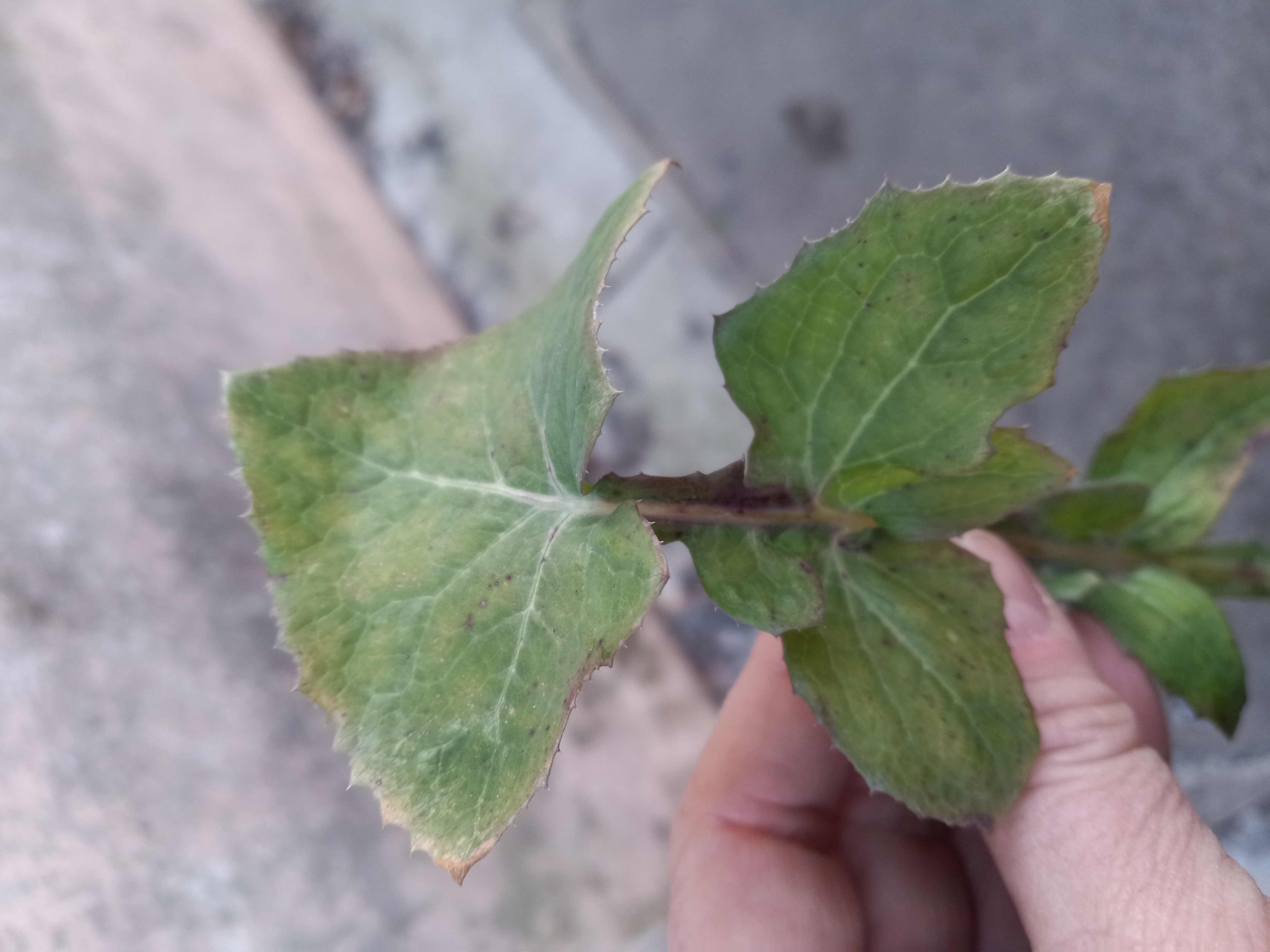
The plant in the photo appears to be a young apple tree shoot or a close relative in the Rosaceae family. The leaves are simple, oval to oblong with a pointed tip and finely serrated margins. They are relatively small at this stage, about 1.5 to 3 centimeters long, and have a soft, slightly fuzzy texture on the surface and underside. The leaf veins form a distinct netted pattern with a pale midrib. The stem is slender and tinted purple-brown, a common color for new growth on young apple shoots. The leaf arrangement is alternately along the stem, though in a photo it can look like opposite leaves at a node due to the close spacing of new growth. The overall appearance—juvenile, dull green leaves with light pubescence and a woody, slender stem—fits well with a Malus seedling, but it can resemble other small rosaceous trees such as crabapple, pear, or certain plums in their juvenile stages when flowers and fruit are not yet present for confirmation. Without blossoms or fruit, a definitive species identification remains tentative, but the combination of leaf shape, serration, pubescence, and growth habit strongly points to an apple or a closely related crabapple at this young stage. If this is indeed an apple seedling or a grafted scion from an orchard, the following care and growth guidance will help it establish healthfully and, if desired, begin to bear fruit in time. Light and placement - Apple trees require full sun for optimal growth and fruiting. Aim for at least 6 to 8 hours of direct sunlight per day. In very hot climates, some protection during the hottest part of the day can help prevent leaf scorch, but long-term shade reduces vigor and fruiting potential. - Plant in a location with good air circulation to reduce disease pressure and to help the tree dry quickly after rain or irrigation. Soil and planting considerations - Apple trees prefer well-drained, fertile soil with a pH around 5.5 to 7.0. If your soil is heavy clay, add organic matter and consider raised beds or mounds to improve drainage. On very sandy or poor soils, incorporate compost or well-rotted manure to boost nutrient holding capacity. - When planting a young tree or cutting, position the root crown at or just above soil level. Avoid planting too deeply, which can suffocate roots and stunt growth. - If you are working with a grafted plant, ensure the graft union is above soil level and protect the graft from damage during planting. Watering and moisture - Establishment requires regular, deep watering to encourage a strong root system. Water deeply during dry periods, allowing the top 6 to 8 inches of soil to dry out between waterings. Avoid both drought stress and waterlogged conditions, which can lead to root rot. - Mulching around the base with organic material helps conserve moisture, regulate soil temperature, and suppress weeds. Keep mulch a few inches away from the trunk to prevent rot. Fertilization and nutrition - In early spring, feed with a balanced fertilizer formulated for fruit trees, following the label recommendations for the tree’s size and age. Avoid excessive nitrogen, which can promote lush foliage at the expense of wood strength and fruit production. - If you have a soil test, use it to guide amendments. Apple trees benefit from adequate phosphorus and potassium for root and fruit development, as well as trace minerals. - A general rule for young trees is to apply fertilizer sparingly in the first year or two, then adjust according to growth and canopy vigor. Pruning, training, and shaping - Pruning is critical for establishing a strong scaffold and good fruiting structure. In the first years, you’ll typically train a central leader or create an open-center (vase) shape, depending on space and preferences. Remove any crossing branches, deadwood, and weak growth to keep the canopy open for light and air movement. - For young trees, focus on developing 3 to 4 strong scaffold branches arranged evenly around the trunk. Remove branch angles that are too tight, as they can be weak points in the future. - Dormant-season pruning is usually the most productive time for shaping and removing diseased wood. Light pruning can be done in late winter to early spring before new growth begins. - If you have a grafted variety, avoid cutting into the graft union and be mindful of shoot growth that arises from the rootstock, which may not bear the desired fruit. Suckers from the base or rootstock should be removed as they appear. Pollination and fruiting expectations - Most cultivated apples require cross-pollination from a different apple variety to achieve substantial fruit set. Plant a compatible pollinator within bee-friendly distance and ensure overlapping bloom times. Some varieties are self-fertile, but cross-pollination generally improves yield and fruit size. - A young apple tree typically takes several years to bear fruit, especially if it is grown on a standard rootstock. Dwarf or semi-dwarf rootstocks can begin producing fruit earlier, sometimes in 3 to 5 years after planting, depending on vigor and climate. Pest and disease management - Apple trees are susceptible to several pests and diseases. Common issues include apple scab, powdery mildew, fire blight, codling moth, aphids, and scale. Prevention and management include: - Plant spacing and prune for good air circulation to keep foliage dry and reduce fungal pressure. - Remove fallen leaves and orchard debris, especially in autumn, to reduce overwintering sites for pests. - Water at the base rather than overhead to minimize wet foliage conditions. - Monitor regularly and use targeted interventions as needed. Organic options include horticultural oils, insecticidal soaps, copper or sulfur sprays when appropriate and according to local guidelines. For structural diseases like apple scab, removing infected leaves in fall and early spring can help reduce inoculum. - If you observe suspicious spots on leaves, abnormal fruiting, cankers on stems, or heavy pest pressure, consult local extension services or a nursery for diagnosis and treatment recommendations tailored to your region. Fruit quality and care through the seasons - As the tree matures, fruit size and quality depend on proper nutrition, irrigation, pruning, and pest management. Thinning fruit in early years can help redirect energy to fewer fruits, improving size and flavor of the remaining apples. - Irrigation during fruit development should be steady but not excessive; water stress during fruit set can reduce yield, while overwatering can dilute fruit flavor and promote root issues. - Harvest timing varies by cultivar and climate, but apples are typically harvested from late late summer to autumn when they have developed full color, firmness, and flavor. Pick when mature but still firm to avoid premature storage issues. Propagation and long-term considerations - Most home gardeners cultivate apples via grafted cultivars on rootstock rather than from seed. Seed-grown trees show significant genetic variation and may take longer to bear fruit, and the fruit may not resemble the parent. If you want reliable fruit characteristics and a manageably sized tree, consider selecting a grafted cultivar from a reputable nursery. - If you do grow from seed, treat it as a long-term project. Stratify seeds to simulate winter conditions and be prepared for a tree that may or may not reach fruiting maturity in a reasonable time frame. Bottom line - The plant in your photo most likely represents a young apple tree shoot or a close relative in the Malus/Crabapple group. Its features—the small, serrated, slightly fuzzy leaves on a slender stem—are characteristic of juvenile Rosaceae growth. With proper light, soil, watering, pruning, and pest management, this seedling can develop into a healthy tree that may eventually bear fruit, provided you select an appropriate rootstock and pollinator partners if you intend to grow a productive orchard or a decorative fruiting tree. If you want greater certainty about exact species, wait for flowers or fruit, or compare with local nursery stock and consult regional gardening resources, especially to distinguish among young apple, pear, plum, or peach relatives. In the meantime, applying standard fruit-tree care practices will support robust growth and potential future fruiting while you monitor the plant’s development.
Identification Time
January 20th, 2026
Notice
The function of Plantypia is using AI, so it may be inaccurate. Please use it for fun and reference only.
A plant result page that leads to the next useful action
After checking the name, continue into official plant database results.