Dracaena fragrans (corn plant)
Description
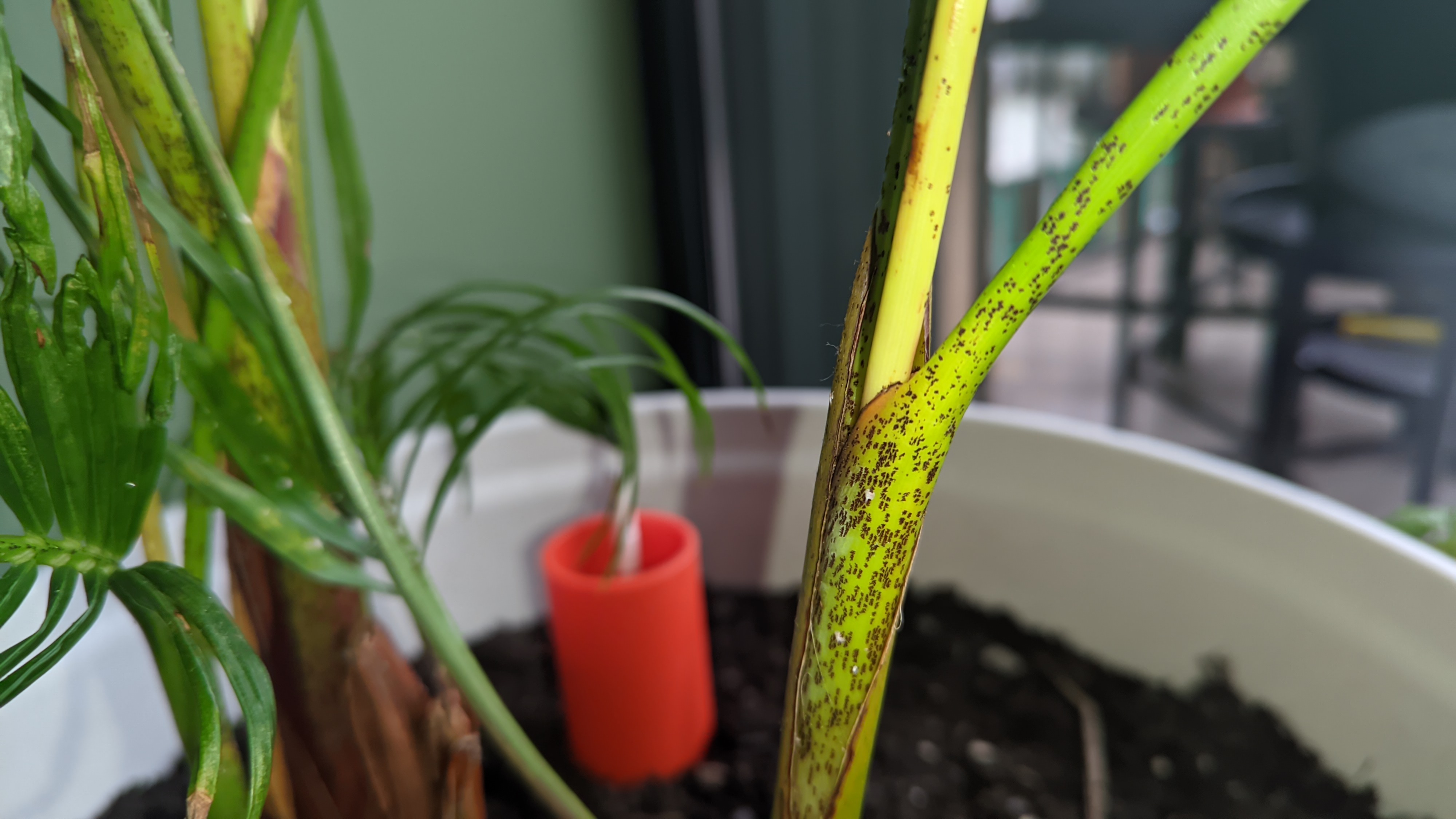
The plant in the photo appears to be a dracaena cane, most likely Dracaena fragrans, commonly known as the corn plant, or a close relative in the Dracaena/Cordyline group. The key clues are a tall, woody cane-like stem with a light green to yellowish color and a top that has (or once had) a crown of strap-like leaves. The stem in the image shows numerous small dark speckles or spots, which could be natural aging, sun exposure patterns on the cane, or could indicate a pest issue such as scale insects. The visible foliage on the left side of the image resembles the slender, arching leaves typical of dracaenas—the kind of long, sword-shaped leaves that emerge from the crown of the cane. Indoor dracaenas are very common and versatile houseplants, and this specimen’s growth habit fits that profile: a single upright cane with a rosette of leaves at the top, often growing slowly but steadily into a tall, architectural plant that tolerates a range of indoor conditions. What you’re looking at is a plant that tends to grow in “canes” or stems. In a healthy plant, the cane remains relatively rigid and woody, with annual leaf scars visible as rings. The crown at the top produces a cluster of long, narrow leaves that arch gracefully. Leaves are typically glossy and dark green, though many cultivars exist with variegated patterns (such as a yellow central stripe in some massangeana-type varieties). In a typical home setting, Dracaena fragrans can reach several feet in height and add a tropical, peaceful feel to an interior. They are popular because they are relatively forgiving, tolerate lower light, and require modest maintenance. Below is a practical, long-form guide to the characteristics, care, and related information for this plant. This covers identification notes, cultural needs, common problems, propagation, and safety considerations. Identification and natural history - Growth form: A woody cane with leaves borne at the crown. As older leaves drop, the cane can become more exposed, showing leaf scars. - Leaves: Long, lanceolate (sword-shaped), arching leaves that arise from the top of the cane. In many cultivars, leaves are green with varying degrees of variegation; in non-variegated forms they are solid green. - Native range: Tropical Africa and parts of Southeast Asia where dracaenas occur in the understory and as understory trees. In cultivation, they are grown as houseplants or ornamentals. - Size: Indoors, dracaenas typically range from 3 to 8 feet tall, depending on pot size and pruning; can be shorter or taller with regular maintenance. - Helpful note on the photo: The brown speckling on the cane could be natural aging or it could indicate a pest or disease presence. A close inspection of the leaf undersides and the cane for pests such as scale insects can help determine if treatment is needed. The leaves in this shot are not fully visible, so a precise cultivar identification is challenging; nevertheless, the overall habit is strongly consistent with a dracaena cane plant. Care and cultural requirements (indoor growing) - Light: Dracaena fragrans tolerates a broad range of light levels but prefers bright, indirect light for best color and growth. In very low light, growth slows dramatically and color can fade. Direct sun can scorch leaves, especially on younger plants, so place by a bright window with filtered light or a few feet away from direct sun. If your aim is to preserve leaf color or pattern, providing consistent moderate light is ideal. - Watering: Water when the top 2 to 4 cm (about 1 inch to 1.5 inches) of soil are dry to the touch. Dracaenas prefer to dry out a bit between waterings rather than stay very wet. Overwatering can lead to root rot and yellowing leaves. In winter, reduce watering even further. Ensure the pot has drainage holes and that excess water can drain away. If you see a root-rot scent or soggy soil consistently, adjust watering and soil drainage. - Humidity and temperature: Average indoor humidity is generally fine. They tolerate typical room temperatures from about 18–24°C (65–75°F); avoid sudden temperature drops and cold drafts. Extremely dry air can cause leaf tips to brown; occasional misting or placing the pot on a humidity tray can help in very dry spaces. - Soil and repotting: Use a well-draining potting mix, such as a standard peat-based mix amended with perlite or orchid bark for better drainage. Repot when the plant becomes top-heavy or roots fill the container—usually every 2–3 years for a mature plant, or sooner if you’ve been keeping a very small pot for a long time. When repotting, choose a pot only slightly larger than the current one to avoid waterlogging. - Fertilizing: Feed with a balanced, water-soluble fertilizer (N-P-K around 20-20-20 or 10-10-10) at about one-half to one-quarter strength every 4–6 weeks during the growing season (spring and summer). Do not over-fertilize, which can cause salt burn and leaf tips browning. Do not fertilize in winter when growth is slow. - Pruning and shaping: If growth becomes leggy or you want to control height, you can prune the cane. Cut back the top leafy crown to encourage new shoots from lower portions or from the cut to create multiple stems. After cutting, new growth typically emerges from the cut surface or from dormant buds along the cane. You can propagate by cutting sections of the cane—laid horizontally in a moist medium or planted upright—to root and form new plants. - Propagation: Cane cuttings or crown cuttings are the common methods. Allow cut surfaces to callous briefly before planting to reduce rot risk. Use clean, sharp tools to minimize damage and disease transmission. Pests, diseases, and issues you might see - Common pests: Scale insects (often appearing as tiny brown or tan bumps on stems and leaf undersides), mealybugs, and spider mites can attack dracaenas. Signs include sticky residue (honeydew), yellowing leaves, or speckled leaf appearance. If you see scales on the stem, brush them off gently with a cotton swab dipped in isopropyl alcohol, or use insecticidal soap, horticultural oil, or a systemic insecticide according to label directions. - Leaf tips and margins: Brown tips or edges can result from low humidity, dry air, fluoride in tap water, or salt buildup from overly concentrated fertilizer. Use distilled or rainwater if fluoridated water is an issue; occasionally wipe leaves to remove dust and help with photosynthesis. - Root and crown rot: Overwatering or poorly draining soil can cause roots to rot; symptoms include yellowing leaves, a soft brown cane, and a foul smell from the pot. If this occurs, reduce watering, improve drainage, and consider repotting into a fresh media. In severe cases, you may need to prune away affected roots and allow the plant to recover in a drier environment. - Disease signs: Fungal leaf spots or bacterial leaf spots can appear as dark lesions on leaves. If you notice spots on leaves, prune affected areas (if feasible) and avoid overhead watering to reduce leaf wetness. Safety and pet considerations - Toxicity: Dracaena fragrans is considered mildly toxic to cats and dogs if ingested. Ingesting plant material can cause vomiting and digestive upset. If you have curious pets, place the plant out of reach or choose a pet-safe alternative. For households with small children, keep the plant in a location where kids cannot easily bite or chew the leaves. A note on the photo’s speckling on the stem - The numerous small dark spots on the cane in your photo could be natural aging or sun-induced spotting, but they can also be signs of scale or another pest. A careful examination of the stem surface and leaf undersides is recommended. If you do find pests, treat promptly using methods mentioned above. If the spots persist without clear pest symptoms, monitor for changes in growth or leaf health to determine if other issues (like nutrient deficiency or moisture problems) are at play. A few cultivar notes (for context) - Dracaena fragrans has several popular cultivars, including the massangeana type with a yellow central stripe on the leaves and solid green forms. Cordyline and some Schefflera-like plants are often confused with dracaenas in casual observations because of similar cane-like growth; exact identification can depend on leaf arrangement, petiole length, and inflorescence characteristics. If you can share a clear photo of the crown (the top leafy portion) and the base, I can refine the ID further. Summary and practical tips for care - Start with good light: bright, indirect light is ideal; avoid harsh direct sun. - Water with checks: water when the top inch or two of soil is dry; ensure good drainage; never keep the pot sitting in water. - Use appropriate soil: a well-draining indoor potting mix; consider adding perlite or sand for drainage. - Maintain stable warmth: keep indoors around 18–24°C (65–75°F); avoid cold drafts and sudden temperature shifts. - Fertilize thoughtfully: dilute balanced fertilizer during the growing season; skip in winter or reduce frequency. - Tackle pests early: inspect for scale and other pests; treat with alcohol swabs or appropriate insecticides/oils if needed. - Prune and propagate if desired: you can prune to control height and encourage branching; propagate using cane cuttings or crown cuttings. - Be mindful of pets: dracaenas are mildly toxic to pets; place out of reach if you have curious animals. In summary, the plant in your photo resembles a dracaena cane, likely Dracaena fragrans. It embodies the classic indoor plant persona: architectural, easy to care for, and capable of reaching a striking height with proper light and occasional maintenance. The spotted appearance on the stem warrants attention for pests, but with careful inspection and routine care, a dracaena can remain healthy and visually appealing for years in a home or office setting. If you can provide a closer shot of the crown and a view of the leaf texture, I can offer a more precise cultivar identification and tailored care notes.
Identification Time
February 16th, 2026
Notice
The function of Plantypia is using AI, so it may be inaccurate. Please use it for fun and reference only.
A plant result page that leads to the next useful action
After checking the name, continue into official plant database results.