Croton (Codiaeum variegatum)
Description
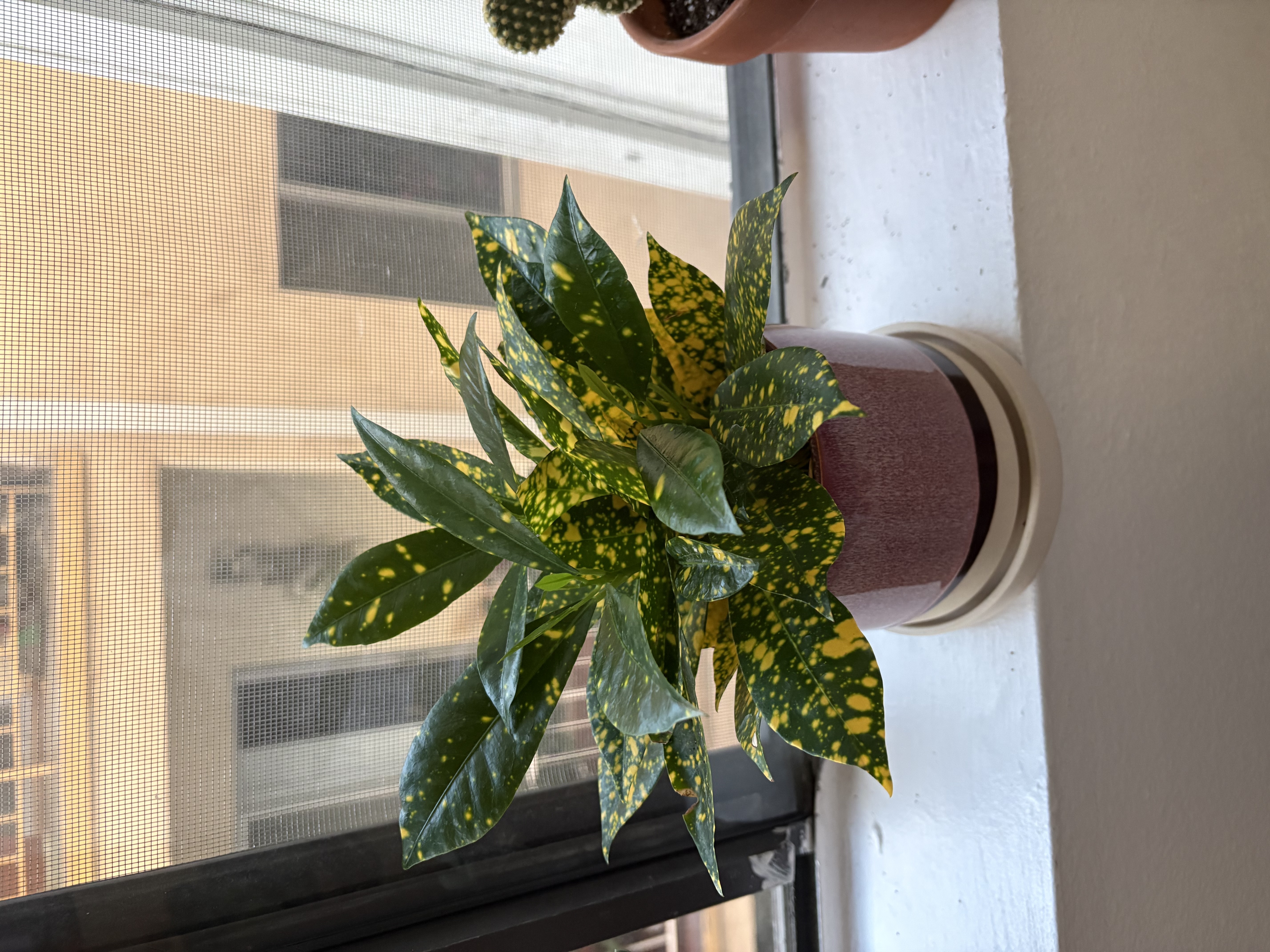
Identification and overview: The plant in your photo appears to be a croton, scientifically known as Codiaeum variegatum. Crotons are tropical evergreen shrubs prized for their highly decorative leaves, which come in many colors and patterns. The specimen shown has dark green leaves heavily speckled with irregular yellow spots, a common look among speckled or “golden” croton cultivars such as Gold Star or similar varieties. While crotons can display a wide range of color combinations—including reds, oranges, purples, and creams—the form in your image is characterized by a green ground foliage with bright yellow variegation. This is a typical look for indoor crotons grown for striking foliage rather than flowers. The plant is compact and makes a bold focal point on a sunny windowsill. Key features and appearance: - Leaves are glossy, leathery, and smooth-edged with a pointed tip. - Leaf size on a young, indoor specimen is typically 2–4 inches long, though some cultivars can be larger. - The overall habit is a bushy, somewhat upright houseplant when provided with bright light. - Color pattern: green leaves with irregular yellow speckles or blotches scattered across the blade; some leaves may show more concentrated yellow areas, especially in bright light. Natural history and range: Crotons originate from tropical regions of Asia and the Pacific Islands. In cultivation, they have been developed into hundreds of cultivars with different leaf shapes (narrow, broad, lobed, or entire margins) and diverse color patterns. They thrive in warm, light-rich indoor environments but do not tolerate frost or cold drafts well. Care and maintenance (approximately 1000 words overview): Crotons are bright, showy plants that demand consistent care to maintain vivid color and a healthy growth habit. If you want to maximize the yellow speckles and keep the plant compact and attractive, follow these guidelines: - Light: Crotons need bright light to keep their color. Place the plant in a sunny, warm spot—ideally near a south- or east-facing window. A few hours of direct morning sun can help intensify the yellow variegation, but be cautious of harsh mid-day sun that can scorch the leaves. In very low light, the leaf coloration fades and the plant can become leggy. If you notice dull color or leggy growth, increase the light exposure gradually. - Temperature and drafts: Maintain warmth year-round. Ideal daytime temperatures range from about 65–80°F (18–27°C). They dislike cold drafts, sudden temperature changes, or exposure to temperatures below 60°F (15°C). Keep them away from uninsulated windows in winter and from cooling air blasts from air conditioners. - Humidity: Crotons appreciate higher humidity, as dry indoor air can cause leaf browning at the tips and edge. If your home is dry, increase humidity with a humidifier, a pebble tray with water under the pot, or by grouping plants together to create a microclimate of higher humidity. - Watering: Water thoroughly when the top 1 inch (2.5 cm) of soil dries, then allow excess water to drain. The soil should be consistently moist but not waterlogged. Overwatering can lead to root rot and yellowing leaves, while underwatering causes leaf tip browning and brittleness. Use a pot with drainage holes and a well-draining, airy potting mix (a mix designed for tropical houseplants or trials with perlite/peat-based soil). - Soil and repotting: Crotons like a rich but well-draining mix. A standard peat-based potting soil with added perlite works well. Because crotons grow slowly but can become root-bound, plan to repot every 1–2 years or when you see roots filling the pot. When repotting, choose a pot only one size larger and refresh the soil to encourage new growth. - Fertilizing: Feed during the growing season (spring through summer) with a balanced liquid fertilizer (such as 10-10-10 or 20-20-20) at half the recommended strength every 2–4 weeks. Reduce or pause feeding in fall and winter when growth slows. Do not over-fertilize, as this can cause leaf burn and reduce variegation. - Pruning and training: Crotons can become leggy indoors. To promote a bushier plant and preserve leaf color, pinch back new growth and prune after a flush of growth. You can also selectively remove older or damaged leaves to shape the plant. Pruning helps maintain a compact form and encourages more side branching. - Propagation: Propagation is commonly done via stem cuttings. Take semi-hardwood cuttings in spring or early summer, remove the lower leaves, and dip the cut end in rooting hormone. Place the cutting in a moist, well-draining medium (like a mix of peat and perlite or perlite alone) and maintain high humidity until roots form, typically 4–8 weeks. - Pests and diseases: Crotons can attract common houseplant pests such as mealybugs, scale, and spider mites. Regularly inspect the undersides of leaves and treat promptly with insecticidal soap, horticultural oil, or neem oil. Wipe leaves with a damp cloth to keep them clean and reduce pest hiding spots. Leaf drop or stippling can also indicate stress from low humidity, poor light, or inconsistent watering. - Toxicity and safety: Croton plants are toxic if ingested by humans or pets. They contain caustic compounds that can cause oral irritation, vomiting, and other symptoms if chewed. If you have curious pets or small children, place the plant where it’s not easily accessible and wash hands after handling. If ingestion occurs and symptoms appear, seek medical or veterinary advice promptly. - Common issues and troubleshooting: If the leaves turn pale yellow or drop excessively, re-check light level (insufficient light can cause color loss) and watering practices (overwatering or underwatering). Brown leaf tips often signal low humidity or salts from hard water or over-fertilization; use distilled or rainwater and flush the soil occasionally to prevent salt buildup. If color is dull, consider increasing light gradually, ensuring the plant isn’t in direct scorching sun for extended periods. - Aesthetic and long-term care: For best visual impact, rotate the plant occasionally so all sides receive light, preventing uneven growth and sun-bleaching on one side. Keep the plant away from air-conditioning vents or heaters that create dry or hot drafts. Crotons can become quite large under ideal conditions, so anticipate eventual pruning or repotting as the plant matures to maintain a preferred size indoors. Summary and final notes: The plant in your photo is most likely a croton with green leaves covered in yellow speckles. This species is celebrated for its dramatic foliage, which makes a bold design statement in bright indoor light. With consistent bright light, stable warm temperatures, moderate humidity, and attentive watering, a croton can remain a striking indoor focal point for many years. Remember that crotons are sensitive to sudden changes in their environment, so aim for steady conditions, especially with light, temperature, and moisture. A well-cared-for croton will retain its vivid variegation and provide a tropical accent that is hard to match with other houseplants.
Identification Time
February 28th, 2026
Notice
The function of Plantypia is using AI, so it may be inaccurate. Please use it for fun and reference only.
A plant result page that leads to the next useful action
After checking the name, continue into official plant database results.