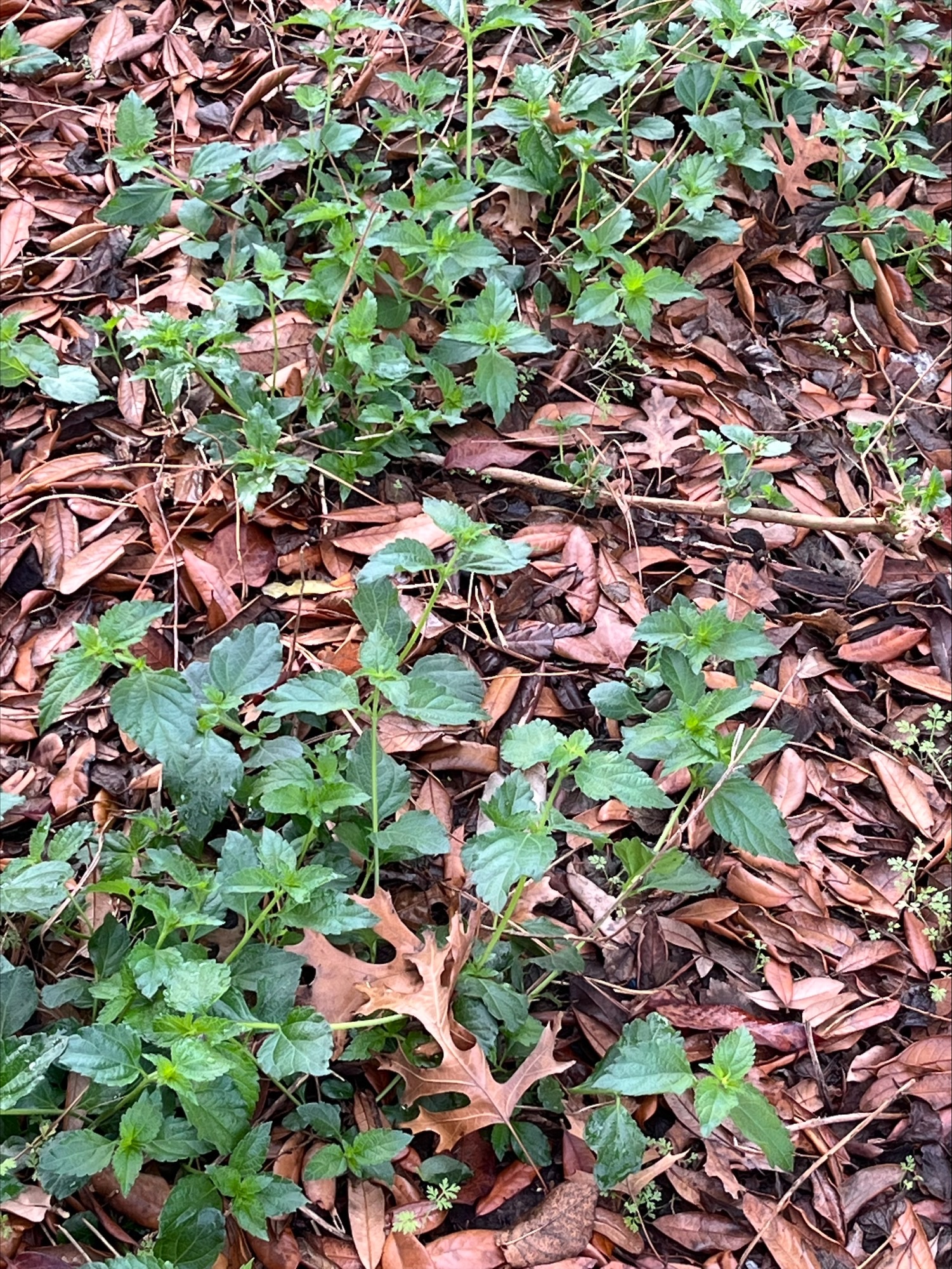
Stinging nettle (Urtica dioica)
Description
This plant is most commonly identified as stinging nettle, Urtica dioica, a sturdy perennial that often forms clumps or spreads with shallow, creeping roots. In the wild or in shaded garden areas, it can appear as a low-growing to mid-height patch with a sprawling, somewhat scrambling habit. The leaves are opposite, simple, and serrated, typically ovate to lanceolate with a pointed tip. Leaves are usually a dull to medium green and have a noticeable rough texture due to tiny hairs. Along the stems you’ll find numerous stinging hairs (trichomes) that release a mixture of chemicals when touched, including histamine, acetylcholine, and formic acid, which causes the characteristic sharp, itching sensation. The stems are generally square-shaped and can be somewhat hollow, a feature that helps distinguish some members of the mint and nettle families from other ground-covering plants. Flowers are tiny and inconspicuous, often greenish or brownish, arranged in dense clusters or panicles at the upper parts of the plants. These plants are dioecious or monoecious depending on the specimen, but in either case, the flowers are not showy and are primarily wind-pollinated or insect-pollinated by small insects. Growth habit and appearance: Stinging nettle is a vigorous, fast-growing herbaceous perennial. It forms a patchwork of leafy shoots that can reach a height of roughly 2 to 6 feet (about 0.6 to 1.8 meters) under optimal conditions, though in shaded woodland patches it often stays much shorter and sprawling along the ground as seen in your photo. The root system is robust and can spread by rhizomes, helping it colonize open ground quickly. Leaves are arranged oppositely on the stems; they are usually 2 to 6 inches (5 to 15 cm) long in mature plants but can be smaller on young growth. Leaf margins are sharply serrated, and the leaf veins are conspicuous. The overall look is a green, slightly coarse texture that blends into woodland edge and disturbed-soil habitats. In the late season, nettles may produce clusters of small, inconspicuous flowers that give rise to a modest seed crop if not clipped back. Ecology and habitat: Stinging nettle thrives in nutrient-rich soils and tends to prefer partial shade to full sun with moist conditions. It is commonly found along stream banks, in hedgerows, wood margins, and other disturbed or nutrient-rich areas. The plant is known to tolerate a wide range of soils but does best in fertile, well-draining soil that remains consistently moist. Nettles are a classic pioneer plant in disturbed habitats and can improve soil by drawing nutrients they will later share with other plants, though they can also become invasive if not managed. They are an important food source for certain insects and provide cover in naturalized areas. Edible and medicinal uses: A well-known feature of stinging nettle is that young leaves lose their sting when properly cooked. This makes them a popular wild food in soups, stews, sautés, and pestos. When harvested, young, tender leaves are preferred, and they should be blanched or steamed to neutralize the stinging hairs before consumption. Nettles are rich in vitamins A, C, and K, iron, calcium, and minerals, and they have been used in traditional medicine as anti-inflammatory, diuretic, and tonic remedies. Nettle leaf tea and nettle infusions are common in herbal medicine traditions. As with all wild edibles, ensure correct species identification and avoid foraging in areas that may have been treated with chemicals or exposed to heavy metal contamination. Garden and care tips: While nettle is not typically grown as a decorative garden plant due to its aggressive growth and stinging hairs, it can be cultivated intentionally for edible greens or for ecological benefits when managed properly. - Light and soil: Nettles tolerate a range of light conditions, from partial shade to full sun. They prefer rich, well-drained but moisture-retentive soils. In gardens, plant them in a dedicated bed or container where you don’t mind their vigorous spread. - Watering: Keep the soil evenly moist, especially during the growing season. Nettles dislike drought and will decline if the soil becomes dry or overly waterlogged. - Fertilization: They benefit from fertile soil rich in organic matter. Incorporating compost in spring supports strong leaf production. Avoid excessive phosphorus if you plan to cultivate them solely for edible greens, as too much nutrient can encourage leggy growth. - Pruning and containment: Because nettles spread by rhizomes, they can quickly form dense patches. To keep them contained, regularly harvest the upper growth, trim back long runners, or install physical barriers (like sturdy edging) around the bed. Cutting the plants back in late winter or very early spring can help control spread and promote vigorous new growth. - Harvesting: When harvesting for consumption, wear gloves and long sleeves to avoid skin irritation from the stinging hairs. Use scissors or shears to cut the leaves and stems. Harvest in the morning when leaves are crisp and full of moisture. Fresh nettles should be blanched or steamed before eating to deactivate the stinging hairs. - Propagation: Nettles spread by rhizomes and can be propagated by division of root clumps in early spring or fall. Seeds can also be collected from the seed heads and sown in a nursery bed before transplanting, though this is less common than clump division for control. - Pests and problems: Nettles are generally hardy but can be attacked by certain pests such as aphids, caterpillars, and mites. They can also host powdery mildew in very moist conditions. In managed beds, monitor for pest outbreaks and treat with appropriate organic or chemical controls if needed. Avoid overwatering to reduce disease risks. - Companion planting: Nettles can be integrated into a diverse garden to attract pollinators and beneficial insects. They pair well with comfrey, yarrow, calendula, and other pollinator-friendly herbs. Some gardeners plant nettles as a support or windbreak in mixed borders, where their brightness and texture contribute to ecosystem services such as habitat for insects. - Safety and handling: The sting from nettle hairs is a defensive mechanism; to minimize irritation, handle plants with thick gloves and protective clothing during harvesting and pruning. After contact, wash the skin with soap and water and apply a cool compress if needed. In some people, contact dermatitis can be more pronounced; if irritation is severe or widespread, seek medical advice. Reproduction and life cycle: In temperate regions, nettles emerge in spring after winter dormancy. They will send up new shoots that rapidly accumulate biomass as long as moisture and nutrients are available. Flowering can occur in midsummer, with seeds if conditions are suitable. The vigorous growth of rhizomes helps maintain patches across a landscape, and the plant’s ability to regrow from root segments makes complete eradication challenging unless you remove all root material or use persistent containment strategies. Uses beyond edibility: In permaculture and naturalized gardens, nettles can be used to improve soil fertility indirectly. They are often netted or composted (after chopping) to create nutrient-rich compost or used to brew a “nettle tea” that can be added to compost piles to accelerate breakdown. In addition, nettle leaves have historically been used to make fiber and dyes in some cultures, and the plant is valued as a source of forage for certain caterpillars and other wildlife in more natural landscapes. Potential downsides: The primary drawback of stinging nettle in home gardens is its aggressive spreading habit, which can crowd out other plants if not kept in check. Its stinging hairs can be a hazard to children or pets that brush against the plant. For ornamental or cultivated settings, many gardeners reserve nettle for a dedicated bed or a naturalized corner rather than a formal border. If you’re aiming to use the site for a different purpose, consider alternatives like cultivated herbs that resemble nettle’s leaf shape but lack the same aggressive spread and stinging properties. In summary: The plant pictured resembles stinging nettle, a resilient, nutrient-loving perennial. It is easy to grow, fast-spreading, and valuable both as a wild edible and as an ecological plant in the landscape. Its most notable feature is the sting caused by hair-like structures on the leaves and stems, a reminder to handle the plant with care. With mindful containment and regular harvesting, nettle can be a productive addition to a kitchen garden or a naturalized woodland-edge border, offering edible greens, soil-supporting benefits, and ecological value while requiring attention to manage its invasiveness and to protect yourself during handling.
Identification Time
March 11th, 2026
Notice
The function of Plantypia is using AI, so it may be inaccurate. Please use it for fun and reference only.
A plant result page that leads to the next useful action
After checking the name, continue into official plant database results.