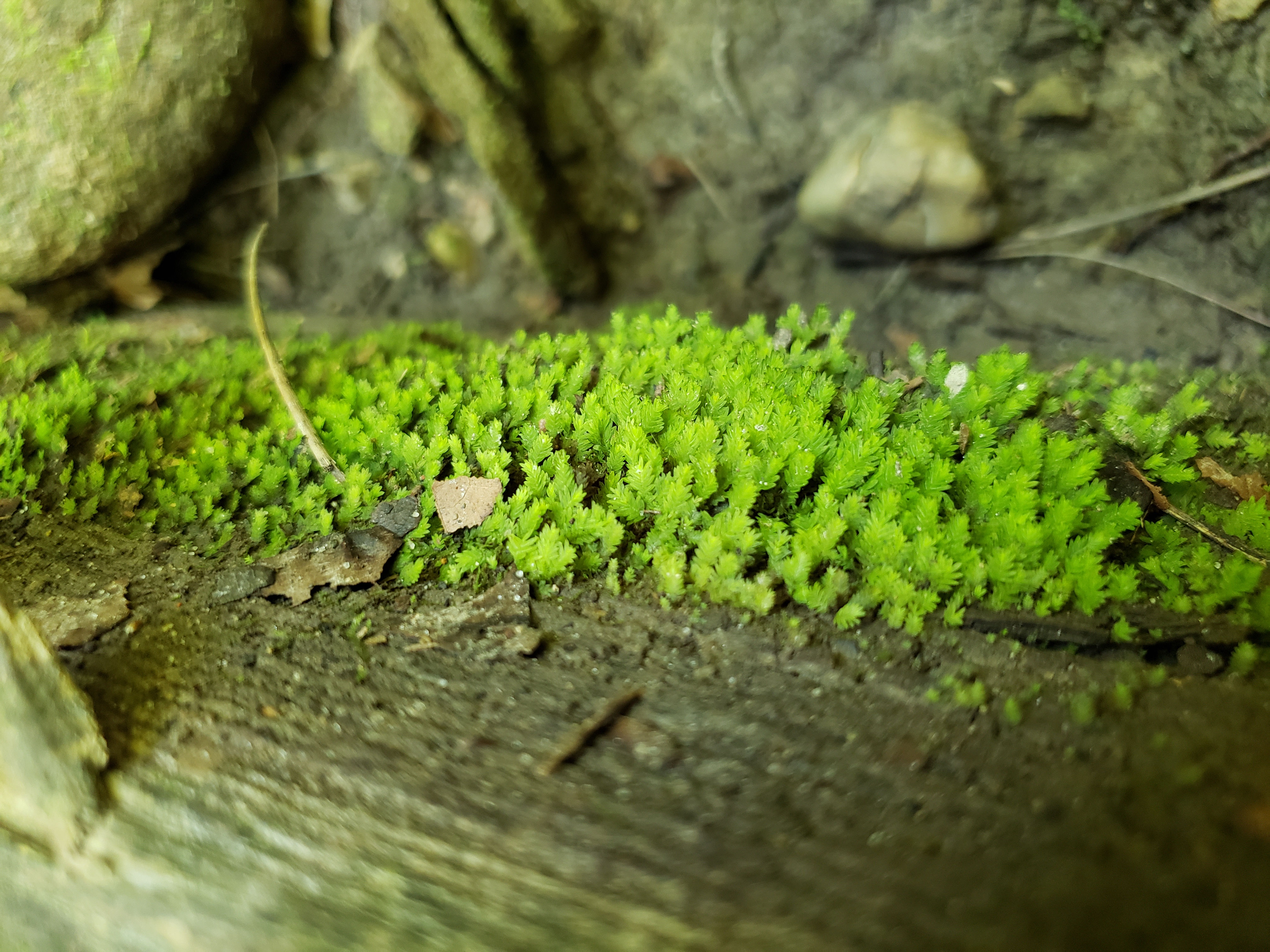
Moss (rock-dwelling bryophyte, likely a feather moss)
Description
The plant shown is moss, a non-vascular bryophyte that forms a soft, leafy carpet on damp surfaces like rocks. Mosses are among the oldest terrestrial plants and are characterized by tiny leaves arranged along short stems. In this image you can see a bright, lime-green mat clinging to a vertical rock face, with densely packed, delicate leaves that give the growth a feathery or ferny appearance. The growth habit is typical of mosses that colonize moist, shaded crevices: a compact, cushiony mat that spreads slowly over time rather than forming upright, woody stems. While it is difficult to identify the exact species from a photo alone, the moss appears to be a common rock moss or a feather moss (groups in genera such as Hypnum, Brachythecium, or related taxa) that prefer cool, humid environments and acidic to neutral substrates. Mosses like this have a simple life cycle dominated by the gametophyte stage, with sporophytes that arise from the same plant when conditions are right. Here is a detailed look at the plant’s characteristics, habitat, and care considerations. Characteristics and anatomy - Structure: Mosses lack true roots, stems, and leaves in the way flowering plants have them. Instead, they have leaf-like structures attached to a tiny axis, with rhizoids acting as simple root-like anchors. The photographed plant shows many small, flat leaves densely arranged around the axis, forming a ribbon-like or cushion-like column that adheres to the rock surface. - Leaves: The leaves are usually one cell thick at the outer surface and often have a narrow, pointed tip. In many mosses, the leaves are arranged in two or more ranks along the stem, giving a feathery or variegated texture when viewed up close. The bright green color indicates active growth and abundant chlorophyll in a well-hydrated specimen. - Growth form: Mosses can grow in mats, cushions, or tufts. This specimen is a vertical seam of moss-like growth running along a crevice, which is a common microhabitat in nature because it provides consistent moisture and shade. - Reproduction: Mosses reproduce via spores produced in capsule-bearing structures (sporophytes) that arise from the gametophyte. In a healthy colony, you may see sporophyte stalks with capsules when conditions are moist and cool enough. However, many garden or wild specimens appear as lush green mats most of the time, with visible sporophytes only during favorable seasons. - Ecology: Mosses are pioneers in moist environments and play a role in moisture retention, soil formation, and microhabitat creation for tiny invertebrates and microorganisms. They thrive where the substrate remains damp but not waterlogged, and they tolerate periods of dryness by drying out and then rehydrating when moisture returns. Habitat and natural history - Habitat preferences: This moss appears to be a rock-dwelling or cliff-dwelling type that favors shaded, moist microhabitats. It can grow on limestone, sandstone, or other mineral surfaces and often colonizes crevices where rainwater pools and light is filtered. - Climate tolerance: Mosses generally prefer cool to moderate temperatures with high humidity. They can tolerate a range of conditions, but direct, hot sun and drying winds can cause desiccation and brown tips or patchy growth. - Role in the ecosystem: Moss mats help stabilize soil and rock surfaces, reduce erosion, and create a microclimate that supports other tiny plants and invertebrates. They are also good indicators of environmental humidity and, in some cases, air quality. Care and cultivation tips (outdoors and in terrariums) - General approach: Moss is very forgiving and relatively low-maintenance when its basic needs are met: consistent moisture, shade or filtered light, and a stable vertical or horizontal surface to cling to. Whether you encounter this in a garden bed, on a garden rock feature, or in a terrarium, the goal is to replicate a moist, shaded micro-habitat. - Watering: Keep the moss consistently damp to moist, especially during dry periods. Rainwater or distilled water is best; hard tap water with minerals can leave deposits over time. In a garden setting, supplemental misting during dry spells can help. In terraria, mist the moss several times daily or keep a humidity level around 60–90% depending on the species. Avoid standing water that can lead to mold growth. - Light: Place moss in bright, indirect light or partial shade. Direct sun—even in the morning—can scorch the delicate leaves and cause browning. If grown indoors, near a bright window with filtered light is ideal, or under a low-intensity grow light on a 12–14 hour cycle. - Substrate and attachment: Moss will attach to many surfaces, including rock, bark, wood, and moistened soil. For rock features, you can sprinkle a little soil or use a moss slurry (ground moss blended with water) to help it colonize a new surface. In terrariums, you can set moss on a damp substrate such as sphagnum moss, coconut coir, or a shallow layer of damp potting mix. - Temperature and humidity: Moderate temperatures are best. If kept outdoors, a shaded, cool microclimate is ideal. In a terrarium, maintain steady humidity and avoid overheating the enclosure. - Fertilization: Mosses generally do not require fertilizer and can be sensitive to salts. If growth is slow or pale, provide more humidity and light rather than applying fertilizer. In rare cases, a very dilute foliar spray of a balanced fertilizer may help, but this is not typically necessary and can harm moss if overused. - Maintenance: Moss typically requires little maintenance beyond moisture management. Remove any adjacent weed growth or debris that may compete for space or introduce excess nutrients. If the mat grows unevenly, you can gently press fragments into exposed areas to fill gaps. - Propagation and spreading: To expand a moss colony, you can gently detach small patches and press them onto new damp surfaces. In the field or garden, you can collect small bits from a healthy colony and transplant them to a shaded, moist location. In terrariums, layering more damp substrate atop or alongside the existing moss helps form a larger, cohesive mat over time. - Common problems: Brown tips or patchy appearance often indicate drying or excess sun exposure. If the substrate is too wet without adequate drainage, you may encounter mold or fungal growth. Ensure good airflow and avoid waterlogged conditions. If mineral deposits from hard water appear, rinse gently with distilled water. Identification tips and species considerations - Distinguishing features: Moss species are diverse, and many look similar at a glance. The bright, uniform green and dense, ribbon-like growth along a stone surface suggest a common rock moss or feather moss type. If you examine a patch closely, you may notice little leaf-like blades arranged along a central axis in two or more ranks, which is typical of many Hypnum-, Brachythecium-, or Pleurozium-like mosses. - Why exact species can be tricky: Moss taxonomy relies on microscopic features such as leaf shape, the presence or absence of a costa (the midrib in each leaf), cell structure, and the form of the reproductive structures. Without a handheld microscope or spore capsules, many visually similar mosses are grouped as “feather moss” or “rock moss” for practical purposes. - Field identification tips: If you want a more precise ID, note the substrate (rock type), the growth form (mat, cushion, or tuft), the color in different seasons, and whether sporophytes are present. Collecting photos over time and consulting a local field guide or a bryologist can help confirm the species. Ecological and practical uses - Aesthetic and functional uses: Moss is popular in garden design for shaded, moist areas, rock gardens, stone walls, and green roofs. It creates a lush, evergreen carpet that adds texture and softness to hardscape. In indoor settings, terrariums and vivariums often showcase moss as a low-maintenance ground cover. - Environmental benefits: Mosses contribute to moisture retention in soils and rock crevices and create miniature habitats for invertebrates. They’re also used in biosurf and ecological studies as indicators of microclimate conditions, such as humidity and air quality. - Practical tips for beginners: Start with a small, existing patch from a reputable source (or collect legally from permitted locations) and place it in a shaded, moist spot. Be patient; moss grows slowly, and a healthy patch may take weeks to months to spread noticeably. Conservation and ethical considerations - Wild harvesting: If you collect moss from the wild, do so sparingly and with respect for local ecosystems. Some regions regulate moss harvest to protect fragile habitats. Consider purchasing from nurseries or suppliers that cultivate moss or that operate under sustainable practices. - Wildlife and habitat: Moss restoration can benefit urban greenspaces by increasing humidity and supporting microhabitats, but it should be done in a way that does not disrupt native flora or soil health. In summary The plant in the image is a moss—a small, non-vascular ground plant that forms vibrant green mats on damp rock surfaces. Its distinguishing traits include tiny, densely arranged leaves, a cushiony, feathery appearance, and a strong ability to cling to vertical or shaded moist substrates. Mosses thrive in cool, humid environments with indirect light and minimal disturbance. They require regular moisture but not waterlogged conditions, minimal to no fertilization, and patience as they slowly spread to cover new surfaces. Whether used in outdoor rockwork, garden shade features, or indoor terrariums, moss offers an attractive, low-maintenance way to introduce living greenery into spaces where other plants struggle to thrive. The exact species may be difficult to confirm from a single photograph, but the growth habit and habitat strongly point to a rock or feather moss, a common and appealing group for enthusiasts of naturalistic landscapes and terrarium setups.
Identification Time
October 19th, 2025
Notice
The function of Plantypia is using AI, so it may be inaccurate. Please use it for fun and reference only.
A plant result page that leads to the next useful action
After checking the name, continue into official plant database results.