Clivia (Clivia miniata)
Description
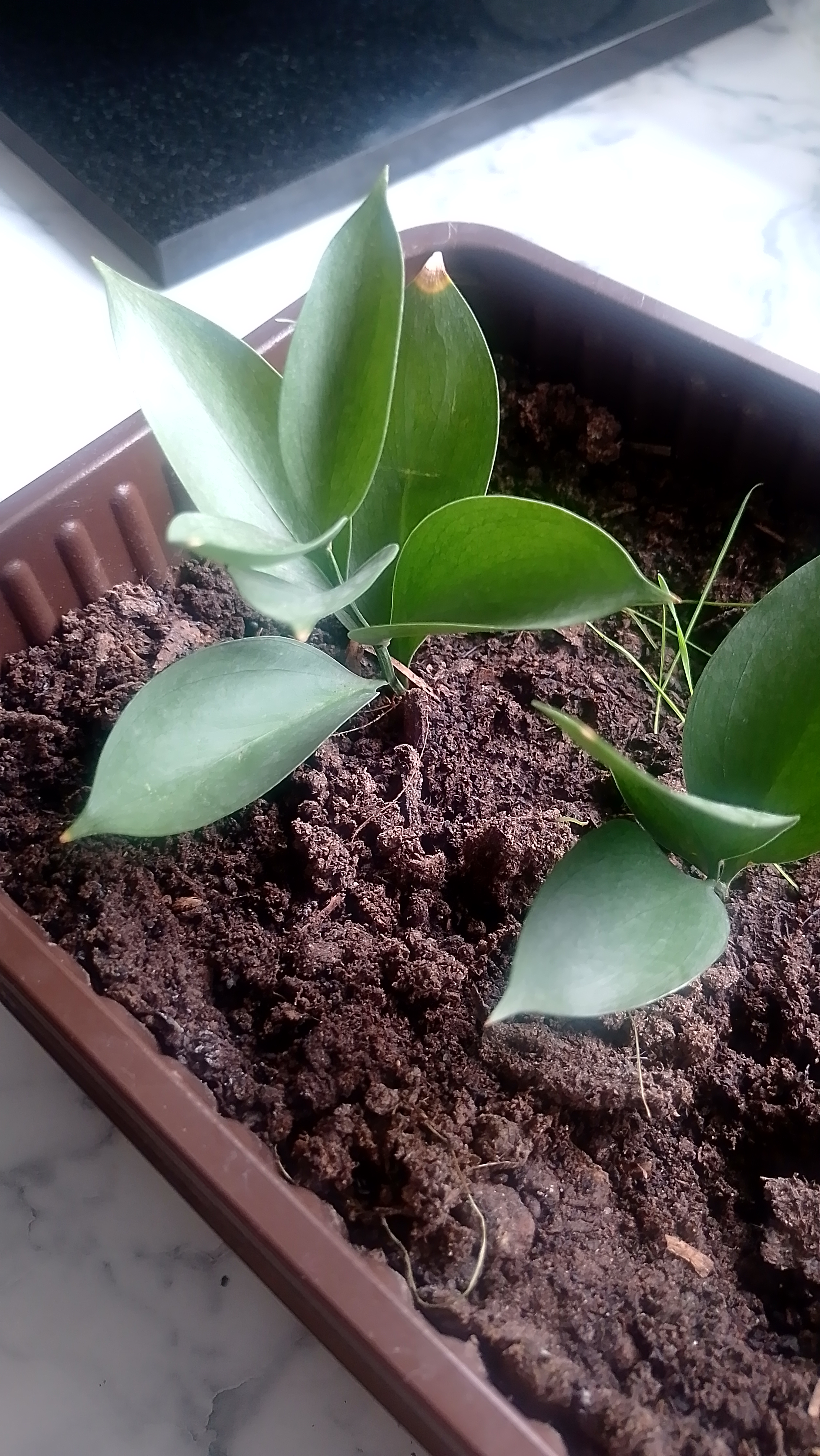
Identification and general overview: The plant in the photo appears to be a young Clivia, commonly known as Kaffir Lily or Bush Lily. Clivia are evergreen perennials that form compact clumps of thick, strap-like leaves arising from a short, sturdy rhizome. In mature plants, the leaves are arranged in a fan or rosette and are a rich, glossy green. The leaves themselves are smooth, rigid, and somewhat leathery, typically 2–4 cm wide with a pointed tip, and they can reach substantial length in established plants. The specimen in the image shows several leaves emerging from a central crown, with the petioles or leaf bases rising from near the soil surface, which is characteristic of Clivia rosettes. While the photo does not show flowers, Clivia plants are prized for producing showy umbels of trumpet-shaped blooms on a leafless stalk (inflorescence) that rises well above the foliage in late winter or early spring. The plant’s overall appearance—a compact tuft of dark green, straplike leaves—fits well with Clivia miniata, though young plants can resemble other broad-leaf evergreen houseplants. If your plant is not blooming or is still small, it can be easy to misidentify at this stage, but the growth habit and leaf form are strong clues for Clivia. Physical characteristics and growth habit: Clivia leaves are evergreen, durable, and long-lived. They typically form a clump from a fleshy rhizome that grows just at or slightly below the soil surface. In a container, you’ll often see multiple leaves fanning out from a central point, giving a neat, architectural look. The plant is relatively slow-growing when young, but it can become a substantial clump after several years. Clivia does not require a woody trunk or climbing support; it remains a compact, clumping plant, which is part of its appeal for indoor spaces. Flower stalks (scapes) emerge after a period of growth and can reach beyond the leaf height, bearing a cluster of bright orange, yellow, or sometimes red trumpet-shaped flowers. The blooming habit is a hallmark of Clivia and is often the signal that a plant is thriving. In the absence of flowering, Clivia still makes an attractive green foliage specimen, and it tolerates a range of indoor conditions surprisingly well. Origin and general care philosophy: Clivia is native to subtropical parts of South Africa, where it grows in lightly shaded forest floors with rich organic matter and good drainage. In cultivation, the plant prefers bright, indirect light or filtered sun. It dislikes harsh, direct midday sun for extended periods, which can scorch the leaves, but it benefits from consistent light to encourage robust growth and reliable flowering as it matures. Because of its origins in relatively warm, stable climates, Clivia prefers consistent temperatures without large fluctuations and well-draining soil that dries slightly between waterings. With proper care, Clivia can be a low-to-moderate maintenance houseplant that rewards you with years of ornamental greenery and, eventually, a spectacular bloom cycle. Light, temperature, and humidity: Clivia thrives in bright, indirect light. A spot near a sunny window with light that is filtered or blocked by sheer curtains is ideal. In very bright environments, some morning sun can be acceptable, but try to prevent strong midday sun from hitting the leaves directly. Temperature-wise, Clivia does best in a comfortable indoor range, roughly 60–75°F (15–24°C). It can tolerate brief cooler spells but should be protected from temperatures below about 50°F (10°C) to avoid leaf damage. Humidity is not a critical requirement for Clivia; average home humidity is fine. If you live in a very dry climate or heat is intense, you can occasionally mist the plant lightly or provide a shallow tray with pebbles and water to raise ambient humidity, but avoid letting the plant sit in waterlogged conditions. Potting mix and repotting: Clivia dislikes “wet feet.” Use a well-draining, airy potting mix. A good mix might be a blend of standard potting soil with organic matter and added drainage components such as perlite, coarse sand, or pine bark. Some growers also use orchid bark or a combination that includes a small amount of leaf mold to improve texture. The important part is excellent drainage and a mix that doesn’t retain water around the rhizome. Clivia often prefers to be a bit snug rather than pot-bound, especially when young, and some hobbyists deliberately underpot to encourage flowering later. Repotting is best done only every 2–3 years or when the plant has outgrown its pot and the rhizome is crowded; in many cases, Clivia is left in the same pot for longer periods. When you do repot, choose a pot with a drainage hole and handle the rhizome carefully to avoid damaging the crown. The rhizomes should sit at or just above the soil surface, not buried deeply. Watering and feeding: During the active growing season (spring through early autumn), water the plant thoroughly and then allow the top inch or two of soil to dry before watering again. The frequency will depend on your home’s temperature, humidity, and pot size, but Clivia generally prefers to dry somewhat between waterings. In winter, reduce watering further; Clivia goes through a slower growth phase and excessive moisture can promote root rot. It’s better to err on the side of slightly drier soil in the cooler months and resume a normal watering pattern as growth resumes. Fertilize during the growing season with a balanced, water-soluble fertilizer at about half-strength every 4–6 weeks. Some gardeners prefer a fertilizer formulated for flowering plants and avoid high-nitrogen mixes, which encourage foliage growth at the expense of bloom. Do not fertilize during the winter rest period. When feeding, apply to the soil and avoid direct contact with the rhizome or leaves to prevent burn. Flowering and age: Clivia is renowned for its blooms, which typically appear on a stalk rising above the foliage in late winter or early spring. For many Clivia varieties, flowering is a sign of a healthy, mature plant. It can take several years (often 3–5 years or more) for a young plant to develop a flowering stalk, especially if grown from seed or from a small offset. A well-lit location, proper rest periods, and not over-watering can all contribute to a flowering-appropriate cycle. If your plant is not blooming, ensure it has adequate light, appropriate temperature, and a proper-watering schedule. In some cases, providing a slight cool period (not cold) in late fall or early winter can stimulate bloom formation, but this should be done cautiously and never by stressing the plant. Propagation: Clivia produces offsets (pups) at its base. These can be separated once they’re large enough to form a stable plant, typically after several growing seasons. Use a clean, sharp knife to detach the offset from the mother rhizome, ensuring that the offset has its own roots. Plant the offset in its own pot with fresh, well-draining mix and water lightly until established. Propagation by offsets is the most common method for home gardeners; seeds are possible but take longer to mature and bloom and yield variable traits. Pests and diseases: Clivia is relatively pest-resistant but can encounter common houseplant issues such as mealybugs, scale insects, or spider mites, especially in dry indoor air. Regular inspection and a gentle approach (rinsing leaves with water, using alcohol swabs for insects, or applying a horticultural oil or insecticidal soap) usually keeps problems in check. The most significant disease concern is root rot caused by overwatering or poor drainage. Always ensure your pot has drainage holes and the soil is not kept soggy for extended periods. If yellowing leaves develop, check for overwatering, root health, and signs of fungal growth. Brown leaf tips can indicate low humidity, mineral buildup from water with high salts, or underwatering; adjust watering and consider flushing the soil periodically to remove excess salts. Common care tips for beginners: - Place the plant in bright, indirect light. Avoid harsh, direct midday sun. - Water thoroughly but let the top 1–2 inches of soil dry before watering again. Do not leave the plant sitting in water. - Use a well-draining soil mix and a pot with drainage holes. - Feed during the growing season with a balanced, half-strength fertilizer every 4–6 weeks. - Repot only when necessary to prevent root crowding, typically every 2–3 years, and avoid burying the base of the plant deeply. - After flowering, remove spent flower stalks if they wilt or dry; this helps conserve energy for vegetative growth. - Keep in a stable environment with minimal temperature fluctuations and away from cold drafts. - Watch for pests; address any signs promptly with appropriate measures. Practical care routine example: If your Clivia sits in a bright windowsill that receives some sun in the morning and is shaded in the hottest part of the day, you’re in a good position. Water once the soil is dry to the touch at the top 1–2 inches, then wait a few days to a week if your indoor humidity is low or the air is particularly dry. In spring and summer, you may water more frequently during warm spells, but always ensure the pot drains well. Fertilize every 4–6 weeks with a diluted balanced fertilizer while the plant is actively growing, and cut back in the late summer to early autumn as growth slows. If you notice the leaf tips turning brown, check humidity and watering habits; a humidifier or a pebble tray can help in dry environments. If you see yellowing leaves, it can be a sign of overwatering or root issues, so check the roots and adjust watering and soil drainage accordingly. Final thoughts: Clivia miniata is a visually striking, relatively forgiving houseplant that rewards careful attention to light, water, and drainage. The thick, evergreen leaves provide year-round interest, while the promise of dramatic winter blooms adds seasonal excitement. If you manage water carefully, provide bright but indirect light, and practice patience as the plant grows and matures, you’ll likely enjoy several happy years with a healthy Clivia. When properly cared for, Clivia can be a longtime staple in a sunlit corner or a decorative focal point in a living space, offering both lush foliage and, when flowering, a bright display that lifts the room’s mood. The plant you’ve photographed—showing a young, compact fan of green leaves—has the classic silhouette of a Clivia and, with appropriate care, should thrive and eventually reward you with its characteristic and celebrated blossoms.
Identification Time
October 18th, 2025
Notice
The function of Plantypia is using AI, so it may be inaccurate. Please use it for fun and reference only.
A plant result page that leads to the next useful action
After checking the name, continue into official plant database results.