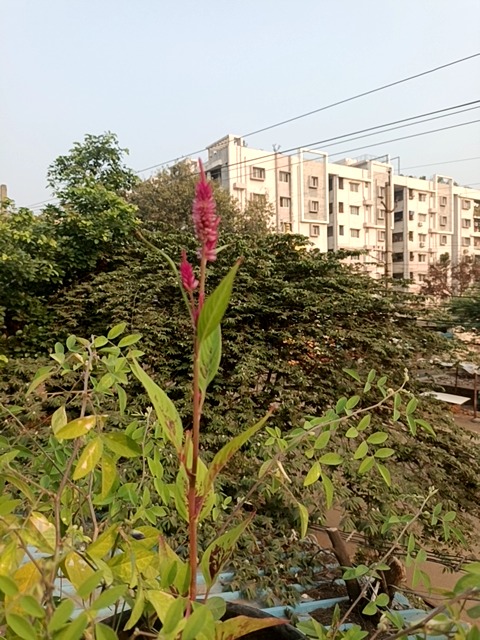
Foxtail Amaranth (Amaranthus spp.), likely Amaranthus cruentus/caudatus
Description
From the photo, the plant appears to be an amaranth (family Amaranthaceae), most likely a foxtail type of Amaranthus. The upright red-tinged stem supports simple, lanceolate leaves that are bright to medium green, with a smooth margin and a slight gloss. At the apex, a dense, pinkish inflorescence rises as a compact spike. This combination—an erect, unbranched stem, alternating leaves, and a densely clustered terminal inflorescence with pink/magenta tones—is characteristic of foxtail amaranths (often labeled as Amaranthus cruentus or Amaranthus caudatus varieties). In cultivation, these plants are grown both as ornamentals and as leafy greens or grain crops, but in a street or balcony setting they most commonly serve as colorful annual ornamentals. The plant in the image looks like a young, self-contained plant that could grow taller in ideal conditions, with the inflorescence developing into more pronounced catkins or foxtail-like plumes later in the season. This identification is consistent with Amaranthus spp. widely used in warm climates and adaptable to disturbed urban soils. It is worth noting that many amaranth species hybridize, so the precise species can be tricky to confirm from a single photo; however, the overall morphology strongly supports Amaranthus and specifically the foxtail growth form. Overview and botanical context: - Growth habit: Annual to short-lived perennial in warm regions, typically reaching around 0.5 to 2 meters tall depending on cultivar and growing conditions. The stem is often sturdy and can take on a reddish or purplish hue, especially near the base or on exposed stems. - Leaves: Alternate, simple leaves with smooth edges, commonly 6–15 cm long, narrow to broad lanceolate in shape. Petioles are usually short or indistinct, and leaf surfaces are green with possible red or bronze tints on sun-exposed parts. - Inflorescence: Amaranth inflorescences are dense, spike-like clusters of tiny flowers. In foxtail types, the inflorescences rise as upright, compact plumes that can range from greenish to pink, magenta, or reddish depending on cultivar and light exposure. The flowers are small and numerous, and seeds form in late stages of bloom. - Flowers and foliage: Flowers are inconspicuous but collectively create striking color and texture. Foliage can be tall and lush, contributing a dramatic backdrop for the vivid floral display. - Habitat and natural history: Amaranthus spp. are native to the Americas and widely naturalized worldwide in warm, frost-free climates. They tolerate a range of soils, though well-drained, fertile soil favors a richer bloom. They are known for their resilience and ability to reseed, especially in sunny, disturbed areas. Key ornamental and culinary uses: - Ornamental value: The vivid pink-purple inflorescences add vertical accent and color contrast in borders, containers, or late-summer/fall displays. They pair well with sun-loving annuals and grasses, and they can be combined with other drought-tolerant plants for a striking, heat-tolerant garden feature. - Edible uses: Many amaranth species produce edible greens (amaranth leaves) and edible seeds (amaranth grain). Leaves are a staple in many cuisines for their high vitamin and mineral content; seeds can be ground into flour or cooked similarly to quinoa. In urban or ornamental settings, the emphasis is usually on aesthetics, but culinary use is an option if the plant is grown specifically for leafy greens or grain. Care and cultivation notes (approximately 1000 words of guidance): - Light and temperature: Amaranths thrive in full sun. Provide at least 6 hours of direct sunlight daily for best bloom and robust growth. They prefer warm temperatures and can struggle in cool or short-season climates. Frost will damage or kill the plants, so in temperate regions they are grown as annuals or started indoors and transplanted after danger of frost. - Soil: They are relatively tolerant of a range of soil types, but perform best in well-drained soil that’s rich enough to support steady growth. A slightly acidic to neutral pH (about 5.5 to 7.5) is generally suitable. Heavy clay soils should be amended with organic matter to improve drainage. - Watering: Keep the soil evenly moist during establishment. Once established, amaranth is fairly drought-tolerant, but regular watering improves leaf and flower production. Avoid waterlogged conditions, which can promote root rot and other problems. - Fertilization: A balanced approach works well. Apply a general-purpose fertilizer or incorporate compost to improve soil organic matter. Avoid excessive nitrogen; very lush leafy growth can delay flowering and may reduce the length and vibrancy of inflorescences. In container culture, feeding once every 3–4 weeks during the growing season is usually sufficient. - Spacing and support: If you’re growing multiple plants, space them about 12–24 inches apart (30–60 cm), depending on the expected mature size of the variety. Tall, upright amaranths may benefit from staking or support to prevent lodging in windy conditions, especially when laden with blooms. - Pruning and training: Pinching the tips when plants are young can encourage branching and a bushier habit, which can lead to more flower clusters and a denser plant. Removing spent inflorescences as they fade can encourage continuous flowering in some cultivars and improve appearance. - Propagation: Amaranth is easily propagated by seeds. For ornamentals, you can sow directly outdoors after the last frost date or start indoors 4–6 weeks before the last frost and transplant seedlings. Seeds germinate quickly, usually within 5–10 days at 20–25°C (68–77°F). Harvesting seeds from ornamental plants will lead to self-seeding; if you don’t want volunteers, deadhead or collect seeds promptly. - Pests and diseases: Common pests include aphids, thrips, caterpillars, and beetles. They can be managed with insecticidal soap, neem oil, or encouraging natural predators. Powdery mildew and other fungal diseases can affect crowded plantings or poor airflow; ensure good spacing and air circulation, water at the base to keep foliage dry, and apply appropriate fungicides if needed. Regularly inspect for signs of disease or pest pressure and address promptly to prevent spread. - Maintenance: Remove lower leaves if they yellow or become leggy to maintain a tidy appearance and reduce disease risk in humid conditions. For prolonged color, deadhead spent blooms; some varieties still bloom vigorously even after flowering begins, while others may slow down if their seed heads mature. - Pod and seed safety: The seeds are tiny and can germinate readily if dropped in garden beds. If you do not want volunteer plants, remove seed heads or dispose of them before they mature. In containers, you can simply clip the flowering stem after bloom to encourage a fresh flush of new growth. - Companion planting: Amaranth pairs well with other sun-loving annuals like marigolds, zinnias, and sunflowers. Its bold vertical form complements grasses such as fountain grasses or millet, creating a dynamic, warm-season palette. In edible-garden settings, interplant with tomatoes or peppers where the height and color can be used to create a layered structure. - Varietal considerations: Because Amaranthus spp. encompasses many forms, the exact care can vary slightly depending on cultivar. Foxtail amaranths (Amaranthus spp.) are particularly prized for upright, tufted plumes and a relatively compact habit. Some varieties are bred specifically for larger seed crops, others for ornamental display; assume a tall, robust plant for the pictured growth form and adjust pruning and staking accordingly. Ecological and practical considerations: - Self-seeding: Amaranthus can reseed readily in favorable climates, especially in warm, sunny sites with minimal competition. If you’re growing a non-native or ornamental cultivar, you may want to manage reseeding to avoid unwanted spread in natural areas. Deadheading or collecting seeds before shed can help limit volunteers. - Invasiveness: In some warm regions, amaranth can naturalize beyond the cultivated area. If you notice the plant thriving beyond your garden beds or appearing in cracks and disturbed ground, you may want to pull out stray seedlings to prevent them from becoming invasive in your local ecosystem. - Nutrition and soil health: In addition to ornamental value, amaranth greens are highly nutritious in many cuisines, rich in vitamins A and C, iron, and calcium. In a kitchen garden, you can rotate amaranth with other crops, using the plant’s deep roots to help break up compacted soil in some cases. - Safety considerations: For most people, amaranth is safe to handle. If you have a history of allergies to related plants or pollen sensitivities, be mindful of pollen production during bloom. There are no known common toxicities associated with handling amaranth, but always wash hands after pruning or harvesting and avoid ingesting large quantities of raw plant material if not prepared properly. In summary: - The plant in your photo is best described as a foxtail-type amaranth (Amaranthus spp.), likely a ornamental cultivar such as Amaranthus cruentus or Amaranthus caudatus in its upright form. It features a red-tinged stem, green lanceolate leaves, and a prominent pinkish inflorescence at the stem tip. - It is an adaptable warm-season annual that values full sun, well-drained soil, and regular but balanced moisture. It responds well to light pruning and staking, and it can be grown from seed with straightforward care. - Beyond its striking appearance, amaranth also offers edible greens and potential grain seeds, making it a versatile plant for gardeners who appreciate both aesthetics and function. With thoughtful care—adequate sun, modest feeding, timely deadheading, and pest monitoring—this plant can provide a dramatic vertical accent in beds and containers throughout the warm months, then seed-free or seed-spreading behavior can be managed as desired.
Identification Time
March 26th, 2026
Notice
The function of Plantypia is using AI, so it may be inaccurate. Please use it for fun and reference only.
A plant result page that leads to the next useful action
After checking the name, continue into official plant database results.