Tree fern (Cyatheaceae)
Description
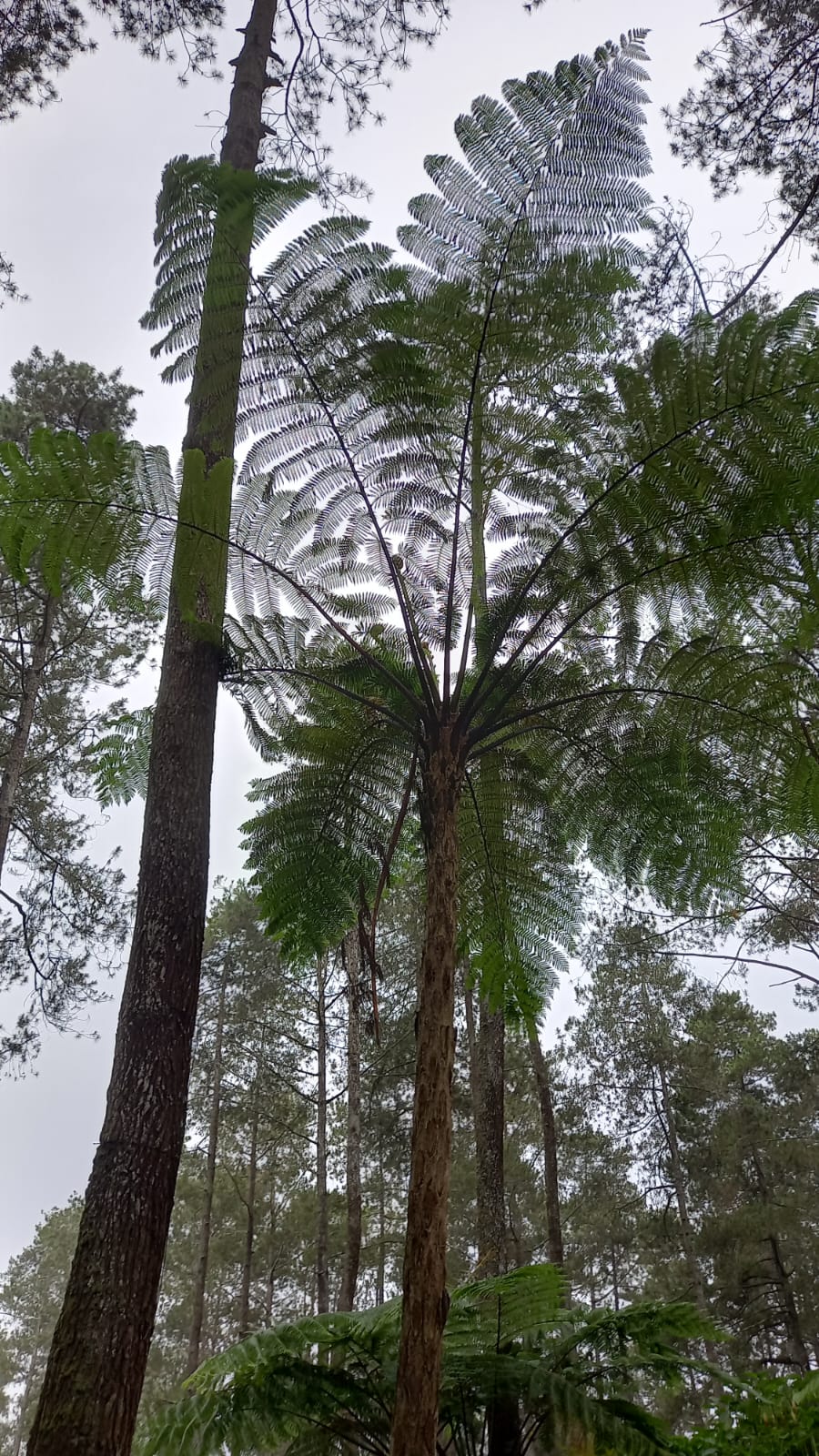
The plant in the image is a tree fern, a member of the fern family Cyatheaceae. Tree ferns are not true woody trees but have a single, upright trunk formed from persistent leaf bases. At the top, a crown of large, lacy fronds rises like an umbrella, giving the plant a distinctive, tropical look. The trunk is often a rough, fibrous column, sometimes with a coating of old frond bases that can appear brown and shaggy. From the crown, fern fronds radiate outward in a circular or fanlike arrangement, creating a dramatic display. The fronds are highly pinnate or bipinnate, with dozens to hundreds of small, delicate leaflets called pinnae that give the frond its feathery appearance. In most garden and forest contexts you will see a slow, majestic growth form rather than a quick, leafy spread, because tree ferns grow slowly and retain their trunk for many years. The photo suggests a young or mid sized specimen in a forested setting, possibly in a region with high humidity and filtered light, such as a subtropical or temperate rainforest environment. Identification notes and natural history - Growth form: A trunked fern with a crown of large fronds. The trunk is typically cylindrical and may reach several meters tall in time, depending on species and conditions. - Fronds: Large, feathery, and arching; fronds are pinnate or bipinnate with many small leaflets arranged along a central rachis. The overall silhouette resembles a sunburst or umbrella when viewed from below. - Habitat: Native to many subtropical and tropical regions, including parts of Australia, New Zealand, New Caledonia, and various Pacific islands, as well as some temperate rainforests. They thrive in shade or dappled light with consistently moist soil and high humidity. - Ecology: Tree ferns contribute to forest structure and microhabitats, providing shelter for invertebrates and small organisms. They often grow in the understory beneath taller trees where light is filtered and the air is humid. - Varieties and lookalikes: The overall look can be produced by several genera within Cyatheaceae, including Dicksonia and Cyathea. Dicksonia antarctica (the soft tree fern) is a popular cultivated species with a bulky trunk over time, while Cyathea cooperi and Cyathea dealbata are common in cultivation for their dramatic fronds. Without close examination of the scales on the stipe or the trunk, it can be hard to distinguish species from a photo alone. The description here covers tree ferns in general terms and reflects common traits across the group. Care and husbandry overview - Light and location: Tree ferns prefer bright indirect light or light shade. In a garden, plant them under taller trees or shrubs that filter direct sun. In hot climates, protection from the strongest midday sun is essential to prevent frond scorch. If growing indoors, place the plant near a bright window with filtered light or use a grow light to mimic dappled sun. Direct sun on the fronds can cause leaf burn and uneven growth. - Temperature and humidity: Tree ferns enjoy moderate temperatures, typically thriving in the range of about 60–75 F (15–24 C). They dislike frost and prolonged freezing, though some species tolerate short light frosts when established or when provided with microclimate protection. High humidity is crucial for healthy fronds. In dry indoor air or heated rooms, increase humidity with regular misting, a humidifier, or by placing the pot on a tray of water and pebbles. Grouping plants together can also raise ambient humidity. - Watering and moisture: Keep the growing medium consistently moist but not waterlogged. Tree ferns do not tolerate long dry spells; however, they also do not appreciate soggy feet. In warm seasons, water more frequently, ensuring excess water can drain away. In cooler months reduce irrigation slightly but never let the soil dry out completely. Use a good, well-draining potting mix rich in organic matter if potted, and ensure excellent drainage if planted in the ground. - Soil and planting medium: In the ground, amend soil with organic matter to improve moisture retention and drainage. A slightly acidic to neutral pH is often favorable for tree ferns. In pots, use a peat-based or coconut coir–rich mix with perlite or other inert drainage materials to maintain aeration and drainage. A thick mulch around the base helps to preserve soil moisture and keep the roots cool, especially in warmer climates. Avoid heavy clay that can retain too much water. - Fertilization: Feed sparingly during the growing season. Use a balanced, water-soluble fertilizer at a low rate (half to one-quarter strength) every 4–6 weeks. Avoid high nitrogen fertilizers that promote excessive leafy growth and can encourage weak fronds. In winter, most tree ferns slow their growth and require little to no fertilization. - Pruning and grooming: Remove only completely dead or damaged fronds to keep the plant tidy and reduce disease risk. Do not trim into the crown or remove numerous green fronds, as they contribute to photosynthesis and shelter for the crown. Regular light grooming helps maintain an attractive shape and helps the plant allocate energy to healthy growth. - Potting, repotting, and growth space: In cultivation, tree ferns grow slowly but can eventually require a larger pot as the trunk thickens. Repot every 2–4 years, or when the plant becomes rootbound. When repotting, handle the crown gently and keep the root ball intact. For very large specimens in the ground, there is no need to move them unless you are relocating or altering site conditions; ensure ongoing moisture and mulch coverage. - Propagation: Tree ferns are not easily propagated by division in typical home conditions. The conventional method is spore propagation, which requires collecting mature fern spores from the underside of fronds and germinating them under carefully controlled conditions. This is a slow process and more suitable for enthusiasts or educational settings. For most hobbyists, starting with a healthy established plant or purchasing a specimen is more practical. - Common pests and diseases: Watch for scale insects, mealybugs, and spider mites, especially in indoor or greenhouse settings. Fungal leaf spots or root rot can occur if the plant is kept too wet or if air circulation is poor. Improve airflow around the crown and avoid overhead watering that wets the fronds. If pests appear, treat with appropriate horticultural oils or insecticidal soaps and inspect for signs of illness. If root rot develops, adjust watering practices and consider repotting into fresh, well-draining soil. - Seasonal behavior: Tree ferns may go semi-dormant in cooler months, slowing growth and conserving energy. New fronds typically emerge in spring or early summer, unfurling in a tight crozier (fiddlehead) that gradually expands. The growth rate is slow to moderate, and large trunks can take many years to form, depending on species and growing conditions. Benefits, uses, and ecological notes - Ornamental appeal: Tree ferns are prized for their architectural form and tropical charm. A cluster of tall trunks with radiating fronds can serve as a focal point in shaded borders, woodland gardens, or conservatories. In indoor spaces, large specimens can create a dramatic, rainforest-like atmosphere. - Microclimate and biodiversity: The dense fronds help create a humid microclimate around the plant, which can benefit nearby plants and attract small wildlife in appropriate outdoor settings. The undersides of fronds may harbor tiny invertebrates and beneficial fungi when conditions are favorable. - Cultural and regional associations: Tree ferns feature prominently in the flora of several southern hemisphere regions and have long been cultivated in botanical gardens and temperate greenhouse settings around the world. They are emblematic of moist, shaded habitats and are often used to illustrate fern evolution and ancient plant lineages. - Longevity and growth potential: Tree ferns are long-lived and, with proper care, can persist for many decades. The trunk can accumulate growth rings and fibrous tissue that reflect the plant’s history of growth and environmental conditions over time. While individual fronds live for a season or two before being replaced, the plant itself remains as a trunked organism that can reach impressive heights with time. Notes on identification from the image - The plant in your photo shows the signature crown of feathery fronds radiating from a vertical trunk, consistent with a tree fern. The fronds appear to be large and finely divided, which is typical for many Cyatheaceae species. The trunk texture looks fibrous and brown, and the surrounding habitat appears moist and shaded, which aligns with the natural preference of tree ferns for humid, sheltered environments. While a precise species identification from a single image can be challenging, the overall morphology strongly supports a tree fern rather than a woody dicot or palm. If you wish to narrow it down to a species, you could examine features such as the presence or absence of scaly leaf bases, the exact shape of the frond segments, and the height and texture of the trunk, and compare to reference images of Dicksonia antarctica, Cyathea cooperi, Cyathea dealbata, and related taxa. In summary - What you have is a tree fern, a hardy and graceful understory plant that brings a sense of ancient woodland to gardens and homes. Proper care centers on providing shade or filtered light, consistently moist but well-drained soil, high humidity, and protection from harsh cold. With these conditions, a tree fern can thrive for many years, slowly developing a thick trunk and a commanding crown of lacy fronds that remains a striking feature of any landscape or indoor collection.
Identification Time
August 25th, 2025
Notice
The function of Plantypia is using AI, so it may be inaccurate. Please use it for fun and reference only.
A plant result page that leads to the next useful action
After checking the name, continue into official plant database results.